Blog

A notebook, pencil and pencil sharpener
Blog

Your Voice Matters


Writers live with the constant fear that there’s no such thing as originality anymore. How can there be anything left to say?

When I was first asked to write Struggle and Suffrage in Bristol for Pen and Sword Books, I wondered if there was anything novel to say on the subject of women fighting for the vote.

A Case Study

The subject has been covered in many ways, from the first-hand experience of E. Sylvia Pankhurst to a novel by Ken Follett. What could I add?

Front cover of Struggle and Suffrage in Bristol by Christina Hollis

The answer was my individual voice. I was born and brought up not far from the city of Bristol, and knew the area well. This made the research particularly meaningful.

Local friends and relatives had grandparents and great-grandparents who had passed down anecdotes. I spoke to people who had been helped by Ada Vachell’s Guild of the Brave Poor Things.

Although I was retelling stories that had been told before, I was using my unique voice. This is where human authors have the edge over AI. We can fill our work with real-life experience. Our voice gives perspective to emotions and scenes. Insight and first-hand experience makes a more satisfying read than shallow novelty.

The Old, Old Story

It’s widely agreed that there are only a limited number of plot lines. Christopher Booker’s Seven Basic Plots is one of the best illustrations of this. He lists Overcoming the Monster, Rags to Riches, The Quest, Voyage and Return, Comedy, Tragedy, and Rebirth. I’ve never managed to find a story that doesn’t fall into at least one of those categories.

A story can be retold any number of times without growing old. Look at the basic plot of Akira Kurosawa’s The Seven Samurai. It’s been retold many times and in many different ways, most memorably as The Magnificent Seven and A Bug’s Life. There’s nothing new under the sun, as they say!

An Author’s Perk

In case you need some extra excitement in your life today, here’s a film clip to illustrate my point. It’s Seiji Miyaguchi playing Kyūzō, one of The Seven Samurai. This character (the best-dressed one in this clip) was based on real-life, unbeatable samurai Miyamoto Musashi. Fun fact: the equivalent character in The Magnificent Seven was played by James Coburn.

You really need to watch the whole of The Seven Samurai as the duel scene is beautifully set up over some minutes, and this clip doesn’t do it justice. Basically Kyūzō – a man of very few words – has repeatedly made it clear he won’t fight, because there’s no point.

Some people just can’t take a hint…

The moral is, always trust your talent as a writer. Believe that you have a unique story to tell. Never compare yourself to other writers, and don’t try to write like them.

Above all, don’t be distracted by what other writers say on social media. It’s a wonderful time-suck, but some of it is fibs, exaggeration, or window-dressing. It’s only the writing that matters.

Here at Tottering Towers there are lots of catkins dancing in the breeze, and the apricot will soon be in flower. While catkins and flowers are lovely, it’s the hazelnuts and apricots that I’m interested in. Fruit is more important than flowers, in the same way that I find producing a piece of writing more satisfying than scheduling the social media posts to publicise it.

Apricot flowers in greenhouse

You owe it to yourself to tell your story. Make 2026 the year you pour your creativity into something that only you can write.

Sleeping tabby and white kitten
Blog, Wellbeing

Rest And Be Thankful

Beautiful Scottish mountain landscape from https://www.seelochlomond.co.uk/discover/rest-and-be-thankful.

There is a viewpoint on a high mountain pass in Scotland called Rest And Be Thankful.

Generations of people on foot have done exactly that, although the long haul uphill is now more likely to be made by car or tourist coach.

Only locals and dedicated walkers are likely to make the trip on foot. For them, this resting place really deserves its name.

It’s easy to feel down in the dumps during the first weeks of January. Nights are long, and the days are still short. There’s an old saying: as the days lengthen, so the cold strengthens. I’m tempted into comfort eating warming stews (and the remaining Christmas chocolate!), which doesn’t help my perpetual resolution to lose weight. If that wasn’t bad enough, the house looks so bare now the Christmas decorations have been packed away.

Under Pressure

The pressure is on us all to be productive. We’re supposed to make more widgets, grow more food, fill in more forms, and the list of household chores is on an endless loop. Not even the media’s beloved influencers are free from pressure and stress. If they aren’t online day and night, somebody else will be stealing their followers. If one of their own fans goes rogue, they’ll be seen as a bad influencer. They can’t win.

As a full-time writer, I’ve got the perfect job but burnout is a problem. Living in the heads of my characters while I write their stories is an all-consuming passion. When a book is finished, there’s the pressure to turn in edits, check proofs, and hit deadlines. This creates a different kind of stress.

When publication day arrives and the book has to be promoted and marketed, I realise writing fiction is the easy part.

Refilling the Well

Much as I love going to events and posting on social media, there comes a point when I have to call a halt. My poor brain won’t take any more. That’s when I need to spend time “refilling the well”. I get outside and walk, or choose books to read for enjoyment rather than research. During winter one of my favourite relaxations is sitting in front of the fire, watching the logs burn and the embers glow. It’s downtime for my brain, and it costs nothing.

Rest, and Be Thankful

Kitten sleeping, photo by Image by Jon Pauling via Pixabay
Sleeping Kitten by Jon Pauling, via Pixabay

We’re around half-way through January. Struggling through two weeks of winter weather while trying to keep our resolutions is hard work. I vote we allow ourselves one guilt-free session of rest and recuperation!

No pedometers or to-do lists are allowed – instead, let’s all spend at least ten minutes doing nothing. Cat-napping, daydreaming, or reading something simply for pleasure. Opening a window or going outside to take five slow, steady breaths of fresh air can be enough. Feel your shoulders drop and your neck muscles soften.

Rest, and be thankful this week – if only for a few moments.

cyclamen hederifolium flowers
Motivation

Small Things Can Change The World

If you think you’re too small to have an impact, try going to bed with a mosquito in the room – Anita Roddick

Early One Morning…

At four am today, I found out how right Anita Roddick was. Small things really can change my world. I woke up to hear the unmistakeable sound of a dripping tap.

The bathroom is a good seven metres away. I was due to get up in under an hour, as I had bread to bake. Nothing terrible would happen if I didn’t turn that tap off, so I tried to get back to sleep.

Ten minutes later, I got up. I had to, because I was wide awake. That quiet drip-drip-dripping hammered on my eardrums until I couldn’t stand it any more. My rude awakening made me stomp round the house like a bear with….sore ears, but it didn’t take me long to decide my extra-early alarm call had some advantages.

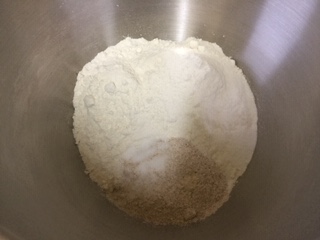
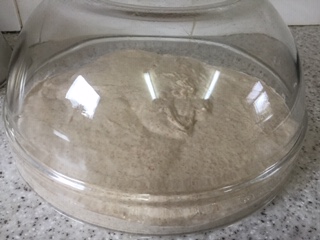
The bread was baked early, and made the house smell amazing. It’s going to be eaten with soup for tea this evening, which is something to look forward to. We’re all told to eat minimally- processed food, and this bread is made from only four ingredients. They are sourdough starter, organic flour, water, and a pinch of salt.

Small things…

There were other advantages to The Affair of the Dripping Tap. All my chores were done nearly an hour early. It meant there was time on the first dog-walk of the day for litter-picking. That will make walking in the woods a more pleasant experience for other dog-walkers, and tourists, today.

Baking the bread saved me driving all the way to the shops (which nearly always tempts me into impulse buying, and its excess packaging). This sourdough should also be better for us than commercially-produced white sliced bread-depending on how much butter and jam goes on top!

Making my own bread has an impact on my life out of all proportion to the time it takes, or its cost. When we look at the state of the world it’s only too easy to feel downhearted. We’re tiny cogs circulating inside the enormous machine called daily life. It’s easy to think our individual New Year Resolutions mean nothing in the grand scheme of things, but that is confusing scale with impact.

…Can Change The World

The world isn’t only shaped by grand gestures. The effects of many small acts added together makes a difference, too.

Making bread has been great for my mental health. Kneading dough lets me take out any frustrations while giving my arm-muscles a workout. There’s plenty of time for reflection, too (you can read about some of my bread-making exploits here and here).

cyclamen hederifolium flowers

A few years ago I sowed six hardy cyclamen seed. They grew, flowered and set seeds, which are spread by ants who love their sticky covering. Descendants of those plants now crop up all over the place. They produce hundreds of beautiful flowers in autumn, and sheets of decorative leaves through the winter – and it all started with six small seeds.

…And if everyone was to pick up just one piece of litter, the world would soon be tidy. It would happen even faster if we all vowed to never to drop another piece of garbage…

Action for Happiness is a charity promoting a happier, more caring society. Here are their ideas for January – let me know how many you’d like to try!

person holding a book
books, Royal Romances

Book Trailers

The first two books in my Royal Romances series now have book trailers!

In Royal Passion, Sara’s prize of a luxury break in Greece draws her into the arms of Leo, King of Kharova. Their holiday romance is the indulgent release they both need, but it leads to disaster. Royal Passion is available instantly from Amazon here. For all other platforms, the links are here.

Escape with Leo and Sara to a luxurious Greek Island where anything is possible. Especially love…

The film clips are by Yuliia Kaveshnikova and Artiemedvedev, both via Dreamstime.

Royal Risk, the second in my Royal Romances series, is the enemies-to-lovers sequel to Royal Passion. The king’s brilliant personal assistant Krisia is sent to sort out the chaotic life of Prince Athan. She doesn’t want the job, and he doesn’t need her…until a national emergency means Krisia must learn Athan’s deepest, darkest secret.

Royal Risk is available instantly from Amazon here. For all other platforms, the links are here.

Working together brings Athan and Krisia to boiling point, until a national emergency turns these enemies into lovers…

The film clips are by Justlight and Victoria Rudenko, both via Dreamstime.

What do you think of them?

Blog, Facebook

Fed Up With Facebook

I’m fed up with Facebook – or at least, with the enormous number of spam messages I’m receiving on my Author page.

I used to love posting on both my Personal and my Author pages. I was linked with lots of other writers and small business, both in my local area and beyond. Then a while ago, everything changed.

My posts began to attract a huge number of comments, and it wasn’t only the most recent posts. Comments were being made on items that were many years old.

Normally a flood of interest is a great thing, and I love hearing from readers. Sadly, these comments were different. Almost all were almost impossible to understand – as though English was not simply the the poster’s second language, but their fourth or fifth. Of the comments I could understand, many were pornographic. The rest were offering to post a review my work, which they said they loved reading – although they wanted me to tell them what the title of the book was, together with my name!

Fed Up With Facebook

I investigated my settings, and altered them as best I could. I can hardly block the country which generates 90% of the torrent, as some of my genuine readers would be excluded. These rogue accounts are all in different names, so if I blocked each one I would do nothing else for 168 hours per week, every week.

I tried to find a way to complain to Facebook (with no luck). In the end, I altered my out of office message from: I’m away from my desk at the moment. Please leave a message and I’ll get back to you as soon as I can to: I have had so much disturbing spam on this account, I no longer check this inbox. If you are a decent person, please contact me through my other online channels. Thank you.

That has cut the flow down to only about a dozen unwanted messages a day–which is an improvement, believe me. I purposely didn’t include my email address or other page links in this new out of office message. That way, only people who are interested enough in me and my work to search out my details will get in contact.

So far, I’ve not had one single person contact me to say I’m emailing you because I saw your message on Facebook.

As I said earlier, I used to love making contact with people on Facebook. Now I rarely visit my personal page, and really have to steel myself to face all the unwanted messages to my Author Page. I really regret the loss of contact.

Have you had a similar problem? If you managed to fix it, please let me know in the comments below!

To Find Out More…

…about me, click here. To buy my latest book, Royal Hostage, click here, and to receive my monthly newsletter, click here.

white ceramic teacup with saucer near two books above gray floral textile
Blog, Happiness

Romance and Reading Resolutions

I’m combining romance and reading resolutions in this week’s blog.

Have you tried the Action for Happiness project I wrote about here? Their suggestion for Monday the sixth worked well for me. It was a dismal day weather-wise, and if that wasn’t bad enough the house had that particularly bare look that comes when the Christmas decorations have been taken down.

Then I checked the Action for Happiness Calendar (you can find it here). It said take five minutes to sit still and just breathe.  That in itself was really relaxing, and it made me happy in another way, too. Every year, I plant bowls of hyacinth bulbs for forcing into flower over the holiday season. Every year in the past, they have either flowered in early December or early January – never on the intended days.

A Holiday Double

In 2024, for the first time ever, we had a bowl of pink hyacinths in bloom on Christmas Day. In a stunning double, a bowl of yellow hyacinths were just coming into flower for New Year’s Day, and there were five spikes looking like this last Monday. It was a real pleasure to spend those five minutes looking at this, and breathing in the lovely fragrance of hyacinths

This week, I’m using the Action for Happiness calendar as a springboard to find other ways of brightening up my life. My first four suggestions are below. I’m including a suitable book with each of them, because reading is an affordable route to happiness everyone can take.

Make The Most Of Every Day

It can’t be a coincidence that the word present means both a gift, and the period of time that separates the past from the future. Each morning offers us a fresh start, so take a moment to learn from yesterday, and then leave tomorrow to worry about itself for a while. Try and concentrate on the here and now.

I wrote here about wanting to read more books which showcase older heroines, and One Day in Summer by Shari Low fits the bill perfectly.  For years, Agnetha devoted herself to caring first for her children and later, her ageing parents. At forty-five, she is now finally free to concentrate on herself.  This story takes place over the course of a day, and shows how life can change in an instant. Shari Low brings a great collection of characters to life, and spins a tale where grief and the lasting pain of betrayal is contrasted with love and joy.

Book cover of Shari Low's book One Day In Summer. Pale blue background with summer flowers, strawberries and butterflies.

Make Time For Yourself

When the weather is good, I love working in the garden. That’s my “me” time. Seeing my family eat the fruit and vegetables I grow gives me a real sense of achievement, as well as pleasure. I also try and meditate every day. It’s something I’ve been doing since lockdown, with mixed success. It definitely helps me unwind, but my mind often feels like a box full of butterflies.

I have mixed feelings about the book Eat Pray Love by Elizabeth Gilbert. It’s a fascinating read, and there’s no doubt her journey of self-discovery inspires strong feelings. It offers a glimpse of what an American woman is supposed to view as success. Liz Gilbert took making time for herself to the ultimate level. She walked away from her marriage and travelled the world to try and fill the emptiness she felt inside. This book is literary Marmite – in other words, you’ll either love it, or hate it. There is no middle way, but it does show that healing comes in many forms. The rainbow of escape stretches all the way from the innocuous taking time out for five minutes, to a self-indulgent crock of something – but is it gold? 

Book cover of Elizabeth Gilbert's Eat, Pray Love, with the title made from pasta, beads and flower petals

Escape With Romance

Reading is the perfect escape from winter. It’s even better if you can lose yourself in a book while curled up beside a lovely log fire, cat on lap, tea and cake to hand (Thinks: I wonder if this is why I haven’t lost any weight yet, despite my New Year’s Resolution?)

One Day in December by Josie Silver  is a romantic tale spanning years. Heroine Laurie doesn’t believe in love at first sight – until it hits her straight between the eyes. She spends months looking out for a man she spotted through a misty bus window. When they finally meet face-to-face, it’s when Laurie’s best friend introduces the mystery man as Jack, her new boyfriend. Laurie has just missed the bus, you might say. What follows is years of friendship, and missed opportunities woven into a moving love story.

Cartoon of couple kissing in a snow flurry, beneath a streetlamp.

Take A Mini Break

Obviously, if you’re one of the lucky few who can drop everything and fly off on an exotic holiday at  moment’s notice, that’s the perfect way to recharge your batteries. For the rest of us, a change in our routine can make all the difference. Pack a lunch to eat in the park instead of at home, or in your workplace. It makes a huge difference. I didn’t realise how close I was to burnout until I ate my sandwiches in the park one day, instead of at my desk. I felt so much better after spending my lunch break out in the open air, I decided to do it as often as I could.

If you are short of time or money, reading is the perfect escape. My own book, Royal Passion, whisks readers away to a glorious Greek island where a troubled king is trying to hide his identity, and an executive with burnout is about to discover she hasn’t been given the promotion she deserves. Both Leo and Sara are damaged and disillusioned, but love, as we all know, makes everything better. Drawn together despite their different circumstances, Leo and Sara face being torn apart by disaster. Will their story end in tragedy? You can find out here.

Book Cover, Christina Hollis's Royal Passion. Romantic couple superimposed on a beautiful Grecian beach scene https://amzn.to/40s4IvN

Let me know what you think of these ideas, and my book choices. How are you getting on with the Action for Happiness Challenge?

To Find Out More…

…about me, click here. To buy my latest book, Royal Hostage, click here, and to receive my monthly newsletter, click here.

easter bunny painting and watercolor palette on white surface
Blog, Happy new year

Action For Happiness

Be-Twixtmas and Be-Tweenmas

The period between Christmas and New Year is a weird time of year. The Orthodox churches won’t be celebrating the birth of Jesus until 7th January, and the Christmas season doesn’t officially end until Candlemas on February 2nd but the supermarkets have already swept away the Christmas decorations. The shelves are now full of hot cross buns and Easter eggs. It’s no wonder our mental health suffers at this time of year. The days are short, the nights are long and commercialism is trying to whip us up into another spending frenzy. What we all need is to take some Action for Happiness.

Stopping and Starting

Lots of us will have made New Year’s Resolutions that involve giving up something such as alcohol or meat (or in my case, general overeating). As well as denying myself in the cause of losing weight (ho hum) I’m starting something new this year. One of my Christmas presents was a voucher for a beginners art class.

easter bunny painting and watercolor palette on white surface

I’m really excited about that. I’ve been sketching during odd moments over the past few days, because it’s been a very long time since I did any art. My powers of observation need to be sharpened up before I’m let loose on a canvas.

While I’m busy with pencils and charcoal, I’m not thinking about food – at least, that’s the theory. The trouble is, I use food as a crutch. I eat to cheer myself up, then I feel miserable because I’ve got no willpower. That’s why I’m also following Action for Happiness’s campaign on social media for a Happier January.

Action for Happiness

Action for Happiness is a non-governmental and non-profit organisation which aims to build a happier and kinder world. You can find out more about the movement here. Here’s their action plan for January:

January calendar produced by Action for Happiness, with 31 ideas for cheering yourself up.

Sometimes I find it hard to look a week ahead, let alone look forward to things any further in the future. At times like that, the first day of January’s challenge would have me waiting for the first snowdrops to some into flower, for the frogs to discover our new pond, and the next meeting of local writing groups.


Luckily, I’m feeling pretty cheerful at the moment. It didn’t take me long on New Year’s Day to think of three things I’m looking forward to this year…

Three Good Things

  • I’ll soon be watching my daughter being presented with her MA (with Merit!) in Museum Studies,
  • I’ve got tickets for the Chelsea Flower Show, and
  • I’m hoping to go up to London in the autumn and watch sumo.

On 2nd January I spent some time sketching, and today, 3rd January I gave OH the last slice of cake from the tin. Unfortunately, that triumph was really a cheat. I wanted to wash up the tin. If I hadn’t given him that slice, I would have been forced to eat it myself!

The next task on the Action for Happiness calendar is “Write a list of things you feel grateful for, and why.” That may take me some time…

Now It’s Your Turn…

Why don’t you have a go at one or two of these challenges, in aid of happiness? Let me know how you get on!

To Find Out More…

…about me, click here. To buy my latest book, Royal Hostage, click here, and to receive my monthly newsletter, click here.


books, Christmas

Seasonal Reads

From Ancient…

This year sees the 40th anniversary of the BBC TV version of John Masefield’s popular Christmas story, The Box of Delights. Masefield’s book was written in 1935 as a sequel to his earlier The Midnight Folk. In its time, critics said The Midnight Folk could stand alongside great children’s books such as The Water Babies and Alice in Wonderland, but it never caught the public imagination. In contrast, The Box of Delights has been adapted numerous times for both radio and the stage. For one thing, my mother could remember listening to it on Children’s Hour with her brother and sisters.

Photo of Tewkesbury Abbey, by Robert Arden via Pixabay
Tewkesbury Abbey, twinned with Tatchester Cathedral!
Pic by Robert Arden, via Pixabay

The theme music used for that radio dramatisation was The First Nowell variation from Victor Hely-Hutchinson’s Choral Symphony, which was also used for the 1984 TV adaption. You can enjoy the whole of that piece here, ornamented by AntPDC’s beautiful film.

The cutting edge effects used in the 1984 version of The Box of Delights cost a million pounds – an amazing expenditure for children’s TV at the time – will seem strange to children brought up with YouTube and Netflix effects. Maria Jones, a character in The Box of Delights, thought Christmas ought to be brought up to date, ‘…with gangsters, and aeroplanes and a lot of automatic pistols.‘ Now we’ve all grown up, we can enjoy seasonal reads with all those things, plus romance!

…To Modern

Here’s my roundup of seasonal reads. All these books have been written by members of Courtyard Writing Matters, the writing group chaired by author Joanna Maitland – and me.

To find out more about each book, click on its title within the text.

Wouldn’t it be lovely if dating today was about romance, rather than selfies and social media? Inspired by Jane Austen, Bridgerton, and a thousand and one perfect romance stories, contemporary matchmaker Emma Love makes it her mission to find love for everyone in Ally Sinclair’s The Christmas Season – but while she’s busy making matches for her clients, will Emma’s own perfect partner slip away?

Joanna Maitland’s To A Blissful Christmas Reunion is a lovely seasonal story about rekindling lost love. Choosing a Christmas tree brings Gabe and Lucy together when the gulf between them seemed unbridgeable.You can read my review of it here.

In Evonne Wareham’s Romantic Suspense What Happens at Christmas, someone wants ultra sexy Andrew Vitruvius dead. He is rescued by Lori and her four-year-old niece, and goes into hiding in the Brecon Beacons. This thrilling novella has an unexpected twist at the end, and is a real page-turner.

Jill Barry’s Under the Mistletoe is a box set containing The Christmas Getaway and Crazy Days of Christmas. In The Christmas Getaway, Lulu’s charming boyfriend Ravi suggests a relaxing getaway during the festive season. Their not-so-traditional Christmas turns out to be anything but relaxing. Despite everything, can Lulu rekindle her love for Christmas? In The Crazy Days of Christmas, Lucy clashes with James, the replacement chef at her bistro. He has some wild ideas, but there’s more to him than Lucy realises. Could it be that love is on the menu this holiday season, or will it all be a recipe for disaster?

Alex is a party girl with a penchant for free flowing Prosecco. Her devilishly handsome scientist boyfriend, Charlie, loves jazz and dinner for two. Just before sharing their first Christmas together, Alex goes out of town and does something she will later regret. Is Charlie the forgiving kind, or will Alex be Single by Christmas? A feel good, Christmas novel with very few mince pies, not much snow and absolutely no mistletoe – just a couple of best friends, a sociopathic nemesis and a lot of drinking.

A Florentine Christmas: Three families. One city of art. A holiday that will change everything.

The cobblestone streets of Florence set the scene for a reunion years in the making. Three couples embark on an Italian adventure. But Florence has more in store for them than Botticellis and bistros, and one couple’s world is rocked when their daughter drops a bombshell.

Sara Downing’s A Head Over Heels Christmas is the third in a trilogy, but it’s also a standalone read.

In A Lion is not Just For Christmas by Henriette Gyland, circus performer Justine works with big cats and is asked to spend a few weeks settling a retired lion into his new environment. Tom Yates is groundsman at the stately home in Norfolk where the lion has been relocated. He resents her presence , but revises his opinion when he sees the bond between her and the big cat. She and Tom grow close, although the lady of the house, Priscilla is not so easily won over. She sees Justine as a threat to her plans for the manor. When unsettling events occur, Justine begins to wonder if there is more to Priscilla’s animosity than meets the eye. Can Justine keep herself and everyone else safe until it’s time for her to leave and start a new life elsewhere?

And Last, But By No Means Least…

Cath Barton is reading a micro story on North Manchester FM  on Saturday 14th December as part of the station’s annual 3 Minute Santa stories.

Take a bow, all you talented members of the Courtyard Writing Matters group!

To find out more about my own books, click here.

Blog, short stories

The People’s Friend

Christmas Reading and Christmas Cheer

It’s beginning to look a lot like Christmas here in Gloucestershire. The People’s Friend Festive Bumper Issue has arrived, complete with twenty-three stories (two of them mine!). Lemons, limes, and yuzu are ripening in the greenhouse. The log burner is crackling with good, dry wood harvested last year. I’ll soon be decanting homemade cassis into gift bottles, ready to give as presents. Sadly, I didn’t make any sloe gin this year. Despite our many blackthorn bushes and trees, only one sloe made it to full size. Then one night it vanished, and before it was properly ripe. I suspect a mouse!

‘The People’s Friend’ – Short Stories for Christmas

The last couple of weeks I have been lucky enough to have several pieces of my work published under The People’s Friend banner. My pocket novel Robin’s Nest was published on 24th of October as Number 1029 in The People’s Friend Pocket Novel Library. Then this week, I’ve had more good news. The People’s Friend Festive Bumper Issue dated the 7th of December features TWO of my stories!

My Stories

In Gingerbread Traditions, Marian is feeling lonely as she settles in to her new home in a strange town. Then a neighbour invites her to take part in the local Victorian Christmas Fair. That’s when Marian finds her new house has played a starring role in a very special competition.

Gingerbread house: illustration from The People's Friend story Gingerbread Traditions by Christina Hollis

I think Finch the Grinch, the second story, is my favourite piece of all the short fiction I have written so far for The People’s Friend. It’s Christmas, but Gary Finch hasn’t got any reason to feel cheerful. After losing his job he tried to make it as an artist, but his new career hasn’t worked out. Molly, his wife, has been busy organising a Walking Nativity to bring some Christmas cheer to their town. Gary has been feeling too dispirited to take part. Can the season of goodwill work its magic on him?

Nativity scene to Illustrate short story in The People's Friend by Christina Hollis

The People’s Friend and Me

There was always a copy of The People’s Friend lying about the house when I was growing up. The weekly magazine’s combination of interesting articles and cheering stories lost its hold over me when I became a rebellious teenager, but I rediscovered its value after I became a mother. My son developed a series of medical conditions which required sometimes weekly trips to hospital. The magazine, together with its regular seasonal specials and bimonthly Pocket Novels, is always stocked by the hospital shop. It was then that I discovered the true purpose of The People’s Friend. It’s the perfect comfort and distraction during long waits for treatment, results, or items from the pharmacy.

The magazine covers serious topics as well as light-hearted ones, but whatever the subject, The People’s Friend deals in hope. That’s why the stories it contains are always upbeat, with a happy-ever-after ending (or at least, a happy-for-now-ending).

Optimism is vital when things look bleak. I like to think that my writing for The People’s Friend will make readers smile in the same way I’ve been cheered in the past by the work of its other writers.

I often include short stories in my monthly newsletter, along with news of my life and writing here in Gloucestershire, and offers of free books like these…

Advert for free steamy romances with book covers

If you sign up for my newsletter here, I’ll send you a free copy of Royal Rivals, the prequel to my series of Royal Romance novels.

To Find Out More…

…about me, click here. To buy my latest book, Royal Hostage, click here

crop man writing notes while working in office
Romance, Writing

Crime or Romance?

Over the past few weeks, I’ve been wrapped up in editing work for Royal Hostage , and reading for The Romantic Novelists’ Association’s New Writers’ Scheme.

By the time I got back to my own work-in-progress this week, my brain had got busy with a different plot. I now have two sets of characters keen to meet and get busy. Eventually both books will get written, it’s just a matter of when.

So now it’s over to you! I’ve written mini outlines for both my projects. Which would you like to read first – the Crime, or the Romance?

A Fine Romance

Rebecca has been two-timed, and her life is bleak. Then she wins a house in a competition. It seems like her problems are over, until handsome-but-grim property expert Jack literally falls into her life…

Accident, or Crime?

Pip finds her boss drowned in an ornamental lake. Then the murdered man’s son arrives to take over the family business. Pip soon has the job of her dreams, the new boss of her nightmares–and a killer in her garden…

Over to You – Crime, or Romance?

Which of those two little outlines appeals to you more? The Romance will be gentle, the Crime will be cosy (or Cozy, depending on which side of the Atlantic you live!)

I’d love to hear what you think. Pop your thoughts in the comments section below!

close up of human hand
Blog, Writing

How I Write

I’ve been a full-time writer for a long time. Today’s blog is about how I write, and what I write about. Read on to learn the secrets of my success!

How I Write

The short answer is, I write whenever and wherever I can. The more detailed answer is sitting (whether at my desk, or in bed) in silence, and using a pencil and on paper. The best advice I can give you is to simply start. Whether you write, dictate or type, getting words out of your head and onto a page is the best encouragement I know. Then all you have to do is keep going.

In The Mood?

One thing I never do is wait for the writing muse to arrive. Unless I reserve a block of time each morning to sit down and write, there’s always some distraction calling me away from my desk. If I waited for inspiration to strike, I’d never get anything done!

A trick I use to making starting work easier begins the day before. I stop writing when I’m full of ideas and racing to get them down on paper. Next day, I can’t wait to take up where I left off the night before. During my writing sessions, I use a modified Pomodoro technique–that is, I set a timer for twenty minutes, and write as hard and as fast as I can. I don’t bother about grammar, spelling or punctuation. It’s getting the words down that matters. When the timer goes off, I get up and walk round my desk. After three twenty-minute bursts, I take a longer break to make a cup of tea, visit the greenhouse, water the houseplants, and refill the bird feeders.

This method really helps my productivity.

timer on smartphone
Photo by Hannah Barata on Pexels.com

What to Write

“No man but a blockhead ever wrote except for money” wrote Samuel Johnson, and it’s how I started. I was a freelance, writing non-fiction articles on country living for magazines, and illustrating them with my own photographs.

Getting paid for your writing is the ultimate in validation, but it’s now only one of many reasons why I write. It’s great therapy. Keep a journal, and record your blessings every day as well as your trials. When I was a child, I loved escaping my unhappy life into a world of my own invention. Once I was happily settled with a partner and family, I turned to creating escape routes for others. You can find out more about some of my books here.

Book cover of Royal Risk, in How I Write blog by Christina Hollis. Romantic couple overlaid on a sescape with a ruined castle.

Planning or Discovery

I can’t definitively call myself either a planner, or a pantser (discovery writer). If I’m writing a seasonal article or story, its content and deadline has to be planned carefully. The same applies when I’m putting together a series of books, such as Royal Romances (Royal Passion and Royal Risk)

Beyond those boundaries, I’m happy to write by the seat of my pants and become a discovery writer. Sometimes an idea will comes to me and I scribble away spontaneously, discovering how the characters and plot develop as I work.

This is why I find Scrivener so useful. I’ll be blogging on that subject again soon, but you can read one of my original posts about Scrivener here.

Get Comfy

Sitting is supposed to be the new smoking! My writing life is very sedentary. That’s why writing sprints (see In the Mood? above) are so useful. The time spent getting up every twenty minutes and walking about every hour helps prevent Deep Vein Thrombosis. I’ve been considering a walking desk for a while, but I’ve tried writing while standing up and I don’t like it. I much prefer to sit to the task. My current office chair is an Aeron, and it’s amazingly comfortable. It’s like sitting in a hug!

Read, Read, Read

This is probably the most important tip for anyone who wants to become a writer. I’ve loved reading since I was big enough to pick up a book. Before I start a new project, I read as much as I can in the genre in which I’ll be writing. The genre is the style or category, such as Romance, or Crime/Mystery.

Writing for publication is all about satisfying reader expectations. When you read widely you’ll not only learn how it’s done, you’ll discover the tropes that reader love to see included in their favourite books.

Tropes are popular ideas and themes. There are dozens of these, and they provide an easy way for readers to home in on the type of book they’re looking for. Three from the Romance genre are Enemies to Lovers, Forbidden Love, or Secret Baby. Mystery/Crime has Victim as Villain (everybody hated them, so there are multiple suspects), the alcoholic or otherwise troubled detective, and that Agatha Christie regular, Phonecall Foreshadows Death. “I’ve got something important to tell you, M. Poirot. Meet me at seven o’clock…” and when Hercule arrives at the rendezvous, the caller has been murdered!

That’s a quick run-down of how I write. To find out what I’m working on at the moment, see my latest cover reveal, get behind the scenes news, offers and more, sign up for my newsletter here.

three great pyramid under the blue sky
Blog, books, history

The Seven Wonders of the Ancient World

The Seven Wonders of the Ancient World are a great source of pub quiz questions. How many can you name? They are: the Colossus of Rhodes; the Great Pyramid of Giza; the Hanging Gardens of Babylon; the Statue of Zeus at Olympia; the Temple of Artemis at Ephesus; the Mausoleum at Halicarnassus; and Lighthouse of Alexandria.

Book cover, Seven Wonders of the Ancient World by Bettany Hughes.

Before watching Bettany Hughes’s TV series The Seven Wonders of the Ancient World I could only remember two. They were the hanging gardens and the library, but then I love both gardening, and books.

Our local independent bookshop, Rossiter, arranged for Bettany Hughes to appear in Monmouth and talk about her latest book, The Seven Wonders of the Ancient World. DD got tickets for us. She did well to buy them early. The event was a sell out.

Bettany Hughes is an English historian and broadcaster, specialising in classical history. The author of five books about ancient history, she is a founding patron of the UK based charity Classics For All. This promotes Classics in state (that is, non-fee-paying) schools, and areas of the country such as inner cities where the Classics aren’t well known .
What use are dead languages and ancient history in the twenty-first century? Bettany has the perfect answer.

Veni, Vedi, Captus Sum

That’s the nearest my feeble Latin can get to I came, I saw, I was arrested. In her early twenties, Bettany travelled to Romania to study ancient feminine figurines such as these:

Photo of tattooed female figures by Marius Amarie See https://archaeology.org/issues/november-december-2013/collection/cucuteni-figurine-romania-neolithic/ The Seven Wonders of the Ancient World Blog by Christina Hollis June 2024
Tattooed Figures by Marius Amarie

While she was there, the Romanian Revolution broke out. She rushed back to England and safety, but then had second thoughts. There’s only one sure way to know exactly what is going on in a foreign country. That’s to be on the spot, so she went straight back to Romania. The authorities took a dim view about the swift return of an attractive young woman who spoke no Romanian. They arrested her, and things might have turned nasty. Luckily, the modern Romanian language developed from Latin. Bettany managed to use her knowledge of Latin to create a kind of Pidgin Romanian. She talked her way out of trouble. It goes to show that even today, Classics can get you out of a tight spot…

…Or Help You When You Are In One…

Bettany’s tutor at university, Robin Lane Fox, told his students they should go to the places where history happened. They shouldn’t become armchair historians. She took that to heart. Despite having a life-long horror of small spaces, Bettany often explores them for the sake of her TV programmes.

Claustrophobia is a fear many of us can relate to, but Bettany manages to overcome it. Greek myths help her, especially the story of Perseus. He was the half-man, half god who killed the snake headed monster Medusa. Perseus used Medusa’s severed head to turn the evil giant Titan to stone. Then like all true heroes Perseus got the girl, Andromeda, by killing the sea monster Cetus.

Perseus had to confront not just monsters, but the fear of fear itself. Bettany finds it useful to remember that everyone feels afraid sometimes. That’s not a cure, but it helps to keep her calm.

Inspiration

In 1972 the Treasures of Tutankhamun visited the British Museum London. It still ranks as the most popular exhibition in the museum’s history. Bettany saw it, and developed a life-long passion for ancient Egypt. At the time, she recorded in her school project, Bettany’s Busy Book, that “sum (sic) mosquitoes…” that were “…a bit germy bit Tutankhamun, and he died”.

When Bettany was older, one of her teachers showed her class a picture of a mysterious Minoan snake goddess. This puzzle inspired Bettany to study history at university.

Photo of two Minoan Snake Goddesses Via Wikipedia, ΘεέςτωνΌφεων_6391. The Seven Wonders of the Ancient World Blog, Christina Hollis
Minoan Snake Goddesses Via Wikipedia, ΘεέςτωνΌφεων_6391

After graduating from St Hilda’s College, Oxford, she got a shock when applying to the BBC in the 1990s. A producer told her that nobody was interested in history anymore, nobody watched history programs on TV, and nobody wanted to be lectured at by a woman. Bettany saw that as a challenge, and has spent the past three decades proving him wrong.

The Seven Wonders of The Ancient World

Antonis Chaliakopoulous (MSc Museum Studies, BA History & Archaeology), has written a great piece for The Collector about the Seven Wonders of the Ancient World. The Wonders are all situated around the Mediterranean and Near East. Bettany Hughes started visiting Türkiye and Greece in her teens. Then family life intervened, and she didn’t reach Egypt until she was in her thirties. The pyramids still overawe her, although she has visited them many times. At 4,600 years old they are the oldest buildings ever made by human hands, and the heaviest. The precision of their construction is awesome.

Why Seven?

The number seven has long been seen as a lucky number in many countries. “Seven Top Tips” is a popular blog offering even today.
People in ancient times loved a list as much as we do. Lists bring order to chaos, and structure to our lives. The Seven Wonders of the Ancient World are actually part of a much bigger list of ancient lists. These include the Seven Best Mountains, the Seven Most Beautiful Springs, and the Seven Finest Generals.

The Power of Wonder

Bettany says The Seven Wonders of the Ancient World should remind us of the power of wonder. If we wonder, then we connect. If we connect, then we understand. If we understand we care–even if we’re separated from these ancient civilisations by millennia.
The Seven Wonders of the Ancient World are positive examples of human endeavour in its broadest sense, even though some were built by slave labour. They are proof that collaboration can achieve so much more than the work of an individual, no matter how talented they might be.
We all need wonder in our lives, especially these days when the internet has the power to drown out optimism and achievement by amplifying everything that is bad in the world.

If you get the chance, go and see Bettany Hughes speak. She’s great fun, and wears her immense knowledge lightly. In real life, she is every bit as lively and engaging as she appears on TV. I loved her gold sneakers. Professor Mary Beard also has a pair. They must be the perfect combination of comfort and fashion!

To Find Out More…

…about me, click here.

For news about my writing, life in the English countryside, free book offers and more, sign up for my monthly newsletter here.

To buy my latest book, Royal Passion, click here.

Book Review

Review: Under Far Eastern Skies by Stefania Hartley

Under Far Eastern Skies is another timeless tale of love from Stefania Hartley. I really enjoyed it. The setting and characters are perfect. The period details and dialogue give the story an authentic 1930s feel.

Will Palmer is a botanist, which is an unusual occupation for a hero. Any doubts a reader might have about his choice of career vanish during the scene where he shins up a coconut palm. It’s a perfect example of how to write an irresistible hero in a believable way!

At thirty-two, Shona Wells is older than most romantic heroines. There’s a good reason for this. For her to be single in 1930s Singapore raises a red flag. It means her parents are keen to see her married to a “suitable” man as soon as possible.
Shona has other ideas…

With descriptive flourishes such as the island of Pulau Ubin, sitting on the jade-green waters like a matron on a silk sofa, characters who use phrases such as Tickety-boo, and plenty of frogs, lizards and mousedeer, readers are given an intimate sense of place. The isolation of planters and the destructive nature of their lifestyle is caught very well. It almost (but not quite) made me feel sorry for repulsive, animal-killing Anthony. He has a new tennis court but no one to play with, and nothing to look forward to but his next drink.

All in all, Under Far Eastern Skies is a great read, with an exciting and satisfying conclusion.

flowers touching lips
Blog, Heroines

Ageless Love: Embracing Mature Romance Protagonists in Fiction

I love reading (and writing) about twenty-somethings being romanced by billionaires and royals (see Royal Risk, for example). But I also enjoy reading about women just like me – those of a not-so-golden age, who are looking at thirty down the wrong end of a telescope. Heroines like that are few and far between. I’ve recently been enjoying a collection of Mrs Miniver stories. Assuming Kay Miniver to be roughly the same age as her author, Jan Struther, Kay is a good example of an interesting heroine in her thirties. The film version was a box-office smash in its day (1942). Winston Churchill said it was a huge boost to morale during the darkest days of the Second World War.

Book cover, Royal Risk. Glamorous young coupls agains t a background of sea and a castle. From blog Embracing Mature Romance Protagonists in Fiction by Christina Hollis.
Movie poster for Mrs Miniver in blog Ageless Love: Embracing Mature Romance Protagonists in Fiction by Christina Hollis

I know plenty of romance writers, and we’re all women of sensible years. Whatever eras we write about, whatever tropes we employ, we all have one thing in common. We know what it was like to be young. On the other hand, I’ve read plenty of romantic fiction written by people who assume that a woman’s emotional needs and development cease the second she enters her fourth decade.

They call any woman over thirty “mature” (as though that was a bad thing, which it isn’t) or say she “looks good for her age”.

It isn’t only male writers doing that. Younger writers, of whatever gender or persuasion, seem amazed that women don’t shatter like meringue once they reach middle age.

Why don’t more romance authors write about older protagonists? Blame the advertising industry. The painful fact is that in today’s fast and furious marketplace, it’s youth that sells. Publishers know that including a winsome young woman or a beautiful young couple on a cover shifts books. Fulfilling reader expectation is a major part of the unwritten contract between publisher and book-buyer. If Romance readers choose a novel with dewy young cover stars, they complain if the heroine turns out to be middle-aged. A hero who, in the book, is much older than his strapping twenty-five year old cover version wouldn’t suffer such ageism. That’s unfair, but it’s an investigation for another day.

Embracing the Mature Protagonist

Fancy LLC is a New York advertising agency dedicated to elevating what is important to women. Fancy’s founding partner and co-chief creative officer Katie Keating wrote about the perception of women (quoted by John Oswald here):
‘There are 83 million women over 40 in [the United States]. That’s a full 25% of the population. Put another way, 1 in 4 Americans is a woman over 40. And half of those are women between the ages of 40 and 60. Think about the women over 40 in your life. Are they playing bingo and birdwatching or are they working hard, kicking ass, and living life?’

Anybody who needs convincing that middle age is only the start should listen to the Sophie Tucker song, Life Begins at Forty. Sophie was a big woman in every way. She was a singer, comedian, actress, and radio personality who outworked and out-dazzled Hollywood starlets half her age. Known as The Last of the Red-Hot Mamas, Sophie recorded this, at a time when the entertainment and advertising industries revolved around ditzy young celebrities.

That’s the spirit!

Real women don’t stop at thirty, so why should the protagonists of Romance books? The feverish piston and valve work which is such an enjoyable part of escapist romances might not come easily (so to speak!) to some older heroines, but that makes it easy to relate to them. Variety is the spice of reading matter, as well as life.

Some novels already treat mature protagonists well. The Notebook by Nicholas Sparks, Major Pettigrew’s Last Stand by Helen Simonson, Our Souls at Night by Kent Haruf and The Best Exotic Marigold Hotel by Deborah Moggach, all feature older, diverse characters who find love and new beginnings in unexpected places. These books have succeeded while defying ageist norms.

I started thinking about the topic of embracing the mature protagonist while working on my current novel, Kitten Cupid. While my hero and heroine are both under thirty, Amy Trubshaw, a minor character, has been tugging at my sleeve. She wants her own story. As soon as I can, I’m going to write one for her.

crop woman writing down notes in diary
Photo by Karolina Grabowska on Pexels.com

Amy is a seventy-something wheelchair user with a racy past. As a single parent fifty years ago, she learned to duck and dive to hide her unmarried status. Her ultra-respectable daughter, Brenda, doesn’t know that her own father could have been any one of a number of men. Amy has no intention of growing old gracefully. Marriage wasn’t for her, but she knows her middle-aged daughter yearns for romance. That’s why, in the next short story I write, Amy Trubshaw will secretly turn matchmaker. She’s lived an independent life happily enough, but she can see the benefits of living within a relationship – especially where her daughter is concerned.

The Romance genre is constantly evolving. Why don’t we start a campaign to champion mature protagonists? We can encourage a broader acceptance and inclusion of them in romance literature by showing that’s what we want to read. Word of mouth is a great marketing tool. We can review and recommend stories that reflect the richness and diversity of love and romance at every age. Asking your local library to stock these books would be more proof that there is a market for them.

Do you prefer your heroines to be young and curious, or older and more worldly-wise? Whether you are a writer or a reader, I’d love you to add your comments below!

To Find Out More…

…about me, click here. 

I write about my life in the English countryside in my newsletter, which you can sign up for here.

There’s an extract of my latest book, Royal Passionhere. To buy Royal Passion, click here.

red heart shaped ornament
Blog, Romance

All Change in Romance

It’s all change in romance for me this year. I’ll be saying goodbye to one series of my Romances, and saying hello to a new one. Royal Hostage is to be published in the summer, and it will be the final book in my series of torrid escapist novels, Royal Romances.

All Change…

As soon as I’ve said farewell to the hotblooded royal families of fictional Kharova, I’ll be introducing you to a whole new cast of characters. Right now, I’m surrounded by Post-it notes and highlighter pens, planning a series of contemporary romances with a dash of mystery. The working title for the whole of my new series is Cotswold Charm, but that could easily change! The first book will be published in 2025.

Escape From The Cold!

Book cover of Royal Passion by Christina Hollis. Greek beach scene with yacht and romantic coupleFrom All Change  in Romance

Office Romance?

Book cover for Royal Risk by Christina Hollis. Castle and seascape, with romantic couple superimposed. From All Change  in Romance

The final book in the series, Royal Hostage, is a Beauty and the Beast story – although it isn’t always clear who is the hostage! Mia is a spoiled princess in every meaning of the word. She is taken hostage by rebel leader Mihail, but he doesn’t always get his own way. Mihail is soon wondering if he can pay Mia’s family to take her away…

I’m not giving away any spoilers, but if you love redemption stories with happy endings then I’ve wrapped up my Royal Romances series with you in mind!

Work in Progress

My new series of contemporary Romance novels is still at the planning stage. The books in my Cotswold Charm series will revolve around life in a pretty little Gloucestershire town. The setting and characters are all completely fictional, although the layout and buildings of ‘Avondale’ are inspired by several towns I know, including Tewkesbury. That’s where my daughter lives, so I visit the town often.

Flooding in Tewkesbury: cottage and River Avon, from All Change  in Romance

DD’s tiny cottage is the setting for my current work in progress. If you’ve ever seen news reports of flooding in Gloucestershire the exterior of her home may look familiar. News crews sometimes plonk themselves down on her doorstep to report from the brink of the rising waters.
DD’s cottage is many hundreds of years old but (so far, anyway!) floodwater has never got into the house. Those medieval builders knew better than to build out on the flood plain. DD’s house is in the shadow of the Tewkesbury Abbey, which makes it fractionally higher than the surrounding fields.

Kitten Cupid

Right now I’m working on a “stranger in town” story for my new Cotswold Charm series. Kitten Cupid is my first book for this collection. Emily wants to make a fresh start in a new job miles away from the cheating liar who broke her heart. Alone and friendless in a strange town, she finds an abandoned kitten. Veterinary surgeon Ben helps Emily save tiny Teeny’s life. Broken hearts take a long time to heal, but it takes an accident for Emily to realise she isn’t the only one who is suffering…

Find out more…

female software engineer coding on computer
Blog, Newsletters

Writing My Reader Newsletter

The title of this blog sounds like a topic for the comedy show “Just a Minute”, where panel members try to talk for sixty seconds without hesitation, repetition, or deviation. That programme is fun and educational at the same time. That’s the effect I aim for when I’m writing my reader newsletter, so I’ve got my fingers firmly crossed today!

Writing My Reader Newsletter

I can’t say this often enough – technology is not my friend (apart from my Alphasmart Neo).My website exercises the sum total of my technical expertise. It is at least a permanent base online. Technical hitches, or the whims of Social Media giants such as Amazon or Facebook can’t deprive me and my readers of the safe space called christinahollisbooks.online.

Several of my friends have had problems with accounts run by those media giants. If you lose access to your accounts through no fault of their own, it can be very difficult to get it back. An online following built up over years can be lost overnight. Contacting a human so you can explain your problem is practically impossible. Writing a regular reader newsletter is a way to keep a firm foothold online. I am in sole charge of my list of subscribers, whatever happens.

Cover of Royal Risk by Christina Hollis: Romantic couple against a seascape and ancient castle.

Subscribers to my newsletter get to see extra content and extracts from my works in progress. They see my new covers as soon as they are designed, too, such as Joanna Maitland’s lovely cover for my newest release, Royal Risk (you can find out more about Royal Risk here). That means they don’t have to wait for my cover reveals on social media.

Those are the practical reasons for having a reader newsletter. The fun part is in actually writing it, and keeping in contact with my lovely subscribers!

Writing My Reader NewsletterHow It Began

I subscribe to quite a few newsletters. Most are writing-related, although I also follow several artists, some cookery sites, and my local beekeeping group for regular updates. I studied them all before I started writing my own reader newsletter, and made a note of all the things I liked, and those I wasn’t so keen on.

After reading up on the subject online, I chose Mailerlite as my newsletter distribution service. They have loads of very short videos to walk you through every step of the process. I use the paid option, but there is a free alternative. You can upgrade at anytime. I’m very happy with Mailerlite, although other newsletter distribution sites such as Mailchimp and HubSpot.

How My Newsletter Works

Supermarket shelf with empty Pocket Novel section, to illustrate Writing My Reader Newsletter by Christina Hollis

Subscribers to my newsletter see behind the scenes here at Tottering Towers, get details of my writing life and developments in the Victorian cottage my family and I call home. They see extracts of my works in progress and are always first to see cover reveals. I often include recipes, links to free book offers, and competitions.

Recent competition winners have included EsCeeGee and Sally. EsCeeGee sent me this photo of an empty shelf hanger where my Pocket Novel had sold out (if you bought a copy, thank you!).

Cute ginger kitten by Rebekka D via Pixabay to illustrate Writign My Reader Newsletter by Christina Hollis

As a thank you for signing up to my newsletter, readers get a free copy of Royal Rivals, the prequel to my Royal Romances series.

Now It’s Your Turn!

Blog, Royal Romances

My New Release – ‘Royal Risk’

My New Release, ‘Royal Risk’

Book cover of my new release, 'Royal Risk' by Christina Hollis.Romantic couple superimposed on a beautiful seascape with an ancient castle on a headland.

Krisia’s new job turns her world upside down. She finds Athan, Kharova’s notorious Royal Stud, loud, disruptive– and dangerously alluring. As they clash in the royal corridors of power, Krisia is swept up in a firestorm of danger and desire. When Athan reveals the secret that threatens his future, he and Krisia are forced to work together to overcome disaster.

In a kingdom where duty and desire are at odds, will Krisia and Athan risk everything for a love that can change their destinies?


As Krisia got into the limousine sent to take her back to the palace, something threatened to wreck the end of her holiday. It was the pulsing thud of a helicopter engine vibrating through her body.
With my luck, it’s Prince Athan doing some low-level flying. Once he spots an official car on the move, he’ll buzz it all the way back to the city, she thought.
She slumped into the sumptuous rear seat of the car, with no hope of enjoying the ride. The gates at the end of the drive swung open to let her car out onto the country road. Then everything went wrong. Something pinged against the windscreen, and it wasn’t gravel.
“Gunfire!” the driver screamed.
He threw the car into reverse and they roared back the way they had come, but there was no escape. The automatic gates were already closed.
As part of the royal household, Krisia knew what to do. Terrified, she curled into a ball low down in the car’s footwell. It was the safest place to be when under attack.
The chauffeurs were trained to get their passengers out of trouble. Krisia waited for her driver to accelerate away from danger. Instead, the car lurched and stalled. Flinging his door open, the man leaped out and ran away.
Panic caught Krisia by the throat and refused to let go. She was alone, and her car was under attack.
Light streamed through the driver’s door and into her hiding place. She saw her chauffeur’s feet flash away through the dust kicked up by gunfire. Her heart almost bounced right out of her ribcage. All these official cars were armored, but that wouldn’t help her if a bullet whizzed in through the gap.
Krisia’s choice was to wait like a rabbit in a trap or make a run for it.
Putting her hand to her own door, she groped for its catch. She couldn’t raise her head high enough to see what she was doing. From her low angle, crammed behind the driver’s seat, all she could see was a pair of gleaming army boots. They were hurtling toward her as bullets kicked up puffs of dust from the road.
The sight froze Krisia’s blood.
It wasn’t her driver, returning with help.
She opened her mouth to scream. There wasn’t time. A huge, laughing silhouette opened the car door and threw himself on top of her.
The impact knocked all the air from Krisia’s lungs. Pressed down beneath his weight, the touch of bare male skin overpowered her.
Only one person could laugh while pumping out that rich fragrance of adrenaline. His body felt every bit as powerful as Krisia had always imagined.
She struggled to catch her breath, then gasped his name.
“Prince Athan?”
A deep chuckle reverberated through the muscular body that was crushing her against the floor of the car.
“Right first time,” his rich, melodious tones caressed her ear, “How did you guess?”
“Careful, your Highness. If you get any closer, you’ll have to marry me,” Krisia said, using the one word guaranteed to send a man like Prince Athan heading for the hills.

To Find Out More…

Blog, Review

Review: “To Be Loved” by Stefania Hartley

Review: To Be Loved by Stefania Hartley

Today I’m reviewing Stefania Hartley’s collection of short stories, To Be Loved. Stefania is Sicilian by birth, but fell in love with an Englishman and now lives in the UK. She writes short stories and romance novels.

To Be Loved is a collection of ten short stories, each around 2,000 words long. This makes it easy to dip in and out of the book. It’s the perfect length to take on a journey, or to read during a long wait.

Each story is complete in itself, although regular readers of The People’s Friend magazine will recognise several characters such as Melina, Tanino, and Don Pericle who have appeared in Stefania’s previously published work.

With some great contemporary themes such as how to arrange the perfect wedding, and the unexpected result of a dating app malfunction, there is a lot to love in this collection. The title story, about fish-out-of-water Amanda’s trip to the Italian capital for a dentistry conference, contains the great line: [t]he saying “When in Rome, do as the Romans” was very good so long as you knew what the Romans did.

A Fragile Heart is the touching first-person story of a child shuttled between separated parents. There’s bittersweet humour in the adults’ dark hints about what had been going on in Nunzia and Pietro’s marriage.

“Is he still living in sin?” Grandma asked Mum. “No, he lives in Trapani,” I answered.

I liked the fishmonger’s cranky statement in Lost at Sea that I don’t sell octopuses by the tentacle. It was his loss as the purchaser, Giovanna, found a wedding ring when she bought the whole creature. Delightfully, she imagines that it might be a crown for a royal merbaby, a collar for a seahorse, or a belt for a wealthy eel. Tracking down the ring’s owner leads to a satisfying conclusion.

My favourite story in To Be Loved was Written in the Stars (especially as it mentions gianduja, which is one of my favourite cakes! You can find the recipe I use here). Arianna the magazine feature writer wishes Luigi the new sub editor would notice her. When she is given the job of writing (that is, making up!) the magazine’s new astrology section, Arianna sees how he can influence him, as he checks all her work. Unfortunately, her plan doesn’t seem to work…

This is a great collection, and the perfect escape from day to day life. It deserves To Be Loved!

To Find Out More…

…about me, click here. 

I write about my life in the English countryside in my newsletter, which you can sign up for here.

There’s an extract of my latest book, Royal Passionhere. To buy Royal Passion, click here.

silhouette photo of male and female under palm trees
Blog, Romance

Romance – Sweet or Spicy?

I love writing romance. The amount of detail I include in the love scenes depends on who I am writing for. What kind of stories do you like to read – sweet, or spicy?

Sweet Romance

Book cover of The Wishing tree by Christina Hollis on Romance sweet or spicy blog. Attractive young couple in front of old house.

At the moment, I’m busy working on short stories and a Pocket Novel for The People’s Friend. “The Friend” is a British weekly magazine known for its family-friendly content. It publishes optimistic, feel-good stories. The magazine’s readers appreciate its consistent quality and wholesome content.

Not all my stories for “The Friend” feature romance, but when they do, it’s definitely sweet. A happy ever after is always guaranteed!

You can sample my most recent Pocket Novel, The Wishing Tree, here.

Spicy Romance

Book cover fo Royal Passion by Christina Hollis on Romance sweet or spicy blog. Greek seashore with yacht, romantic couple superimposed

My first published novels were for Harlequin Mills and Boon’s Modern Romance line (known as Harlequin Presents in the US). You can find my UK titles here, and my US titles here.

My most recent contemporary romance is Royal Passion, which is the first book in my Royal Romances series. Readers of this type of story want to explore the physical and emotional attraction between the hero and heroine. The central characters experience tense internal conflicts and emotional responses at a level that would be completely out of place in anything I write for The People’s Friend.

Sweet, or Spicy?

I love writing to please readers, so I’m happy to create stories at whatever heat level they like best. Do you prefer your romance sweet, spicy, or somewhere in between? Let me know by posting your answer in the comments box below!

To Find Out More…

…about me, click here. 

I write about my life in the English countryside in my newsletter, which you can sign up for here.

There’s an extract of my latest book, Royal Passionhere. To buy Royal Passion, click here.

horse running
Blog

An Unforgettable Story

I had a nice surprise last week. Radio 4 Extra have been mining their archives. They invited listeners to nominate programmes which deserved another airing. The 1999 dramatisation of K.M.Peyton’s Flambards was chosen. That unforgettable story meant a lot to me when I was growing up.

Down Memory Lane

Illustration for An Unforgettable Story: Christina Hollis's Blog. Cartoon of The Addams' Family's House, from The New Yorker Magazine

I was brought up in an old house on the wrong side of a village. It felt like we were right out on the edge of civilisation. On my first day at grammar school, I was proved right. All the others in my class came from the nice side of the village, or on the outskirts of Bath. They lived in new houses, or beautifully maintained historic ones. If I invited anyone home, it was never long before they likened out house to either The Addams Family home or (later, and more worryingly) The Bates Motel.

An Unforgettable Story

I escaped into writing, and reading. When I discovered Flambards by K.M.Peyton, it really struck a chord. I was all at sea in the strange new world of secondary education. Christina Parsons, the heroine of Flambards, was an innocent sent to live with the Russells, a hunting household. She had to either sink, or swim while the Russell’s old house, Flambards, decayed around her. Christina’s words, Flambards, you are dying always came back to me whenever another piece fell off my home.

Illustration for An Unforgettable Story: Christina Hollis's Blog. Photograph of The Bates Motel, photo by Jim via Pixabay

Today, Flambards would be categorised as Young Adult fiction. I found it in our school library, but as fox hunting was banned in England and Wales in 2004 I doubt it will be in many school libraries these days. That’s a shame. K.M Peyton captured the problems of coming of age and first love so well. What Oscar Wilde called the unspeakable in pursuit of the uneatable is an inescapable part of the story, but it was a part of English culture in those days and shows how brutal life in the country could be.

It’s been a long time since I last read Flambards, but the radio drama seemed to stick very closely to the story as I remember it. Have a listen, and tell me what you think.

To Find Out More…

…about me, click here. I write about my writing life in the English countryside in my newsletter, which you can sign up for here.

There’s an extract of my latest book, Royal Passionhere, and to buy Royal Passion, click here.

Blog, Spring

Spring is in the Air

Where has the time gone? Five minutes ago it was New Year. Now it’s nearly Valentine’s Day! The weather might be miserable, but spring is in the air. The Dawn Chorus has started and the garden is full of snowdrops. I’ve been working hard on my next book, Kitten Cupid and spending a lot of time doing physio on my damaged hip and broken wrist.

Spring is in the Air

Song Thrush on grass, by https://www.ecoevoblog.com/tag/art/ on Christina Hollis blog Spring is in the Air

We’re lucky enough to have two song thrushes singing in our garden. They start before it is properly light. One perches in the yellow-berried holly tree. The other sits in the elder, on the other side of the drive. At lunchtime today, three robins were squabbling in and around a variegated holly. Puffed up with fury, their red breasts stood out brilliantly against the green and yellow leaves.

Out in the Fresh Spring Air

According to the Wildlife Trusts, snowdrops aren’t native to the UK. Nobody seems to know when they arrived here, but they are very welcome as one of the first signs of spring. While we were walking Alex today we came across a big drift of snowdrops pushing up through last year’s dead bracken. They were a long way off the beaten track, so goodness knows how they got to that spot. They obviously love it!

white and green snowdrop flowers close up photography from Pixabay via Pexels for Christina Hollis blog Spring is in the Air
Photo by Pixabay on Pexels.com

Kitten Cupid

The more I work on the first draft of this novel, the more I like the title. Emily and Ben have both been unlucky in love. They are each finding it hard to trust again. Emily’s new job at the Folk Museum and veterinarian Ben’s concerns for a stray cat bring them together in an unexpected way. When Emily finds an abandoned kitten, it looks like the perfect way to break the ice with her new boss. It takes Ben’s tact to sort things out. Then he discovers that Emily has been hiding an awful secret…

To Find Out More…

…about my progress with Kitten Cupid, my writing life in the English countryside, offers, and more, sign up for my newsletter here.

There’s an extract of my latest book, Royal Passionhere, and to buy Royal Passion, click here.

crop man writing notes while working in office
Blog

Sing in the Lifeboats…

Portriat of Voltaire by Nicolas de Largillière Sing in the Lifeboat blog

French writer, philosopher, satirist, and historian François-Marie Arouet was the right person to have on your team. Better known as that giant of the French Enlightenment Voltaire, here he is in a portrait from the Musée Carnavalet, painted by Nicolas de Largillière. One of François-Marie’s quotes is, ‘Life is a shipwreck, but we must not forget to sing in the lifeboats’. 

I’ve been trying to do that for the past eight weeks, after breaking my right wrist (I’m right handed). Sadly my temperament is more Grimaldi than Voltaire, so to sing in this lifeboat was often harder than learning to do things with my left hand.

Harder – but not impossible. These weeks in plaster and now a splint have taught me a lot.

There’s Always Somebody Worse off…

John Wesley Powell (1834-1902) was an American geologist, explorer, university professor and director of cultural and scientific institutions. Yet he achieved most of that after losing his right arm at the Battle of Shiloh, during the American Civil War. The damaged nerves which remained left him in constant pain for the rest of his life. You can find out more about John Wesley Powell here.

‘All I have to do is stick this out for a few months while mooching around the house and garden,’ I thought, and tried to pull up my big girl pants (using only my left hand).

You Never Know What You Can Do Until You Try

I used to think living the life of a queen would be wonderful. Nothing to do except direct things from the sidelines, while having dressers, chauffeurs, and chefs on hand all hours of the day and night.

The last eight weeks have taught me that I am not cut out to be a monarch. Standing around waiting for somebody else to do up the zips of my waterproofs or tie my laces tight enough for me to use the treadmill safely drove me mad within a few days. Not being able to jump in the car and roar off to the farm shop or garden centre whenever I liked was even worse. Luckily my husband and son took on the cooking. They’ve been doing a brilliant job.

As for my zips, now my fingers have regained feeling and some mobility I can usually pull them up myself. My trainer troubles are solved by taking both laces in my left hand and pulling them very tight before tying a double bow.

Frizzy fringed alpaca photographed by Fritz W via Pixabay.Sing in the Lifeboat blog

There were only two problems I never fully cracked. The first was trimming my fringe using right-handed scissors held in my left hand. Why on earth did I ever think that was a good idea?

Still, it’ll grow. Eventually…

My second problem involves opening cans of tinned fish one-handed. Mackerel have ring pulls, so I can prise those open enough to winkle out the contents. Tins of pilchards and salmon don’t have any easy way in. As we don’t have an electric can-opener, OH has to open those!

Pan of sliced oranges for Sing in the Lifeboat blog

I’ve only got one regret. The season for Seville oranges is so short, I won’t be in a fit state to make marmalade this year. For the first year in a very, very long time, we’ll have to buy it!

Would you like inside information on my writing life in the English countryside, offers, and more? Then sign up for my newsletter here.

There’s an extract of my latest book, Royal Passionhere, and to buy Royal Passion, click here.

A notebook, pencil and pencil sharpener
Blog

Coming Soon

photo of santorini greece

This week I’m busy writing a short story, waiting for the release of my next independently-published romance, Royal Risk, and getting ready to send out my January newsletter. It’s all coming soon!

Christmas Comes But Once A Year…

…unless you are a writer. As well as writing novels, I write short stories and pocket Novels for The People’s Friend magazine. Publication schedules mean that stories for specific time slots such as Easter, Christmas and secular holidays need to be written and ready many months in advance.

Ideas for several stories came to me last month when our Christmas tree went up and Christmas cards started arriving. I made a note of them all. Now the excitement of Christmas 2023 is only a memory, I’m getting to work planning and crafting Christmassy short stories for 2024.

Publication Day

The next book in my Royal Romances series, Royal Risk, will be published on 30th January. You can find out more about Krisia and Athan’s story here.

Would You Like Some Inside Information?

Cover of Christina Hollis's novel Royal Rivals. Royal blue background with golden coat of arms

Subscribers to my monthly newsletter will get a double treat in January. I’ll be sending it out next week, and it will include the cover reveal for Royal Risk, and an extract from the book. To be among the first to enjoy some Royal Risk, sign up for my newsletter here. You’ll receive a free prequel to the Royal Romances series, Royal Rivals, as a thank you.

Blog

Interesting Times

“May you live in interesting times” is a double-edged Chinese saying. Last week lived up to that, with no heating here at Tottering Towers and too much water surrounding DD’s house in Tewkesbury. It’s been all go again here this week, although mostly in a good way.

On Monday, I typed ‘The End’ on my latest Pocket Novel and submitted it.

On Tuesday, I was given three more exercises by the physio for the soft tissue injury to my hip. As soon as I can walk at a gradient without pain on the treadmill, I can start running again. Yay! I think…

On Wednesday, after a sleepless night of worry, I had Nessie the permanent cast removed from my wrist. The process was nothing like as bad as I thought it would be. Watching videos of casts being removed from uninjured volunteers turned out to be a very bad idea. Their limbs were being twisted around in a way I knew would have me passing out with the pain!

I needn’t have worried. When you have a real injury under that plaster exoskeleton and it’s not just for show, the medical staff go out of their way to avoid causing pain.

Still, I was disappointed not to get a sticker saying I’ve been brave at the hospital!

On Thursday and Friday I settled down with my Work in Progress, Kitten Cupid. I’m not getting much done. Every couple of hours I have to stop and do a session of physiotherapy, either on my wrist, or on my hip!

I’ll be sending out my first newsletter of 2024 next week. It will include an extract from my next release, Royal Risk, an update on my other writing projects, and more. Sign up for my newsletter here and I’ll send you a copy of Royal Rivals, a collection of short stories about the heroes and heroines of my Royal Romances series before their lives became entwined…

Blog, Gloucestershire

Plenty of Drama and Excitement!

2024 isn’t even a week old,  but we’ve had plenty of drama and excitement here in darkest Gloucestershire already. First we froze, then there was a flood…

The Heater Rebels

Living in the middle of a wood, we’re used to the electricity supply failing pretty regularly. Squirrels often gnaw through the wires, or falling branches bring down the power lines. What we didn’t expect was for our central heating and hot water system to grind to a halt within months of getting a new boiler. For two days and nights we had no heating, and no hot water unless we boiled a kettle.

A Chilly Crisis

On Wednesday morning, (3rd January) the heater began burbling and banging. Its onboard computer reported there was “no flame detected on ignition”. We reported the fault, but the gas company couldn’t send an engineer out for a couple of days. In trying to do our bit for the environment, we had our solid fuel system taken out a few years ago. What a mistake that was! Tottering Towers is an old, cold house. Although we’ve added lots of insulation and draught-proofing, the temperature dropped like a stone. By Wednesday night the temperature in the coldest room in the house barely reached 54 degrees Fahrenheit (12 degrees Celsius).

burning fireplace with orange flames in dark house

We always keep lots of fresh, frozen, and dried food in stock in case we’re snowed in. There are boxes of batteries and candles, too, for those times when the lights go out. The only thing we didn’t have was any form of non-electrical heating. We had our solid fuel system replaced with gas central heating and an electric cooker several years ago. After this brush with hypothermia, we’ve decided that relying on a single form of power isn’t worth the risk. We’re going to invest in a log burner!

Elli’s Flood Ordeal

We were chilly, but our daughter Elli was facing something far more frightening.

Elli lives in the small country town of Tewkesbury. Her tiny cottage is more than four hundred years old. It’s all old oak beams and handmade bricks, and I don’t think there’s a right angle or any parallel surface in the place!  On one side, her home is so close to ancient Tewkesbury Abbey, a decent bowler or pitcher could make a ball rattle the Abbey’s bells. In the other direction , the River Avon flows past, only yards from her front door.

Over the past few months England has had a lot of rain. Low-lying Tewksbury lies between the Malvern Hills and the Cotswolds, so water drains into the river from a lot of high ground. Storm Henke hit Gloucestershire on January 2nd. The Avon had already crept out of its bed, and by Wednesday 3rd January had covered the riverside walk beside Elli’s house. The monks who built Tewkesbury Abbey knew what they were doing. That building is on high ground, so it never floods. The houses built in its shadow are slightly lower. Water often rises to within a foot or so of these houses, but they rarely flood. The last time was in 2007. This week, though, the water rose so high and so fast that my husband Martyn drove through the night to go and give Elli some moral support.

He reached her house at 1am on Thursday morning. She has a flood gate which should stop the river actually getting in to the house, but who wants to put something like that to the test?

Elli’s Challenge

Next morning, Elli had to wade through a foot of flood water to reach her car, which she had parked on higher ground the previous day. She drove to work through many patches of surface water. During the day, those patches joined up to make such widespread flooding that she and her workmates were sent home at 3pm “while you can still get there”.

She had to take all sorts of detours as many roads were closed. At one point she thought she would have to come here and stay the night. Martyn was marooned in Tewkesbury, as almost all the roads in and out of the town were impassable. Eventually she got home to find the flood water level with her doorstep (see photo).

The rain stopped, but the river went on rising through the night.  Martyn took the photo of Elli’s front door a few hours before the one of the flood height measure (below). At its peak the floodwater lapped close to the bottom of the blue floodgate, but not a drop got into the house. The photo taken during the night shows how deep the floodwater was around the Abbey Mill. That building is directly opposite Elli’s house. It’s only a few yards away, but it sits a few feet lower. Hard to believe, but a public footpath linking Mill Street with the water meadows of The Ham runs past that flooded lower floor!

Phew!

The weather forecast for Gloucestershire over the next week is sunny spells, but getting much colder. I hope that gives the Tewkesbury floods time to recede. We’ve all had enough excitement for this year, and we’re still in the first week!

The first week of 2024 has been an adventure for us, to say the least. It’s a reminder of nature’s power and the importance of community and family support during tough times. How did your new year begin? Share your stories of unexpected challenges and triumphs!

Would you like inside information on my writing life in the English countryside, offers, and more? Then sign up for my newsletter here.

There’s an extract of my latest book, Royal Passionhere, and to buy Royal Passion, click here.

photo of fireworks
Blog

Happy New Year!

Wishing you all a peaceful and Happy New Year, with my very best wishes for 2024.

I hope to be blogging again soon. Right now typing one-handed is still a bit of a pain!

My next monthly newsletter will be going out in the middle of January. Sign up here to find out all about my next book, Royal Risk, and my current work in progress, Kitten Cupid.

See you soon!

Blog, Christmas

Some Christmas Cheer – There’s Good News!

Need Some Christmas Cheer?

Christians look forward to the good news of the birth of a baby who, in the words of Douglas Adams, ‘…was nailed to a tree for saying how great it would be to be nice to people for a change…’. 

But what happens if you hate the commercialisation and enforced jollity that our various winter festivals have become? The pressure to conform, and the loneliness that can strike at this time of year is hard to avoid.

I’m posting some good news here to raise spirits while I can.

Good News!

There was good news for me at the fracture clinic yesterday. With luck, I’ll be in a lighter cast by mid-January. I have regained feeling in all my fingers, although movement remains very restricted in three of them. I keep telling myself that jazz genius Django Reinhardt managed well enough with only two fingers. Trouble is, I’m a writer, not a guitarist!

Christmas Cheer and Good News –arm in plaster decorated with Christmas bauble and tinsel
Christmas Cheer and Good News –photo of crocus shoots in a window box

I’m typing this (with one hand) on 21st December. That’s the Winter Solstice, otherwise known as the Shortest Day. The sun rose this morning just after eight o’clock, and it will set shortly before four pm. It slips behind the trees at lunchtime here, which means part of the garden is in shade from around 1:30pm. Even so, there’s no stopping nature. These crocuses are in a window box outside my office.

The Winter Solstice is actually good news. From now on, the hours of daylight will increase by a few minutes each day. The days will start getting lighter, and longer. It means spring is on the way. People have been saying that to cheer each other up since they were building Stonehenge (right). That’s what you call continuity.

photo of Stonehenge – Christmas Cheer and Good News.

More Good News

I happened on this anecdote on Crazy Days and Nights, a site which is famous for its edgy celebrity gossip.The following story, and many of the comments about the kindness of Gary Sinise, Wendell Pierce, Will Rogers and others, raised my spirits. Here’s the story:

‘There is an A- list actor who has made it his passion the past several years to build as many low income single family homes as he can. Our actor made his name in iconic HBO show that has seen a few cast deaths in the past few years. The people get no interest loans and own their own houses. It was while he was doing this that he ran into several military veterans who were doing construction on one of the houses. They got to talking about other veterans who served and were permanently disabled and were having trouble getting work and therefore having trouble finding places to live. Many ended up homeless or in shelters. Our actor started meeting with veterans groups and also met with an actor that has been in this space before for his work with veterans. Our A- lister started bugging his producer friends to find jobs for the veterans. Our actor also got a group together to purchase two motels for the veterans to stay while they were saving enough to move into their own place. The motels each also have a coffee shop/diner where the veterans can eat, but also work and serve the general public.’  

You can read the comments here.

And Finally…

Fancy a break from the hectic round of shopping and cooking? Then browse these selections of free books. They are a great way to discover the work of romance authors you may not have met before. You can choose from Free Steamy Romance I or Free Steamy Romance II.

Christmas Cheer and Good News –Santa with present.
Christmas Cheer and Good News – Couple kissing

That’s all for now. If I don’t manage to get back on here before 2024, have a peaceful, pleasant Christmas and New Year.

Would you like inside information on my writing life in the English countryside, offers, and more? Then sign up for my newsletter here.

There’s an extract of my latest book, Royal Passion, here, and to buy Royal Passion, click here.

Blog

No Blogging For A While

Disaster! I had an accident last week and broke my wrist, so there will be no blogging for a while from me. I found the last patch of black ice left after a sudden thaw.

You can see the temporary cast that was put on straight afterwards at the top of this blog.

Here’s my elbow, and this was before the bruises came out properly. It’s now a lot darker! The strange lines are pressure marks from the harness-style sling I have to wear.

I hope to be back on here in 2024. Until then, whether you celebrate Christmas or another happy holiday, have a wonderful December and a peaceful, prosperous New Year.

If you’d like inside information on my writing life in the English countryside, offers, news of free books, seasonal recipes, and more, sign up for my newsletter here.

There’s an extract of my latest book, Royal Passionhere, and to buy Royal Passion, click here.

Blog, Christmas

Small is Beautiful in Presents and Cards

Small is Beautiful This Week

Saturday, 2nd December is Small Business Saturday here in the UK. The first Small Business Saturday was founded in 2010 in the US by American Express. It caught on so fast that within a couple of years it had reached this country.

Buyer Beware

I love poking around small independent bookshops and always try to buy something. Many small businesses operate on a knife edge. I’m not a complete pushover, though! On one occasion, I decided to buy a book I wanted from a local bookstore, rather than get it from Amazon. When I got to the shop they didn’t have the book in stock, but the owner opened his laptop and offered to order it for for me, for delivery next day. I noticed he was going to be ordering it from the Amazon site, so I asked how much it would be. The figure he quoted was full price, so I told him I wouldn’t bother. I would have had no problem in paying the extra if I’d thought he had to pay full price to his suppliers, but for him to buy at a discount then bump up the price for me was not on. I went home and ordered the book from Amazon myself!

Charity Begins…

I buy charity cards whenever I can. This week I called in on the Charity Christmas Card pop-up shop in Hereford’s All Saints Church. Each charity represented had a section with selections of cards. There were also many different designs of Advent calendars, as well as ordinary calendars and diaries for 2024. I chose packs from two charities I haven’t supported before: GUTS, a charity supporting sufferers of bowel cancer, and Perennial, a charity which helps people involved in horticulture. That one is particularly close to my heart.

Pack of Charity Christmas Cards from Perennial: Holly, snowdrops, Christmas roses and fir cones fro Small is Beautiful in Presents and Cards
Charity Christmas Cards from Perennial, the gardening charity

Last year I had astonishing luck in the raffle at a local church’s sale of work. You can read about that here. There were lots of lovely things on sale (as well as raffle prizes!). Events like this are a good place to find handcrafted local gifts. Market stalls are often the next step for growing businesses after they have been selling from home or online , so they need all the support and encouragement they can get.

 Christmas cards for GUTS Bowel Cancer charity illustration of Bethlehem stable for Small is Beautiful in Presents and Cards
Charity Cards from GUTS, the bowel cancer charity

…At Home

This year I’m trying to give useful presents. DD is getting a HotBin compost box, which might not sound very exciting but it’s something she definitely needs. Her little cottage is in such a picturesque part of Tewkesbury that there are strict rules about putting out rubbish bins. The less she has to dispose of, the better. She is already a dedicated recycler. This composting system will gobble up practically everything in the way of compostable waste, including cooked food. That’s the plan, anyway –we’ll have to see how it works out.

My sister rather rashly said she’d like me to make her some pyjama trousers, after seeing a pair I made for myself. I bought the material from a local supplier. You can see the fabric I chose in the header of this blog post. I’ve got as far as cutting the pattern pieces out and tacking them together, but then life got in the way. Those half-made pyjamas have spent the last week hung over the back of a chair waiting for me to get the sewing machine out!

Have you ever thought of making, rather than buying Christmas presents? How did you get on?

If you’d like inside information on my writing life in the English countryside, offers, news of free books, seasonal recipes, and more, sign up for my newsletter here.

There’s an extract of my latest book, Royal Passion, here, and to buy Royal Passion, click here.

Blog, Christmas

Some Special Christmas News…

Three Bits of Special Christmas News For You!

I’m blogging early this week as I’ve got some special Christmas news for you. There are stories to read, both short and full-length, and a 30% discount on a package that will help you get your own words into print.

A Short Story

My story Podgy Moose and Me appears in The People’s Friend Special Number 252, which went on sale this week. This story’s working title was The Disobedience Champion, and it’s all about a naughty dog who has to go on a diet. Moose will do anything for food – anything, that is, except for doing what his owner asks. There’s absolutely no need to ask where I got the inspiration from for this story!

Labrador Retriever Alex, the dog disobedience champion, with a wild boar trotter in his mouth.

A Helping Hand

When I was getting my latest novel, Royal Passion, ready for publication, I used Vellum to create ebooks for distribution on every platform. Vellum did everything for me, from formatting to creating the index. It was really easy to use, and better still, Vellum are offering 30% off until December 4th. Find out more here.

Vellum

Free Books

Once again, I’m taking part in a promotion with lots of other authors to introduce our work to new readers. If you like contemporary romance full of bad boys and billionaires, here are plenty of free books to introduce you to your next romantic hero. You can find out more here.

Advertising banner of bare chested hero in Santa cape advertising free steamy romance books

You can buy my latest book, Royal Passion, here, find out more about me here, and see some of my books here.

THE SMALL PRINT! Some hyperlinks on this site are affiliate links. If you decide to purchase then I receive a small percentage of the sales. Don’t worry – I only recommend tools, services or books that I use myself.

A Countryside Christmas, Blog

Six Top Seasonal Treats…

…and you don’t have to spend any money!

It’s still technically autumn, so here are my five top seasonal treats to get you in the mood for Winter and all the festivities involved in an English Country Christmas.

My Six Top Seasonal Treats

Here they are, in reverse order…

6: Drying Washing Out of Doors

Tumble driers cost a fortune to run. Drying washing outdoors on a line in the fresh air is free. The drawback is as the days get shorter at this time of year there’s less time for drying.

A good drying day is a rare bonus between the end of October and the beginning of March. This morning was a rarity, dawning bright and sunny. I couldn’t miss the chance of that high blue sky paired with a blustery wind. I washed all the bedding, towels, and anything else I could find then pegged it all out for a good blow in the breeze.

I love to see washing dancing on the line. It did the washing good, too. Almost everything was dry by 2:30 this afternoon. All it needed was airing. The fragrance of fresh air when the washing comes in after a sunny day on the line is lovely. The problem is, days like today are few and far between at this time of year. You have to get your fun where you can.

5: Kicking Leaves

Christina Hollis's green Wellington boot kicking through oak leaves in autumn. Five Top Seasonal Treats

Talking of fun, when was the last time you kicked through leaves? Why not get out and find some fresh air, exercise, and tomfoolery? If you feel self-conscious, take a dog or small child to fool around with you. I’m lucky–I live in the middle of ancient woodland. Tourists are thin on the ground at this time of year, and all the local dog walkers have already met my inner child at one time or another. I had a good old kick about in the leaves this morning while we were walking Alex. Here’s a blurry photo. You can see from the state of my boot that the trackway of logs laid across the particularly boggy stretch shown below is absolutely vital!

Here’s the point where two tracks diverge in the middle of our (currently) Yellow Wood. A steep slope runs downhill from right to left of this picture. A reasonably level one runs from top left to bottom right of the photo. After weeks of relentless rain, the point where the two paths cross became a quagmire. I nearly lost a Wellington, while Alex came home muddy up to his armpits (if dogs had armpits). Luckily the Forestry put down these spare sweet chestnut logs.

Sweet chestnut logs laid down in mud to make a dry trackway.Five Top Seasonal Treats

4: Warm Hands

What’s the best thing to do after a chilly leaf-kicking walk? Wrap your hands around a mug of hot chocolate! If you can gaze into the living flames of a real log fire, that’s even better. A good fire gives pleasure in so many ways: warmth, the comforting crackle, the sight of the flames, and the delicate fragrance of woodsmoke. Of course, during a power cut, you can cook on it, too!

While you’re thawing out beside a fire with your steaming drink, what’s the most natural thing in the world to reach for?

3: A Good Book

The Christmas Chronicles book by Nigel SlaterFive Top Seasonal Treats

…of course! Every year at this time I read Nigel Slater’s book, The Christmas Chronicles. This is his journal for the entire holiday season, beginning 1st November and going right through until Candlemas on 2nd February. The book is crammed with Nigel Slater’s memories and observations about winter feasts, festivals, markets, and seasonal recipes from both England and across the world.

I’m a very slow reader so this year I’ve just reached the chapter in The Christmas Chronicles dated 22nd November: Gold, Frankincense and Myrrh. This is a potted history of the Magi’s gifts, and how they can be used at Christmas today. The chapter I’ll be reading tonight is 25th November: The Cake. With still a month to go, I shall be making my Christmas Cake the minute I can get around to it!

2: Victor Hely-Hutchinson’s Carol Symphony

Listening to Victor Hely-Hutchinson’s Carol Symphony while enjoying the first mince pie of the season is a tradition here in Tottering Towers. This is a lovely piece of music, guaranteed to get you into the holiday mood. For best effect wait for it (and your first mince pie) until Advent Sunday, which is on December 3rd this year. You can get the best effect by listening to the Carol Symphony here, where AntPDC has paired it with his own beautiful photographs. It gives you the full experience of the English countryside in winter.

My number one seasonal treat is showing its age, but that only adds to its charm.

1: The Box of Delights

John Masefield’s The Box of Delights was first published in 1935. Despite its age, this simple exciting tale has charmed children ever since. Adults aren’t immune, either. Each year #theboxofdelights and #thewolvesarerunning are popular hashtags on X (formerly Twitter). If you’ve listened to Victor Hely-Hutchinson’s Carol Symphony, you’ll recognise the haunting treatment of The First Noel, which is used as its theme. It must be popular – my mother could remember sitting by the radio with her siblings when The Box of Delights was a Christmas treat on several occasions, both during and after the Second World War.

For best results, suspend your disbelief, forget CGI ever existed, and become a child again…

You can sign up for my newsletter here, and buy my latest book, Royal Passion, here.

You can find out more about me here, and see some of my books here.

Blog, Creative Writing, Writing process

Find Your Support System

Everyone needs a support system – friends or family who have your back, and a safe space. Writers really benefit from people who “get” what they are about, and creatives in general crave supportive surroundings.

Find Your (Writing) Support System

This week, I and other members of the Herefordshire branch of The Society of Authors met for lunch in a local pub. The surroundings were great, the company was even better. Writing can be a lonely business. It’s good to know you’re not the only one struggling with the killer combination of work/life balance, characters, and plot. Meetings like this offer a safe space for the free exchange of views, as long as everyone understands

close up of human hand writing. Illustrating Find Your Support System
Photo by Pixabay on Pexels.com

Rules? What Rules?

This lunch did three important things. It got us all out from behind our keyboards, we talked about our work and brainstormed our problems, and we all exchanged news and views (and not only about writing). Our meeting worked well as a safe space, because everyone understood that social gatherings like this should run on a combination of the rules of Chatham House, and Vegas. Chatham House rules mean that anything said at a meeting can be broadcast outside the group as long as no names are used, and all comments are anonymised. And we all know that what happens in Vegas, stays in Vegas!

Join

I’m very shy and suffer from terrible social anxiety. Hard though it was at the beginning, I’ve gained so much from belonging to writing groups that I’m glad I made the effort. Each meeting teaches me something new, and I can pass on what I’ve learned, too. If I can manage to take part in a group or association, so can you! Do your research before you join, as some groups are definitely more supportive than others. Every genre has it specialist group, so there’s something for everyone.

I’m a member of both The Society of Authors and The Romantic Novelists’ Association. Both associations over social occasions and learning opportunities. The RNA runs the New Writers’ Scheme, which provides feedback on the manuscripts of unpublished writers. That’s a support system particularly close to my heart, as I am one of its Readers.

Share

Don’t keep your work to yourself. Let it breathe and expand by sharing it with your support system. When you are in the early stages of your writing life it can be difficult to show your work to friends and family. This is where entering competitions can help build your confidence, or getting feedback from a trusted source such as the New Writers’ Scheme (see above). As you advance in your writing career, Beta readers and editors can help and guide you.

Take Part

I’m taking part in @NaNoWriMo at the moment, which has pushed me into writing more than twenty-nine thousand words so far this month! That’s a good percentage of my next novel, although those twenty-nine thousand words are in the form of a very rough first draft. I’ll have to have tidied up the opening paragraphs by 22nd November, as that’s when the next edition of my reader newsletter goes out. I’ve promised subscribers that I’ll include an extract for them to read. My project doesn’t have a name yet, so I’m offering my subscribers the chance to win a gift token for suggesting a title for the finished novel.

To read the coming extract from my NaNoWriMo project and enter my competition, sign up for my newsletter here.

Buy my latest book, Royal Passion, here. You can find out more about me here, and see some of my books here.

A notebook, pencil and pencil sharpener
NaNoWriMo

NaNoWriMo Week Two

End of Week Two, NaNoWriMo!

Last week I wrote about National Novel Writing Month (NaNoWriMo). Writers from all over the world are challenging themselves to write a novel in a month. I’ve managed to write something every day toward my next novel, which is good. My story is so new it doesn’t have a name yet. I’ll be including an extract in my next newsletter. Subscribers who suggest a title will be in with the chance to win a prize. You can sign up for my newsletter here.

I’ve managed to log a total of 21,126 words so far, but it is the roughest of rough drafts. It will take some time to tidy it up, but I’ll worry about that on 1st December!

First Things First

I had the basic storyline planned out in my mind before I began writing. My priority is getting dialogue down on the page. The descriptive flourishes can come later, when I’m not chasing a deadline. Then I can take plenty of time to think, imagine, and get the settings just right.

The only problem with all this writing is that I’m tempted to spend too much time sitting down! Luckily our cheeky canine Alex needs at least a couple of walks a day. That’s a good excuse to get outside and enjoy all the autumn colours.

red holly berries and yellow variegated holly leaves

Birds are beginning to come back to our bird tables. There aren’t so many daylight hours when they can find food in the wild. Winter migrants like redwings and fieldfares have blown in on the north east wind from Scandinavia. That’s good news for birdwatchers, but bad news for anyone hoping to pick holly and mistletoe for Christmas. I’ll need to cover I cover some branches with netting before the birds arrive, or all the berries will be eaten!

Don’t forget, to read an extract from my NaNoWriMo project and enter my competition, sign up for my newsletter here.

Buy my latest book, Royal Passion, here. You can find out more about me here, and see some of my books here.

female software engineer coding on computer
Blog, NaNoWriMo

NaNoWriMo 2023

NaNoWriMo 23 is here!

November is National Novel Writing Month. NaNoWriMo 2023 is an international creative writing event in which participants try to complete 50,000 words of a brand new novel during the month of November. I’m taking part this year. Starting with a rough outline of an idea on November 1st, I’m hoping to have at least 50,000 words of a new novel completed by midnight on 30th November.

A Dash of History

The NaNoWriMo challenge was thrown down by freelance writer Chris Baty in San Francisco during July 1999 with 21 participants who hoped to write a book in a month.

NaNoWriMo Winner's certificate, Christina Hollis 2024
My Winner’s Certificate from the last time I took part in NaNoWriMo

NaNoWriMo grew fast, and in 2005 was registered as a non-profit organisation. In 2019 almost half a million people took part. The NaNoWriMo website supplies all kind of support, from motivational articles by well-known authors, hints and tips, and progress badges. There are also local groups all over the world.

A Rush of Inspiration

I began my project (which is so new it doesn’t have a name yet) first thing on 1st November. I’m writing this blog on 3rd November, and I’ve written 5,702 words so far. I spend all my spare time in the afternoon and evening thinking about my story. Then I sleep on my ideas. Next morning, I’m ready to start work with at least one scene pretty much fully-formed in my mind.

Neos Smart

My Alphasmart Neo is key to my success. It’s basically a keyboard with a memory. It has a tiny screen which inhibits looping back to edit as you work, and most importantly of all as far as I’m concerned, it has no access to the internet. There’s no room for procrastination or web surfing. I take my Neo somewhere quiet,  hammer out a stream of consciousness first draft, and then upload it to an open word document on my Mac at the end of the day’s writing session. By November 30th I should have at least 50,000 words of my novel. It may be garbled, but as the old saying goes, the roughest first draft is much easier to work on than a blank page.  

My Alphasmart Neo, ready for  NaNoWriMo 23
My Alphasmart Neo

Follow My Progress

For a weekly report on how I’m getting on, sign up for my blog (see the box on the right of this page). I’ll be including an extract of what I’ve produced in my November newsletter, which goes out in three weeks’ time.

To be in at the birth of my next book, sign up for my newsletter here. Subscribers can enter a competition to suggest the title of my NaNoWriMo project. Once you’ve read the excerpt that will be appearing in my November newsletter, send me your idea for a title. You’ll be in with a chance of winning a gift token as a reward for your creativity!

Buy my latest book, Royal Passion, here. You can find out more about me here, and see some of my books here.

orange maple leaves in a fall
Blog, Children in Need

A New Release, Supporting Children, and NaNoWriMo 2023

This week I’m celebrating my new release, supporting Children in Need, and getting ready for NaNoWriMo2023.

Dive into Leo and Sara’s World with Royal Passion!

Thanks to everyone who picked up a copy of my new release Royal Passion on Tuesday. I hope you enjoy reading Leo and Sara’s story! If you missed release day, don’t worry – you can grab your copy of Royal Passion here.

Help A Good Cause: Children in Need

Pudsey bear, The Children in Need mascot. A yellow teddy bear with a spotty eyepatch.

On Friday 17th November, the BBC will be holding its annual Children in Need event. It’s a heartwarming day of charity events and giving, showcasing the generous spirit of people across Great Britain.

The “Children in Read” auction is part of this. Authors from every genre donate their books. There’s fiction and non-fiction, and categories include books for every age. My recent release, “The Wishing Tree,” stands as Lot Number 614 in the auction, so here’s the link. Every bid counts, so please make an offer here!

Autumn in Gloucestershire

Autumn finally arrived in Gloucestershire this week! The last few mornings have been misty.The valley now dazzles with golden beech trees, while the blueberry leaves began their colour transformation just last week. And guess what? A spirited mistle thrush has chosen our yellow-berried holly tree as its domain. You can either spot it serenading from the treetop or bravely defending its territory.

Red leaved Acer at Westonbirt arboretum.
Acer at Westonbirt Arboretum ©Christina Hollis 2023

Are You Ready for NaNoWriMo 2023?

Can you believe November is around the corner? With it comes the thrilling NaNoWriMo (National Novel Writing Month) challenge. Are you participating? I’m excited to kick off a brand-new project next Wednesday as my NaNoWriMo 2023 endeavor. Stay tuned! I’ll be sharing an exclusive sneak peek in my November newsletter. And here’s the fun part: I’m still brainstorming a title for this new venture. So, I thought, why not turn it into a contest? Share your title suggestions in my newsletter, and you might just win a gift token for your creativity!

Be a Part of the Adventure!

Sign up for my newsletter here, and be the first to embark on new adventures, contests, and exclusive content!

Blog, books

The Wait is Over!

My contemporary romance Royal Passion was launched today, Tuesday, 24th October. The wait is over!

I’ve written twenty-three books, and this is my twenty-second romance. It’s also the first book in a trilogy. Subscribers to my newsletter can read the prequel to all three books, Royal Rivals, for free.

The subtitle of Royal Rivals is One Crown, Two Royal Houses, Three Love Stories. This prequel showcases the couples who will feature in the trilogy. For a sneak peek into their lives before they met each other, sign up for my newsletter here.

Book cover for Royal Rivals by Christina Hollis royal blue silk background with a golden coat of arms

To buy the ebook of Royal Passion, click here.

Meanwhile…

…here’s a taster from Leo and Sara’s romance in Royal Passion, to whet your appetite…

“Addiction, depression, suicide – I have seen it all,” said Leo.

“And I suppose you’ve got the ideal prescription?”

He strolled around to stand beside her. “Of course I have. Close your eyes.”

“In a public place?” Sara gasped, but he was deadly serious.

“Do it. Close your eyes and open your mouth.”

His commanding voice made her obey instantly. When she realised what she had done, her eyes flew open again–at the exact moment the cool kiss of silver touched her bottom lip. Leo had piled a spoon with champagne granita and was about to put it into her mouth.

“Open wide.”

“I’m not a child.”

A bead of sorbet fell from the overloaded spoon. It landed on the smooth pale skin at the base of her throat, trembled, and ran down into the shadowy cleft between her breasts.

“I can see that,” Leo purred.

“But people are staring at us!”

“Let them. Open your mouth, or – ”

“Or – ” Or what, she was going to say, but Leo took his chance. As she replied, he put the spoon into her mouth. She couldn’t talk with her mouth full of sorbet, so she clenched her teeth on the silver spoon.

“I thought you said you weren’t a child?” he teased, tugging at it.

She released her grip. “I only did that because I’ve got a chill in my teeth.”

“Excuses.” He scooped up another helping of the dessert in front of her. “I am including a sample of each different flavour. If you don’t enjoy it, then I am afraid there is no hope for you.”

“Is that your professional opinion?”

“Maybe. First, I would need to make a full examination…”

She scowled.

“…of the facts,” he added smoothly, slicing into another scoop of sorbet.

To order your copy of Royal Passion from your favourite platform, click here.

You can find out more about me here, and see some of my books here.

tomato pizza
Blog, Food

A Great Day Out

Every year, my daughter and I have a great day out. It’s an autumn treat called The Forest Showcase. This is held annually in the grounds of the Speech House Hotel near Coleford, in Gloucestershire. Food producers, craft workers and other small businesses set out their stalls to show what they have on offer.

Not Such An Autumn Treat

This year, DD and I bought advance tickets online at a discount. We expected that would save time on the day. How wrong we were! We arrived ten minutes before opening time, and there were already three long queues. One was for card payments, one for those who had bought advance tickets, and one for cash payments.

Ten o’clock came, and the visitors were allowed in. Everyone paying by card or with cash vanished pretty promptly into the showground. There was only one long line of of people waiting to be admitted. It was the advance ticket holders. Before they were admitted, their names had to be ticked off on a list. That stretched to dozens of sheets of paper. It took FOREVER! Here’s a photo of advance ticket holders still left waiting after we’d got through into the show.

Queue at Food Tasting Session - Autumn Treats
Table with paperwork Food Tasting Session - Autumn Treats

We won’t be buying tickets in advance next year. It would be worth missing out on the discount in order to avoid hanging around in the queue. Perhaps it’s all part of a cunning plan to sell more full price tickets on the day, in future!

Once inside the showground, we forgot about the delay. There were only the finest wisps of cloud in the high blue sky. The weather was warm for October, but I didn’t feel the need to take my top layer off.

There were dozens of attractions, from handmade glass and jewellery to brightly coloured trays of pansies and wallflowers. Above all it was the food we went to see, taste and buy.

The Food Tasting Begins…

The wonderful fragrance of barbecuing over charcoal made from Forest of Dean trees filled the air. Who can resist onions fried in the open air? And the smell of bacon sandwiches might easily tempt a fair-weather vegetarian to sin.    

Pies and sign for Pie Creche atFood Tasting Session - Autumn Treats

Inside this marquee there was a Pie Creche. You could leave your purchases there until you were ready to go home. Outside there was a large sign advertising an “Adult Creche”. It was a pop-up pub!

The Isle of Wight Garlic Farm had a stall, so I stocked up with virus-free heads of garlic to plant. I got three of the variety Provence, which did so well here last year, and another called Mersley. I’ve already picked out a sunny spot for them in the vegetable garden. They’ll get plenty of home-made compost, plus some calcified seaweed. Maybe that will remind them of their origins on the Isle of Wight!

Thirsty Garlic

My mistake in previous years had been to think that garlic didn’t need much water. Last year, I tried following better instructions. I watered our garlic regularly, and got a bumper crop.  Fingers crossed I can do the same next year, and there aren’t any hose pipe bans in Summer 2024.

I’m not a vegetarian, but I love vegetarian food. There were some real treats on the Parsnipship stand. Their onion bhajis and pakoras were delicious. As Forest Showcase day is a no-cook day at Tottering Towers, we bought some of their savoury pies for tea.  The Glamorgan Crumble (leek and cheese) and Tandoori mash-up were both absolutely delicious. They were really rich and full of flavour.

We all decided that the Glamorgan Crumble needed a texture more like the Tandoori Mashup.  I’ve studied the ingredients of both, and will try to create a hybrid. If I can create a mixture of the two types of treat, I’ll include the recipe in my October newsletter. I’ll be sending that out in a couple of weeks’ time. Sign up here to subscribe, and find out if I manage to make a crunchy Glamorgan Crumble!

My next book, Royal Passion will be published on 24th of October. Sign up to my monthly reader newsletter here to download the prequel to Royal PassionRoyal Rivals, for free.

To order your copy of Royal Passion from your favourite platform, click here.

You can find out more about me here, and see some of my books here.

brown leaf in tilt shift photograph
autumn, Blog

Autumn Leaves and Autumn Treats

Autumn Leaves

Autumn is starting to ruffle its way through the woods surrounding our house. This summer was so wet the bracken grew to over six feet high in many places. It makes perfect cover for the wild boar during the day, but it began to turn rusty toward the end of September. The longer, cooler nights since then and a couple of heavy rainstorms have turned the fronds a dull brown and beaten them down to knee-height.

Autumn Treats

There’s an Indian summer forecast for this weekend. That suits me: DD is coming home for the weekend. On Saturday, we’re introducing her to a great Italian street food kiosk. We’ve got tickets for the Forest Food Festival on Sunday, so that will be another enjoyable trip. This Food Festival is small, but well worth a visit. All kinds of local food producers have stalls, and there are presentations by chefs and live music too.

Drawing of a  Gloucester Old Spots pig  - ogo of the Forest Food Festival in 'Autumn Leaves and Autumn Treats'

Last year I bought some fat heads of garlic from The Garlic Farm, and planted them when I got home. I harvested the crop a few weeks ago. It’s been so good, I’m hoping The Garlic Farm will be there again this year, so I can buy some more!

Apart from the Covid year 2020, we’ve been to The Forest Food Festival every year. It’s a funny thing, but it’s always had perfect Autumn weather, blue sky, warm sunshine and only the occasional mare’s tail of cloud in a clear blue sky. The forecast this year is for more of the same, so we’re looking forward to a pleasant stroll around the stalls. It’s a good place to start picking up little stocking fillers. Quite apart from food themed presents such as cordials, beers, chutneys and other preserves there are plenty of treats on offer in the craft tent. A local photographer produces beautiful calendars filled with local scenes, there are handmade soaps, paintings and other artwork. Last year DD bought a beautiful little hand-painted dish.

My End-Of-Summer Resolution

My To-Be-Read pile is almost as tall as I am, so with only three months left of 2023 (where did the time go?) I’ve made an end-of-summer resolution. When I wake up each morning, I now set a timer and read for twenty minutes before I get out of bed. As I normally wake before five a.m, it doesn’t eat into my working day, and it’s a manageable length of time. Its surprising how much I can read in that short time.

I love a tick box, so my daily reading sessions have been added to the chart I made on Canva to log all the little jobs I have to do leading up to the launch of Royal Passion on 24th of this month. If you sign up to my monthly reader newsletter here you can download the prequel to Royal Passion, Royal Rivals, for free.

To order your copy of Royal Passion from your favourite platform, click here.

You can find out more about me here, and see some of my books here.

Blog, Writing

September Was A Busy Month

September was a busy month for me. It was exciting, too. My first Pocket Novel, The Wishing Tree, went on sale. I’ve since discovered that it sold really well, so thank you to everyone who bought a copy. I loved writing Jake and Emma’s story. I hope you enjoyed reading it.

September was a busy month…

… for getting out and about. I went to Kaffe Fassett’s Timeless Themes exhibition in in Bath’s Victoria Art Gallery. Fassett is an artist who works in many different media, including patchwork and knitting. This exhibition was of a new series of quilts he has created. I saw my first Kaffe Fassett quilt exhibition several years ago. It was at The American Museum in Bath, which with its section on pioneer life was the perfect setting.

Kaffe Fassett's colourful quilt "Salad Days" picturing vegetables, fruit and flowers in September was a busy Month

The natural world had a big influence on all the work in this exhibition. There were so many lovely pieces on display that it was impossible for me to choose a favourite. The one above, called Salad Days, was definitely in my Top Three.

Something is Only 85 Days Away!

The weather has a real feel of autumn here in Gloucestershire but it’s far too early for talk of 25th December yet–unless you need to plan a Christmas event. September is when the Marcher Chapter of the Romantic Novelists’ Association holds one of its Writing Workshops at The Courtyard, in Hereford. That’s traditionally the time when the chapter makes plans for its Christmas meal at the same venue (seasonal jumpers obligatory). That’s another reason why September is a busy month!

News Of A Free Book…

I’ve been taking part in another Romance promotion during September. Along with many other authors I’ve been offering a free book–in my case, Royal Rivals– throughout the month. It’s a chance for readers to discover new authors by sampling their work. The promotion ends on 30th September, so if you’re reading this blogpost before that date you can find out more here.

Grid of promotional squares for Royal Passion. Seascapes, sand, text boxes for September is a busy month

…And An Ebook

I’ve been promoting Royal Passion during September, too. This romance is set on a beautiful sundrenched Greek Island where Leo has gone to escape from the pressures of being a king, and where Sara has been sent to relax. Neither of them are looking for romance, but both are in search of answers. Royal Passion goes on sale on 24th October, and you can pre-order it here.

You can find out more about me here, and see some of my books here.

Blog, Extract

Not Long Now…

It’s not long now until the release of Royal Passion, the first in my Royal Romances trilogy. Here’s an extract to get you in the mood. You can preorder it on your favourite platform right now by clicking here. Then you’ll get Royal Passion the second it goes live!

It’s not every day James Bond swims right underneath you.

The experience propelled Sara out of the water like a missile. It wasn’t 007 who met her on splashdown, but he was a water-slicked vision. His perfect teeth, bronzed skin and flashing dark eyes almost made up for getting the fright of her life.

With the sapphire Aegean Sea slapping at her, Sara didn’t have enough breath left for tact.

“What the hell do you think you’re doing?”

“You screamed, so I dived in,” he said, his voice rich with a foreign accent Sara couldn’t recognise.

The stranger lifted his arm to point at the granite crag above them. Water gushed from the sleeve of his sodden white shirt. Dragging the cuff across his face, he blinked the last water droplets from his lashes.

His long, thick, black lashes…Sara noticed, then cursed herself silently. Surging hormones weren’t to be trusted. They had dragged her out of her depth before.

Her toes brushed sand. With a few frantic strokes toward the shore, she found her feet and waded up the beach.

“You mean you saw blood in the water and made like a shark,” she said.

He was following her. She winced as salty breakers licked the gash on her shin.

“Blood?”

“Something bit me.”

She stopped, bending to check the wound. Her leg had no tooth marks, only an extended, jagged cut. She blushed, and the pink stain spread like her bruises. Fancy thinking she was being attacked by a man-eating shark in the privacy of a place like the Paradise Spa!  Relaxing with late-night TV had a lot to answer for.

“That’s unlikely. A rocky outcrop runs under the mouth of this cove. You probably scraped against it.” Her self-appointed rescuer studied her legs with interest. “You’ll live.”

Sara dug her toes into the sand. “Rock or shark bite, it’s still pretty painful.”

He gave her a calculating look. “The way you screamed, I suppose Jaws was on television again last night.”

She avoided his gaze by staring at her leg. It was as painfully red as her face. “I have no idea. There should be warning notices around here, telling people to take care.”

“They are all pinned up inside the summer house.”  He nodded toward a building at the head of the beach.

“Then there should be warning flags out here, too.”

“Why? This inlet is safe enough. There’s a good depth of water at high tide. You just got too close to the rocks, and the swell did the rest.”

He was standing on his dignity, which was difficult, with a wetly transparent shirt clinging to his muscles.

They are rock hard, Sara noticed, wondering about the other parts of his body. This guy could win a Mr Wet Tee-shirt competition, hands down.

Her thoughts revealed themselves in a smile. It got wider at the sight of his disapproval.

The points of Sara’s nipples pushed against the thin fabric of her bikini top.  She told herself it wasn’t a reaction to this gorgeous guy. It was simply the effect of a cooling breeze on her wet skin. She started doing some warm-down exercises as a distraction. Then she noticed her stretches were affecting him, too.

“I haven’t noticed Nick’s guests swimming out here before,” he said.

“Oh, come on! Everyone staying at the spa must love to swim in this beautiful bay.”  Sara straightened up, looking around at the cliffs. Rising from the specially imported, cleaned and sifted silver sand, they towered against a clear blue sky.

“Lounging on the beach or swimming in the sea would get the paparazzi circling. The people who come here are trying to get away from it all. Calling it a spa lets them pretend they are here on doctor’s orders.”

Sara groaned. “Tell me about it! Relaxing is for people with time to spare. Nothing I could do would persuade my doctor not to make me take this break.”

The stranger had been sizing her up appreciatively but stopped when she said that.

“You must have a heart of stone not to enjoy a place like this.”

“…and you aren’t the first person to say something like that. I’m not keen on enforced idleness. And far too many people seem to know what is best for me.”

“You didn’t look to be idling. You were swimming like there really was a shark after you. The only exercise most of the guests take here involves lifting cutlery and glassware. I’ve never seen anyone in the water before.”

“You saw me.”

“You’re pretty unmissable.”

His bitter-chocolate eyes were penetrating. Unsettled, Sara tried to laugh.

“Oh, please! I’m sure a charmer like you can do better than that, Sir Lancelot!”

She felt the intensity of his gaze soften as she spoke, but he didn’t smile. Not yet.

“My name is Leo, not Lancelot. Leo Gregoryan.”

“It was a joke, Leo Gregoryan.” Sara hesitated, but despite his words, he didn’t have the air of a man trying his luck. “I’m Sara Astley.” She planted her hands on her hips, waiting for him to say more.

He didn’t answer. With time to think, she wondered if his surname rang a bell. She put her head on one side and eyed him quizzically.

“Should I know you?”

“I hope not. Nick assured me that his spa is reserved for those keen to spend time away from the public eye. I want to make the most of my freedom while I can.”

His face was unforgettable, but that didn’t help Sara to place him. “Well, I’m sorry, Mr Gregoryan. My day job doesn’t give me time to watch TV. I’ve met a few celebrities, though, and I haven’t liked them.”

“Good for you.”

She looked at him more closely. “You have just dived fully clothed off a rock, and you’re saying it wasn’t a publicity stunt?”

“Correct. I’m not keen on celebrities either. There’s a world of difference between tellystocracy and true aristocracy.”

His charm was effortless. That made puncturing it irresistible to Sara. “I assumed you had done it on the flimsy excuse of creating an online splash.”

“No, I did it because I thought you were in trouble. I was watching you from the terrace. It was much more interesting than yet another champagne reception.”

“Ah,” Sara nodded, “then that explains your clothes. And I thought only bridegrooms wore monkey suits at eleven o’clock in the morning.”

 He grinned, flexing like a tiger anticipating a chase. “No woman makes a monkey out of me.”

“I’m glad to hear it. Champagne and chivalry – that’s an intoxicating combination.”

To order your copy of Royal Passion, click here.

white and blue butterflies illustration
Artificial Intelligence, Blog

The Artificial Intelligence Revolution—How Do You Feel About It?

I’ve been debating for a long time whether or not to take the plunge and start my PhD. I’ve sent for details several times. I bought new stationery last year, used it all on other projects… and now I’ve bought more stationery for this new academic year. Will 2023 be the year I begin my studies? Possibly. I have found a research subject close to my heart, so here goes. How do you feel about the Artificial Intelligence Revolution?

The Artificial Intelligence Revolution

We all use AI to some extent, if it’s only Google or Siri. Almost everybody has an opinion on the AI Revolution. Some say they will never use it. Others say it marks the end of writing, writers, and the writer’s life I’ve enjoyed for so long. Still more have yet to make up their minds. The big question is, if pressing a button will regurgitate enough text to support a computer-generated cover art and a 99 pence price tag, will human authors and the books they produce vanish beneath what Joanna Penn calls “a tsunami of crap”?

close up view of an old typewriter
Photo by Suzy Hazelwood on Pexels.com

That’s what I’ll be researching when I start my PhD. Throughout human history there have been sudden, enormous changes in lifestyle. Wars, social and geographical mobility (think the adoption of the horse, bike, train, cars, or planes), revolutions industrial and agricultural…the list goes on. Humans have always adapted, and survived. AI will change writing, for sure, but keen readers will never stop reading. Everybody loves a well-crafted story. You don’t have to read more than a few pages to discover whether a book is worth reading on your personal scale of enjoyment. Who or what wrote a brilliant book is immaterial—unless you are a human writer trying to earn a living. That’s when things get tricky.

I’ve never used AI to write a book or article and I can’t imagine doing so, but I have employed it to help with the aspects of writing craft that I find tricky or time-consuming. Distilling a two-page synopsis into a snappy tag line of only a few words is something that keeps me awake at night. The media expect press releases to take a certain form and contain particular information. AI will produce that kind of technical, rather than imaginative, writing quickly and easily.

In these cases, I craft a prompt that will result in ChatGPT creating half a dozen examples of tag lines, or whatever text I need. Some will be rubbish, some will be quite good, but none (so far) have ever been perfect. They’ve all lacked something. For want of a better word, you could call heart. I choose the best line, then tweak it until it’s a perfect fit. As the famous writing instruction says, it’s far easier to edit something than to break a blank page. AI does that. It can blaze a trail. The quality of what you eventually produce from that starting point is up to you.

AI Assisted v. AI Generated

When human input exceeds the amount of machine-created work, Amazon and other players in the market call it AI-assisted. Broadly speaking, that’s a widely acceptable use of AI although (in my opinion anyway) you should probably ‘fess up. In contrast, if a computer was asked to produce a 50,000 contemporary romance in the style of Barbara Cartland with the intention of marketing it as such, that would be AI Generated. The actual percentage of human input needed before “generated” can fairly be categorised as only “assisted” is a point that will be debated by everyone, and will keep lawyers in business for years.

When creating ad copy distracts writers from real creative writing, that’s where AI can help. Feed the final draft of your two-page synopsis into ChatGpt, and ask it to create half a dozen tag-lines. It will respond in seconds. If you want a blurb for your book, AI can do that too. But of course, it’s not all good news.

Garbage In, Garbage Out

The most advanced AI system in the world can’t read your mind (yet). That means the resulting output can only reflect the quality of the prompts you gave the system. The Large Learning Models used to train AI systems are exactly what they sound like–vast quantities of data used to “teach” the AI system to recognise patterns in computer code, words, or symbols.

AI in the form writers use it at the moment can’t reason or think. Therefore, it can’t improve on your input, only suggest combinations of words and phrases most likely to agree with the prompts you gave it or the questions you asked. That proves the truth of an old computing motto: Garbage in, Garbage out.

Satisfaction (not entirely) Guaranteed?

There’s also the problem of possible plagiarism. Nobody should ever claim work as their own unless it has been throughly checked for plagiarism. Anything created by AI should be meticulously fact-checked, too. There have been cases where students have submitted beautiful assignments, complete with full footnotes, references, and citations. When checked, Artificial Intelligence has been rather too helpful. As well as doing a wonderful job of creating feasible original text, it has gone on to back up its arguments with made-up quotes attributed to fictional authorities and citations from non-existent textbooks.

If you want to read a real book by a real author (me!) while there is still time, my escapist romance Royal Passion is released on 19th October. To order your own copy from your favourite ebook supplier, click here.

You can find out more about me here, and see some of my books here.

crop woman writing down notes in diary
Blog, Writing

Better Than Writing Romance?

I love writing romance, but I enjoy much more about the subject than that. Reading Romance cheers me up when I’m feeling down. The research I do is a big part of my working life.

Better Than…

…writing Romance is discovering how many people enjoy reading it. Last week I wrote about the release of my first Pocket Novel, The Wishing Tree. Lots of people have written lovely things about my debut Pocket Novel, and I’ve been really touched.

I didn’t think things could get better than that. Then EsCeeGee responded to a request in my newsletter (you can sign up for that here). I asked for shelfie photos of my new book baby. They sent me this photo of an empty Pocket Novel hanger in W H Smith. Every copy of The Wishing Tree had been sold!

The story I originally wrote to cheer myself up has found a much bigger audience. Don’t worry, EsCeeGee, I’m sending you your very own copy of The Wishing Tree.

…Reading Romance?

When I was commissioned to write my first non-ficton book, Struggle and Suffrage in Bristol, I discovered the joy of research. I enjoyed diving deep into the archives of Bristol so much that I was disappointed when that research came to an end.

A visit to the University of Gloucestershire in 2018 took my mind off that. My son was considering a course in computing, and it was my turn to do the Uni Open Day Run with him.

Technology really isn’t my friend, so while he was busy at a computer keyboard, I got talking with a tutor from the Humanities department. I told him I’d always regretted leaving school at sixteen. He suggested I should become a mature student. You can read more about what happened after that on several of my blog posts, starting with this one.

The moral of that story, which ended with me achieving an MA (with Distinction!) in Creative and Critical Writing, is Say Yes to Every* Opportunity . Don’t give yourself a chance to have second thoughts. You never know what you can do until you try.

If you’ve read Struggle and Suffrage in Bristol, which of the real-life women’s stories included in it would you like to see expanded into a full-length book? I would love an excuse to spend a few more months in the Bristol Archive!

You can find out more about me here, and see some of my books here.

*Legal!

brown bench beside tree
books

Pocket Novel ‘The Wishing Tree’

Only a short post today as my Pocket Novel, The Wishing Tree is published in the UK this week. I’m in the mood to celebrate by spending some time away from my keyboard!

Something New…

Book cover, The Wishing Tree by Christina Hollis Young couple, old house.

I’ve had quite a few short stories published in The People’s Friend magazine. The Wishing Tree is my first Pocket Novel for them. It’s the story of grumpy Jake and nursery owner Emma. Jake steps in to help Emma out when things get tough, and eventually she discovers his tragic secret. It’s a story of fresh starts and learning to work together, with that all-important happy ever after! You can find out more about The Wishing Tree on my Book Page, here.

I love writing for The People’s Friend. It’s such a privilege. The magazine has been popular for so long that at least three generations of my family have been fans! Throughout his childhood, my young son had appointments with hospital consultants every few weeks. The Friend was always on sale in the hospital shop, offering plenty of optimism and distraction. That was exactly what I needed. It’s great to be able to contribute stories to such a national institution

The Wishing Tree Goes On Sale!

Photo of WH Smith magazine rack showing The Wishing Tree Pocket Novel

I managed to snap this shelfie in Cheltenham to prove it’s not a dream. I needn’t have worried. When this week’s copy of The Friend arrived in my postbox, The Wishing Tree was right there on the front cover. It’s part of a promotion!

I really enjoyed writing The Wishing Tree, and I hope you enjoy reading it. Pocket Novels are only on sale for a very short time. You’ll need to be quick to snap up a copy. The Wishing Tree is on sale in larger branches of Tesco, Morrisons, and other supermarkets, WH Smith and many independent newsagents. Look for it where you buy your copy of The People’s Friend. Catch it while you can!

Blog, books

Exciting Book News

I’ve got some exciting book news to share today.

Royal Passion Is Available On Pre-Order Now!

My first bit of exciting news is that my journey from page to publication is now nearly complete. Royal Passion, the first book in my Royal Romances series is now available for pre-order everywhere online! Click on this link to find out how to order your copy.

Book Cover fro exciting News blog Royal Passion, Greek Beach , romantic couple

More Exciting News

My second bit of exciting news is that my first Pocket Novel goes on sale on Thursday, 31st August. That’s less than a week away! The working title of my book was The Wishing Tree. That may have been changed to fit in with the company’s other published titles. Pocket Novels are sold in larger Tesco, Sainsbury’s, Asda and Morrison stores, WH Smith High Street, Martin McColls, and independent newsagents.

You can read here about how I’ve kept my New Year’s Resolution to self-publish a book. Next time, I’ll start going through the individual steps to publication in more detail. I’ve already updated the My Books section of this site, here.

Thanks All Round

Along my road to self-publishing I’ve had lots of support from the writing community. The Alliance of Independent, the Marcher chapter of the Romantic Novelists’ Association, the Society of Authors, and my cover designer Joanna Maitland have all been really helpful. I couldn’t have done it without them.

I hope you will enjoy reading Royal Passion as much as I enjoyed writing it. Don’t forget—you can order your copy now, from Amazon, Apple, Kobo, or Barnes and Noble.

Blog, books

Royal Passion Goes Live!

At last I can say those magic words—I’m an independent author! Royal Passion will be published on 24th October. You’ll be able to order it as soon as all the links are in place and live, which will be within a few days of the date of this blog.

Book cover Royal Passion, Greek beach, sea, romantic couple

From Start—to Finish

I’ve written here about how it was my New Year’s Resolution for 2023 to stop procrastinating and start publishing my backlist. I’ve learned so much in the past six months. So many people—in particular Joanna Maitland and The Society of Authors—have kindly offered support and advice. It’s been a long, sometimes frustrating process, but I felt a real sense of achievement when I submitted the final, final, final draft and the computer said “yes”.

My Books

I’ve already added Royal Passion to the My Books page on here, but at the moment it’s for information only. As soon as I can I’ll be adding clickable links so you can find the ebook on Amazon, although that won’t be the only place Royal Passion will be on sale.

And When Royal Passion Goes Live Online…

I’ll let you know when Royal Passion goes live on all the platforms, ready for pre-orders. By the way, isn’t it funny to talk about “pre-orders”? That’s what we used to call “orders”!

Meanwhile…

I’ll be sending out my August newsletter this week. Among other things, this month’s email includes a look behind the scenes of the recent Society of Authors Zoom chat, and a seasonal recipe (I’m still trying to decide which is more photogenic, damsons or blackberries). There will also be the chance to win an advance copy of Royal Passion. To find out how to enter my competition, sign up here to receive my newsletter, which will have full details.

blur book close up coffee
Blog, self-publishing

Adventures in Self-Publishing—The Movie!

Well, all right, it was a Zoom call rather than a movie, but over the past couple of weeks I’ve definitely had some adventures—in Self-Publishing, and PowerPoint production.

Book cover, Greek beach, cuddling couple, Royal Passion, Adventures in Self Publishing

Adventures in Self-Publishing

I wrote here about how I love learning new things. When Marilyn Pemberton, Chair of the Monmouthshire chapter of the Society of Authors visited the Marcher Chapter of the Romantic Novelists’ Association, she asked if I and Joanna Maitland would like to talk to the Society of Authors about our experiences as self-publishers. Joanna is a past master at the art, I’m a raw recruit as you can see here.

Joanna and I put our heads together and came up with a short PowerPoint presentation. This introduced each of us to the viewers and then set out my experiences as a newbie, and Joanna’s advice for a successful transition from backlist title to new release.

Point and Shoot

I’ve only made one Powerpoint presentation before. That was when I was at university as a mature student (see here for more about that). I’d forgotten everything I’d learned, so it was a slow process trying to recall it all. Despite that (or perhaps because of it) I really enjoyed putting my part of the presentation together. Now I’m looking round for an excuse to do another one! One bit I was particularly proud of was the shot of the new business cards I designed and produced ahead of my launch. It shocked me to discover that the QR code on the back of my cards actually worked when it appeared on screen during our presentation. If you’ve got a QR reader on your phone, I’d be interested to see if it works for you on here!

Business cards, Christina Hollis, Adventures in Self-Publishing, QR Code

Links

Joanna has written many blogs about self-publishing on the Libertà website. She went into detail about how to work with a book cover designer, how to set up the front matter of your book and what to include in the back matter, such as your coming self-published attractions. Joanna has written many blogs about her work as a publisher and designer on the Libertà website. There’s a search facility on that site, so you can check out whichever aspect of self-publishing you’d like to read about.

My Own Adventures in Self Publishing

I introduced myself with details of my non-fiction and fiction writing. Then I went on to explain how I had joined the Alliance of Independent Authors (Alli) several years ago. Every time the subscription went out of my bank account, I’d think, “‘I must do something about self-publishing!” but time went on and I never did. This January 1st, I decided things would change. I made a New Year’s Resolution to either self-publish something this year, or forget the whole idea.

Order Early

I explained how everything about self-publishing, from buying ISBNs (International Standard Book Number), to getting your book included in the British Library’s Cataloguing In Publication programme has to be planned well in advance. I had written the original version of Royal Passion in a Word document with all kinds of styles. As I was going to format the document for self-publishing using Vellum, I had to strip out all that formatting to produce a clean copy.

Next Steps

I explained about getting a bright new cover here. Then I had to devise a copyright notice to go in the front of the book. At the back, there’s an extract of the next book in my Royal Romances series, Royal Risk, and a link so that readers can subscribe to my newsletter. That was when I found out about Reader Magnets. They are a little ‘thank you’ sent out to people who subscribe to my newsletter. That meant writing a seven-thousand word prequel to the whole Royal Romances series. There are five short stories, showing all the characters in the series as they were before the main books in the series open. I treated writing and self-publishing Royal Rivals as a dry-run for publishing Royal Passion.

Blue book cover for Royal Rivals by Christina Hollis: One Crown, Two Royal Houses, Three Love Stories https://bit.ly/RoyalRivals

Coming Soon!

I’ll be sending out my August newsletter soon. As well as more behind-the-scenes details about the Zoom chat, there will be a seasonal recipe, and details of how to enter a draw where the prize is the chance to read an advance copy of Royal Passion. Sign up for my newsletter here!

photo of dried pin cones on top of books
Blog, self-publishing, Writing

More Self-Publishing News

I explained here that I’ve started self-publishing my backlist. Royal Passion is the first in my Royal Romances series, and I’m releasing it in October. I’m busy doing the final edits, and today, I’ve got more self-publishing news!

Save the Datefor More Self-Publishing Hints

On Tuesday, 8th August, fellow author and cover artist Joanna Maitland and I will be appearing on a Zoom chat arranged by the Herefordshire Chapter of the Society of Authors. We’ll be talking about our experiences of self publishing. If you’d like to find out more and book a place, click here.

One of the things I’ll be talking about is how the design of Royal Passion the ebook tells readers what to expect. All they can see online is the cover and the first few pages, which must convey a lot of information in a short space.

Self publishing cover news Greek beach and seashore, with a yacht. Image of a romantic couple.

Royal Passion is escapist romance. I wanted the cover to make readers think of holidays in the sun, with cloudless skies and romance with a hint of sizzle…

More Self-Publishing Know-How

There are lots of books jostling for attention online. Cover art needs to make a big impact at thumbnail size. Joanna made sure that the cover art for Royal Passion gave the impression it was contemporary, escapist romance with a hint of heat. The font and colours will be readable even at a small size.

Like for Like

Inside the front cover, Royal Passion is designed to look exactly like other book in the romance genre. It opens with an introduction to new readers. Then there’s a note about my backlist (you can find out more about me here, and see some of my books here). The all-important copyright notice is next, followed by an extract from Royal Passion to whet readers’ appetites, and a message thanking everyone who has helped me to bring the book to life.

And Then?

Readers turn the page to meet Sara and Leo, two strangers in a Grecian paradise who are determined not to fall in love…

Your Chance To Read on…

My August newsletter will give five lucky subscribers the chance to read an advance copy of Royal Passion. Sign up for my newsletter here, and I’ll include you in the draw.

crop faceless woman reading book on bed
Blog, self-publishing

The Challenge of Learning New Skills

My adventures in self-publishing now see me taking on the challenge of learning new skills.

First of all, I had to check which of my books I am able to publish. That sounds odd—surely as I wrote them, I ought to be able to do what I like with my books? I can, but only when the rights to any previously published work has legally reverted to me. 

white ceramic teacup with saucer near two books above grey floral textile the challenge of learning new skills blog post
Photo by Thought Catalog on Pexels.com

My Princes of Kharova series is currently out of print. I love writing, but it takes a lot of dedication and hard work to write one book, let alone a trilogy. It seemed a shame to have His Majesty’s Secret Passion, Her Royal Risk and Heart of a Hostage gathering virtual dust on my computer. Publishing them myself will do two things.  It will give a whole new audience a chance to fall in love with my exotic heroes Leo, Athan, and Mihail. I’ll also be taking on the challenge of learning a whole new set of skills.

The first of these new skills is patience. Combing through each manuscript takes ages and a lot of concentration. There’s always a better way of wording something. I’ve also been updating some details within my stories. Technology is changing all the time. The cyber cafés I wrote about in 2015 are now internet cafés—and they are full of gamers! Phones are miles better today than they were back then, too. 

I find it easier to work through one chapter of my books at a time and then take a break. In an ideal world, I would set aside a week or two and do nothing else but work on perfecting each manuscript, but life isn’t like that! There’s the family to feed, the house to run, and Alex to walk at least twice a day. Not to mention all the fruit that needs picking and processing at this time of year. And of course, the weeds are running riot! I’m also a Reader for the Romantic Novelists’ Association’s New Writer’s Scheme. This involves reading submissions and writing a report to help and encourage authors in their work.  That takes all my attention and often involves an element of research online to check details too.

I took notes of the settings and characteristics of each hero and heroine of my books so I could provide an art sheet for my cover designer, Joanna Maitland of Libertà Books. Joanna has extensive experience of self-publishing and understands the importance of book covers in today’s market.

Any cover must have an immediate impact in the thumbnail size used online. Covers are visible shorthand for the reader. It must tell them the book’s genre in one glance.

This is why all books within a genre have broadly similar covers. Romcoms use silhouettes or have cartoon-like covers, while World War Two family sagas have a photograph of a woman or women in period-correct clothes superimposed on a 1940s backdrop with planes overhead, and so on.

I gave Joanna copies of my books along with art sheets so she could create a unified visual experience for the series. Each art sheet included the setting of one particular book and every possible detail of its hero and heroine, from their height, age, and colouring to the clothes they wear.

Covers for escapist contemporary romances like Royal Passion feature a hero and heroine against a background related to the story.  A luxury hotel on a fictional Greek Island serves as the setting for Royal Passion. Classically tall, dark and handsome Leo became king of Kharova after the death of his brother. He doesn’t want the job and had to give up his medical studies to take on the role. His stay at The Paradise Hotel is a short period of freedom before his life becomes tied up in protocol and matters of state. Tense, anxious Sara is recovering from a broken heart and a health scare. Leo and Sara want very different things. He dreads his destiny, while she can’t escape her past. Can their passion free them to share a future?

That was the brief. Here’s the finished cover:

Cover, Christina Hollis's Book 'Royal Passion'. Greek seashore, glamorous couple. The Challenge of Learning New Skills

Learning the new skills needed to become a self-publisher is a challenge, but it’s been well worth it so far. You can find out more about me here, and see some of my books here.

I’d love to know what you think about the cover of Royal Passion—why not post a comment?

person holding a book
Blog, Writing

Adventures in Self-Publishing

Rather than let my backlist gather dust, I’m going to republish selected pieces of my writing. Join me at the start of my adventures in self-publishing…

A Coral Reef of Creativity

During my career as a writer, I have written a ton of stuff. Articles, short stories, and novels are sitting around in my office and on my computer gathering dust (both real and virtual). After years of living alongside this coral reef of creativity, at last I’m going to put it to good use. It’s either that, or one day I shall disappear under a landslide of Lever Arch files.

crop woman writing down notes in diary
Photo by Karolina Grabowska on Pexels.com

My First Adventure in Self-Publishing

A few years ago, I put out a story, My Dream Guy, on Amazon. You can read that for free here, and find more of my published books here and here. I did that after discovering how easy it was to do that using the writing tool Scrivener. Around that time, I joined the Alliance of Independent Authors after attending a presentation at an RNA conference. I was inspired…but never quite brave enough to load up more of my work and press ‘publish’. Every time my Alli subscription fell due I would think, “This year I’m definitely going to do it!” Then life got in the way, the days turned into weeks, and then months. You know how it is.

The Adventures Start Here…

And then this year the planets aligned—or rather, an attack of guilt about how much I spend on various subscriptions sent me out to local meetings of both the Romantic Novelists’ Association and The Society of Authors in the same week. My regular New Year’s Resolution to self-publish was already months old, and I had done nothing about it. Then Historical novelist Joanna Maitland inspired members of the RNA with her experiences of self-publishing her extensive backlist. My flagging spirits revived. Three days later, I went to a meeting of the Society of Authors’ Monmouthshire group. I was still feeling enthusiastic after listening to Joanna when members of the SoA got to work on me. Instead of the leisurely lunch I had expected, I spent the whole time making notes (when I wasn’t eating). By the time I got home, my mind was buzzing with ideas and suggestions. Then my research started. It’s been going on ever since.

person holding a book

…the Self Publishing Is Coming Soon!

Right now, I’m investigating the keyword creator Publisher Rocket and the manuscript formatting package Vellum. I have given this blog a makeover, and I’m busily updating the manuscript of His Majesty’s Secret Passion. This will be the first book from my backlist that I produce. It will have a new name, Royal Passion, and a brilliant new cover is being produced as I write. Subscribers to my monthly newsletter will hear about my adventures in self publishing as they happen, and they will be the first to see the cover of Royal Passion when it is ready. Join them by entering your email address here!

landscape view of greece during day time
Blog, books

My new look blog

What do you think of my new look blog? It’s a summery theme to celebrate my latest Work in Progress. I’m going into the self-publishing business!

photo of santorini greece
Photo by jimmy teoh on Pexels.com

I love being outdoors as much as I love writing. This means that whenever the weather is good and I’m working on a writing project, I’m always desperate to get out in the garden.

For the last few months, I haven’t had that problem. The weather has been so foul—cold, wet, and cloudy—that I’ve been happy to stay snug and warm indoors.

It’s exactly the kind of weather that led to me releasing my short romantic story My Dream Guy. That was an early experiment in finding a new channel for my work. Then I was commissioned to write Struggle and Suffrage in Bristol. The research I did for that non-fiction book led me into a whole new career as a mature student.

Clutching my newly minted MA (with distinction!), I emerged ready to plunge back into writing romance. Then I regained the rights to some of my backlist. Self-publishing my work seemed to be the obvious next step—although it’s an enormous one for me.

I’m always saying that technology is not my friend. It’s true. I only use my desktop computer as a glorified typewriter. That means I’ve got a very steep learning curve to climb if I want to self-publish. For example, it took me ages yesterday to set up a newsletter, which I’ll use to give subscribers inside information on my journey to self-publication. Creating the sign up form was another puzzle.

warm coffee drink
Photo by Daria Obymaha on Pexels.com

If you sign up to my new newsletter, you’ll get monthly updates on how my attempt to publish my own work is going, along with cover reveals, giveaways, etc. You and I will than also have the satisfaction of knowing that my hours of bafflement over templates and form creators haven’t been in vain.

You can sign up using the form on the right—go on, put a smile on my face!

Blog, books

My Dream Guy—Free!

What has happened to spring? We’ve got the flowers, but there’s no sunshine and too much rain. As it’s so wet and miserable this weekend, why not curl up with a quick romantic read? My short romantic story My Dream Guy is now available as a free read on Kindle Unlimited, or for £1.99 from Amazon.

I wrote this story when the rain was lashing down outside, and it was freezing inside. That’s the British summer for you! I’ve only been camping twice. Both times it was in a two-man tent with OH, when we were first married. Wales was freezing and wet, while Oxford was freezing and dry. At least we had our love to keep us warm! North Wales had lots of lovely little shops and the Centre for Alternative Technology at Machynlleth, while Oxford had nightingales and..well, Oxford.

As our finances and our family grew, we ditched the tent and started holidaying in chalets. I was so glad to leave the sleeping bags at home and relax in a proper bed.

My-Dream-Guy-Free! Holiday Chalet black trees
Photo by TomTookIt on Pexels.com

Memories of crouching over a tiny gas burner in a howling gale inspired me to write My Dream Guy. It’s about the contrast between what we expect from holidays and the sometimes comical reality.

Here’s a taste of it…

The romance has gone out of Emily’s relationship with Jack. When he books a holiday at a campsite in Wales during the wettest summer on record, it’s nearly the last straw.
Emily thinks the bronzed farmer who was her teenage crush will be the best thing about this dreaded holiday. But time has moved on. She’s in for an almighty shock – and then her boyfriend Jack springs some even bigger surprises.


Can Emily’s holiday from hell ever have a happy ending? Find out in My Dream Guy—Free with Kindle Unlimited.

You can find out more about me here, and see some of my books here.

white ceramic teacup with saucer near two books above gray floral textile
Book Review

Review: Hidden in the Mists

I had planned to review Hidden in the Mists by Christina Courtenay later this month. However, as it is shortlisted for the Romantic Novelists’ Association‘s Fantasy Romantic Novel Award 2023, I’ve brought the review forward.

Like Joanna Maitland’s To A Blissful Christmas Reunion (which I review here), this book is a great example of the use of a thinning veil between past and present.

Review: Hidden in the Mists

Review: Hidden in the Mists. Sea shore on Islay, Scotland. Scene of Viking raids. Good landing place for Asta's boat. Pic by Fixers Andy via Pixabay

Set on the west coast of Scotland, Hidden in the Mists weaves together two narrative threads. It does this seamlessly, moving between 2022 and AD890.

Stressed and isolated, Skye Logan is looking out over the shore close to her home. She sees a hazy female figure in strange clothing jump out of a boat. The woman carries a sack into nearby woodland.

Bleak Present and Dark Ages

Skye puts the vision down to stress and lack of sleep. Her soon-to-be ex-husband Craig has abandoned her, after alienating half the locals.

The woman Skye saw, Ásta ThorfinnsdÓttir, was off to bury the wealth of her father, Thorfinn. He has died, leaving Ásta alone, and in danger from her horrible cousin Ketill. The hoard should have guaranteed Ásta the loyalty of the men who had supported her father. Ketill has other ideas. Knowing that Thorfinn’s men killed innocent people to amass his treasure, Ásta cannot bring herself to profit by it. She even casts away a gold arm ring given to her by her father.

Skye employs drifter Rafe to help her on the smallholding for a few weeks during the summer of 2022. He is a useful jack-of-all-trades. Skye and Rafe are drawn to each other, despite each of them having guilty secrets. Skye doesn’t want to admit to anyone that her marriage has broken down. Rafe is escaping from a past which eventually catches up with him.

Viking Ketill wants Ásta to run his household, when she should be leading the settlement. Óttarr, kidnapped as a teenager by Ásta’s father, burns with the need to take revenge on his kidnappers. Two exciting climaxes, one in Skye’s world and one in Ásta’s, bring Hidden in the Mists to a satisfying conclusion.

A Great Read

I thoroughly recommend this book. Hidden in the Mists combines the dual timelines perfectly, and the heroines and their heroes are believable and likeable. Their intertwined stories are rich with detail. Christina Courtenay describes smallholding and foraging well, and I couldn’t resist Skye’s dogs, Pepsi and Cola.

I loved the Viking-period detail. Things like Ásta’s bitter curse The trolls take Ketill, and bathing wounds in sea-water really stuck in my mind.

There was only one thing about Hidden in the Mists I didn’t care for. That was Rafe’s man-bun. I like contemporary heroes to have short hair!

You can find out more about me here, and see some of my own books here.

close up of human hand
Blog, Writing

Become A Better Writer By…


Becoming a better writer starts with confidence. The first step in reaching any goal is telling yourself you can do it. It doesn’t matter if your goal is writing a novel, creating a collection of poems, or keeping a journal.

…Believing In Yourself

Becoming a Better Writer: get a business card. Photo by Hans via Pixabay

If you want to be a writer, give yourself that job title from Day One. Then work at it with all your might. Whether or not you are published, as soon as you put words down on the page, you become an author. Celebrate that fact! Create your own business card and keep it in your phone case. Seeing it every time you use your phone will remind you of your ultimate goal. Your first business card can be as simple as a hand-written, cut-down postcard. Include your writing name, email address, and that vital word ‘author’. As soon as you can afford it, order a small supply of business cards from somewhere like Vistaprint or Canva. Then when the time comes you’ll have something to hand out to your readers, and book stores.


Writers are supposed to avoid using clichés, but practice really does make perfect. Here comes another favourite saying—I wish I had a pound for every time someone has said to me; ‘I’d love to be a writer, but I don’t have the time,’ or, ‘I’d love to be a writer, but I don’t have the inspiration.’ If you care about your ideas and you are willing to work at them, the words will come. The more time you invest in writing, the better you will become.

Become A Better Writer By—Writing!

Entering competitions teaches you to write to a deadline. Some offer a paid-for critique service, which is helpful. Attending conferences and workshops will give you ideas and advice, but in the end how much your writing improves is up to you. If you wait until you are in the mood to write, you might as well give up now. You have to put in the work, whether or not you, or the words are in the mood to play along. As long ago as 1911, Mary Heaton Vorse came out with the perfect advice to writers everywhere; ‘The art of writing is the art of applying the seat of the pants to the seat of the chair.’

yellow black pencil sharpened above the white paper in macro photography Becoming a better writer by writing
Photo by Lisa Fotios on Pexels.com


Writing goals keep you on track and give you something to aim for. The SMART system is really useful for writers. The individual letters of the word stand for Specific, Measurable, Achievable, Realistic, and Time sensitive. Saying; ‘I want to write a book’ is woolly. There’s neither detail nor urgency about it.

I will have written a book at least 70,000 words long by 31st December this year is specific. It’s measurable, because at the end of the year you will either have reached your goal, or you won’t.

Writing a book of that length in a year is both achievable, and realistic. All you have to do is write 109 words every day for 365 days. Want an idea of what that daily total looks like? There are more words than that in the first nine sentences of this blog.

Set a Goal

Becoming a better writer takes self-belief, practice, and a definite goal. If you sit down, concentrate, and write a few lines every day, it will soon become a habit—like cleaning your teeth or brushing your hair.

Why don’t you share your writing goals for 2023?

You can find out more about me here, and see some of my books here.

Blog, gardening

Looking Down and Looking Up

Last time, I wrote about facing up and facing down. This week I’ve put a twist on that idea. I’m looking up and looking down.

brown and black hen with peep of chick outdoor looking down at food and looking up to mum
Photo by Quang Nguyen Vinh on Pexels.com

Poultry in the United Kingdom has been in lockdown for months, because of Avian Flu. Our little flock can’t run about the garden any more. They are in an enclosure, well away from wild birds.  I go out each evening to shut the hen coop door. They’re completely safe from foxes within their run, but it keeps the birds warmer. I collect the feeder and empty the drinkers, so the contents won’t freeze overnight.

Down On The Ground

As the torch beam swept across the garden one evening this week, I spotted something.  There, against the dark earth was one small shoot of garlic. I could hardly believe it. At a local food festival last October I’d bought a head of garlic for planting. The cloves had shot up so fast, I ordered another three heads direct from the suppliers.  These arrived in early November. The weather was still very mild, so I expected them to grow as fast as the original cloves.

Then the autumn rains started. Weeks went by without a single dry day. Christmas came and went, and there was still no sign of my second planting of garlic cloves. I thought they must have rotted off in the wet ground.

Now here was one brave survivor after more than two months hidden away in the sodden soil.  It was too cold to hang about that night, but I told myself that if one clove had managed to survive, there should be others.

Looking Up

Next morning I went out at 7am to open the hen coop. There had been a dusting of snow, but the sky had cleared. Looking up, I saw the full moon glowing gold. It was low over the Sitka plantation, but high in the sky a flock of redwings called as they flew over to the orchards of Herefordshire.

The moonlight was so bright it was almost light enough to see what I was doing without the torch. A covering of snow on the frozen, sloping path made the going tricky. I had to watch my step. As I filled the drinkers and put out the poultry feeder, I could hear a hen purring in her sleep. Then a fox barked from the other side of the hazel thicket, and she went quiet.

Looking down at garlic cloves beside spices and leaves
Photo by Karolina Grabowska on Pexels.com

After I had finished with the hens, I went to check on the garlic. The one shoot I had seen the night before was no fluke. Just enough snow had fallen overnight to throw more shoots into relief against the soil surface. While my fingers and toes turned into icicles I counted twenty four little nibs.  Together with the dozen plants which had shot up back in the autumn, it’s tempting to think there will be plenty of fat garlic cloves for the kitchen this year.  I’m already planning to get more varieties from The Garlic Farm for planting in autumn this year.

Are you planning to do any gardening this year?

You can find out more about me here, and see some of my books here.

Blog

Facing Up and Facing Down

For thousands of years, January has meant resolutions and fresh starts. The month takes its name from the Roman god Janus. He had two faces, to look both backwards and forwards. There’s a lot to be said for facing up and facing down, too. Facing up to the future, and facing down everything that is holding you back.

Snowdrop flowers facing up to winter ivy

‘It was the best of times, it was the worst of times… ‘ wrote Charles Dickens in A Tale of Two Cities. That describes January perfectly, doesn’t it? It is full of contrasts. The weather can be foul, the days are short, and Christmas seems a lifetime away. Then the sun comes out, a robin starts to sing, and snowdrops push up through last autumn’s fallen leaves.

The two headed god Janus would be carved on ancient thresholds with one face pointing outwards, the other inwards. At this time of the year we’re all looking into the empty, unfurnished room of 2023. Behind us are all the events which have made us what we are today. January is a time to face up to the future, and face down fears.

Life is a series of challenges. Some are enjoyable, while some aren’t. In my current work in progress, Hayley is making a fresh start in a new town. She has drawn a line under her past and wants to start again. She finds it’s not as easy as she thought it would be, but don’t worry—she creates her ‘happy ever after’.

Looking Back

While I never put myself into my books, I’ve based one of Hayley’s problems on something that happened to me. I left a great but poorly-paid job for a much better position in a different company. It was a huge mistake. The turnover of staff in the new firm was high, because bullying was a problem.

When I couldn’t stand working there any longer, I walked out and became a full time writer. Writing is great therapy. In a world where it is easy to feel powerless, inventing characters and storylines creates a safe space. Facing up to what wasn’t working in my life and facing down my doubts definitely changed my life for the better.

I enjoy doing research almost as much as I love writing fiction. Including real life details bring stories to life. There’s even more research involved in writing non-fiction. That’s why I jumped at the chance to write Struggle and Suffrage in Bristol.

Looking Straight Ahead

I couldn’t wait to get started on that commission, and booked myself into a Bristol hotel as soon as I could. That way I didn’t have to commute every day. I could be on the doorstep of the city archive when it opened each morning. However, moving from a sleepy little Gloucestershire village into the heart of the city was a real culture shock. My project nearly shuddered to a halt before it started.

Bristol Clifton Suspension Bridge Avon

I was born a few miles outside of Bristol, and had worked in the city centre for years. When I married, I moved away. I thought I knew the city like the back of my hand, but my memories were years out of date.

Life in the city was non-stop, and so different from the peaceful countryside. Skateboards and cyclists came at me from all directions. The press of people waiting at light-controlled crossings came as a shock. At home, I’m lucky to see half a dozen people in a whole day.

I stood at the bottom of Park Street, trying not to cover my ears against the racket. All I wanted to do was bolt back to my hotel…but I also wanted to research and write that book.

I knew I could make a great job of it. That, and the thought of disappointing my publisher were the only things that stopped me running away.

Looking Forward

Standing in the middle of Bristol was not going to get the job done. I had to at least try and get to the archive. Studying the directions, I saw they could be broken down into several short sections. It was only a couple of hundred metres to the cathedral. If I could get there it was only twice that distance to the marina. I started to walk. Within about thirty seconds I had left the racket of the city centre behind. There were hardly any other pedestrians about. My stress levels plummeted, and I started to enjoy myself.

It’s a lovely walk along the harbourside. The huge bond warehouse housing the Bristol archive soon came into view, so I had something to aim for.

This was high summer. The moored houseboats and waterside houses were bright with hanging baskets and pots of flowers. Several people were watering their plants in the early morning sunshine. It was such a lovely day I completely forgot two rules of city living: never make eye contact, and never speak.

I said how much I liked their gardens. Once they had got over the shock of a stranger speaking to them, they came out of their shells. So did I. They asked where I was going, and were intrigued when I told them about my work. That was when I realised I wouldn’t be writing this book just for my own pleasure. Other people were interested in the subject, too.

And Then…

Facing up to what I had to do meant that I had to face down my fears. Looking back, that seems a small challenge now, but it sowed seeds of success. Writing Struggle and Suffrage in Bristol inspired me to sign up as a mature student at the University of Gloucestershire. That was another enormous challenge for me, but I’ve lived to tell the tale.

Have you managed to challenge yourself yet this year?

You can find out more about me here, and see some of my books here.

woman in white long sleeved shirt holding a pen writing on a paper
Blog

More Reading, Writing, and Reviews

Hello, and welcome to my first post of 2023. I hope you had a happy, peaceful Christmas and New Year with plenty of time for reading and relaxation. This year I’m hoping to spend more time reading, writing and posting reviews.

More Reading, Writing, and Reviews heart, book, paper
Photo by Pixabay on Pexels.com

It’s always peaceful here in the depths of the countryside but this holiday season was even quieter than normal(apart from the sound of coughing). Hours after our darling daughter arrived to spend Christmas, she was contacted by her company with the news that three-quarters of the people who had been at their Christmas party had tested positive for Covid.

Despite testing negative, one after another my whole family came down with a horrible bug. Luckily the first casualty didn’t occur until Boxing Day. At least we were all able to enjoy our Christmas dinner before the lurgy struck!

This year I’m hoping to spend more time reading. I’ve started a new page on this site for reviews. You can read my first one of the New Year here. I usually read fiction when I’m writing non-fiction and vice versa, so I’ll be reviewing books of each type over the next twelve months.

My New Year resolution is to look into self-publishing in 2023. I’ve joined the Association of Independent Authors (Alli), and subscribed to The Creative Penn Podcast. It seems a shame to let my backlist gather dust when I’ve retained all the rights for a lot of my stories and novels. You can see some of my books here.

That’s my to-do list for this year: more reading, writing and reviews. What are your New Year’s Resolutions for 2023?

Blog

My Christmas holiday starts today!

My Christmas holiday starts today, so I won’t be blogging for a while.

photography of trees covered with snow, night, fir trees, snow, winter

I’ll be doing plenty of cooking, reading, walking with my family and Alex, and plenty of garden planning. While all this ice and snow is hanging around I won’t be doing much gardening, but there’s always planning. I’ll be watching and feeding the wild birds, too as well as my poor quarantined hens. Most of all though, I’ll be enjoying a break!

My Christmas holiday starts today so Alex supplied his own Boar's Head for the Christmas Carol
Alex supplied his own Boar’s Head for the Christmas Carol!

I’d like to thank you for reading my blog this year, and I’m looking forward to sharing my writer’s life with you again in the New Year.

If you need some inspiration for reading over the holidays, you can find details of my books here.

Wishing you all a very Merry Christmas, a peaceful, happy New Year, and plenty of time for reading (and writing!) in 2023.

Love,

Christina x

merry christmas sign
Blog, Writing

December Notes and Writing Prompts

Lots of us are busy with parties and Christmas preparations this month. I started early! However busy you are, take some time out to and relax. When the weather is cold and clear we can get some wonderful sunrises and sunsets this month. Here are some December notes and writing prompts, to give your creativity a nudge.

December Writing Prompts: photo of a winter sunset with birch trees and snow.
Photo by Pixabay on Pexels.com

December Notes

December 1st is the official start of winter. At this time of year insects are in short supply. Wildlife has already eaten most of Autumn’s berries and seeds, so birds and animals are getting hungry. Even if you don’t have a garden, you can feed them. There are windowsill feeders to bring life and movement right up close. That can provide inspiration for non-fiction work, or simply a break from work. I waste lots of writing time watching the finches, nuthatches and woodpeckers squabbling!

December Writing Prompts: Use the contrast of light and dark to spark creativity. Two pillar candles
Photo by Matej Novosad on Pexels.com

December in the Dark

One of my favourite December memories is trudging home from school one dark winter afternoon, weighed down with a ton of homework. With a hundred yards to go I looked up—and saw the coloured lights of the Christmas tree in our front window, shining through the darkness. They were only the old-fashioned, static Woolworths fairy lights, but that didn’t matter. Seeing them gave me a real boost. It’s important to include contrast in your writing. The difference between reality and promise, or darkness and light, add depth to your work.

close up of christmas decoration hanging on tree
Photo by Gary Spears on Pexels.com

Sensory Treats at Christmas

December brings lots of sensory treats. There’s Jack Frost nipping at your nose, and the fragrance of crushed pine needles, or marzipan, and all kinds of exotic citrus fruits. I love the sensation of sliding into a brand new bubble bath on Christmas morning. It’s a shame those bubbles are always cold, no matter how warm the water!

Writing Prompts

Editors schedule magazine features and stories about Christmas months in advance. The The People’s Friend , for example, looks for Christmas pieces in early summer. You can get some inspiration ahead of Christmas 2023 deadlines by studying what is on offer right now. Background reading of this month’s Christmas fiction and non-fiction will give you an idea of what is wanted. Make lots of notes. Then you can spend the next few months working them up for submission.

Now It’s Your Turn!

Create your own December Notes and Writing Prompts to inspire you this month. If you have a busy Christmas, the time between the big day and New Year celebrations can be a bit of a let-down. Writing gives you focus. If you are on your own this Christmas, writing can help to ease loneliness. Either way, you can use the dark days of December to squirrel away inspiration for your new writing year.

December Writing Prompt: close up of mistletoe
Photo by Dids on Pexels.com

Ideas to get you started

  • What if the family member who always did the cooking went on strike, and refused to cook Christmas dinner?
  • Power cuts are predicted. How would your characters cope, faced with cold baked beans and bread toasted over a candle?
  • Mincemeat originally contained real meat. What’s the worst traditional dish you can think of—and how could you persuade your fictional characters to try it?
  • Kisses under the mistletoe—a huge mistake, or the start of a beautiful friendship?
  • Christmas 1914 saw a football match between British and German forces during the First World War. How would you mend a rift between opposing sides? This is the idea behind my latest story Goodwill to All, by the way!
Blog, Book Review

Review: Stanley Tucci’s ‘Taste’

Um…Stan Lee…Stan Lee…Stanley Tucci?*

Only a few months ago, the name Stanley Tucci meant nothing to me. I’d heard him mentioned in The Big Bang Theory*, but that was it. Then Tucci’s Searching for Italy aired on TV. As I love both Italy and food, I watched every episode (sometimes more than once). What follows is a review of the No. 1 Sunday Times Best Seller, Stanley Tucci’s ‘Taste’.

So Who is Stanley Tucci?

Stanley Tucci is an award-winning actor, writer, director and a food obsessive. He has also worked in restaurants. Unlike some celebrities who are famous simply for being famous, when it comes to food, cooking, and ingredients, he knows what he is talking about.

A ‘Taste’ of Italy…

Both the first and second series of Searching for Italy have won Emmys. It’s easy to see why, and how. Stanley Tucci is a hugely likeable personality. He is enthusiastic about every aspect of food: its regionality, seasonality, and the joy of eating together. He knows his way around a kitchen, and brings out the best in everyone he meets. He also knows how to turn his knowledge and affable nature into words.

Stanley Tucci, Chef

Once I’d watched the TV programmes, only one thing stopped me buying Tucci’s Cookbook and The Tucci Table. It was the groaning shelves of cookery books already lining both my kitchen and living room. I use them all (with one exception) but I really don’t have the room for more…unless they come in the form of Christmas or birthday presents, of course!

Taste is a different matter. Although it contains recipes, it isn’t a cookery book. It is an exploration of how food has affected Tucci’s life and relationships. That may sound odd, but as you read this book you see how closely food affects so many areas of life. I hadn’t realised how fascinating the ritual, social, and celebratory aspects of cooking and eating could be.

I never expected to use this book stoveside, but I did. The recipes Taste does contain are good, easy to follow, and delicious. I tried almost all, and can recommend them. Sadly, I can’t endorse any of the drinks. The cocktails sound amazing, but the occasional glass of wine with dinner is now my giddy limit!

The Nightmare Begins

Taste is a clever title. From Chapter Twenty onwards it becomes a verb, as well as a noun. Mr Tucci helped his first wife struggle through terminal breast cancer. Then in 2018 he was diagnosed with oral cancer. He says of that nightmare, “I was stunned to the point of almost fainting”. Food plays such an important role in his life the discovery that the cancer hadn’t spread beyond the tumour in his mouth didn’t mean he was out of the woods. He had to endure the loss of taste, and the enjoyment of food—a huge part of his life.

His treatment regime was punishing. Despite the painful details he manages to inject some moments of humour. When Canadian actor Ryan Reynolds accompanied Stanley to an appointment to give moral support, the staff were so star-struck one of them almost forgot a vital part of the medical procedure.

I’m very glad I’d watched all those episodes of Searching for Italy (filmed in 2021/2) before I started reading this book. If I hadn’t watched Stanley Tucci on film munching away, talking with such animation, and looking so well I would never have been able to carry on reading. Even so, there were bits where I felt like crying.

A Happy Ending…

Taste is a great book. It has real enthusiasm for its core subject—food. It works on several levels. It’s part autobiography, an examination of extended family ties, a small window on the world of acting and directing, and it contains some excellent recipes.

Last but by no means least, if you have a hypochondriac in your life, try reading aloud to them from Chapter Twenty onwards. If that doesn’t make them pull up their big girl/boy pants and count their blessings, then nothing will.

Long live Stanley Tucci!

(Extracts from Review: Stanley Tucci’s ‘Taste’ have also been posted elsewhere online)

*The Big Bang Theory (Prady, Holland and Ferrari: Series 3, Episode 16, The Excelsior Acquisition).

Blog, Christmas, short stories

Christmas Special Goodwill to All!

A New Story

I’ve had an exciting week! I polished off the last chocolates from my raffle prize to celebrate the publication of my Christmas short story, Goodwill to All. You can find it in a Christmas special published by The People’s Friend dated December 3rd (although it’s been on sale since Wednesday, 30th November).

The Christmas Special bringing Goodwill to All!

I love writing long fiction such as romantic novels and novellas. You can find out more about my earlier work here. Short stories are more challenging to write. Three generations of my family have read The People’s Friend so to have one of my stories included in a Christmas Special is the icing on the (Christmas) cake!

Goodwill to All

Goodwill to All is about a family in trouble. Katie is writing her Christmas cards, but something is worrying her. Every one she chooses reminds her of the hole in her life she can’t fill. I love Tracey Fennell’s festive illustration for Goodwill To All. It brings the season to life.

Goodwill to All, my festive short story.

This festive edition of The People’s Friend is a bumper one, as it’s a Christmas special. There’s fiction from Laura Tapper, Sue Cook, Val Melhop, Jan Snook, H. Johnson-Mack, Alison Carter, Jenny Worstall, Stefania Hartley, Kate Hogan, Lesley-Anne Johnstone, Christine Bryant, Eirin Thompson, Suzanne Ross Jones, Teresa Ashby, and Glenda Young.

There’s also a short story by debut Friend author, Susan Batten, and a new serial from Alison Carter.

You can find details of the other stories contained in this Christmas special edition here. They’re under the heading “Fiction Sneak Peek”. There’s also more information about this week’s magazine as a whole here.

Winter Reading

brown cookies on gray tray
Photo by Georgie Devlin on Pexels.com

Why not read your winter worries away? It’s lovely to curl up with some feel-good fiction. Especially when you can add a hot drink, and a mince pie.

Why not forget your troubles for half an hour?

Happy Reading!

Blog

Christmas is coming!

Passion flowers are more closely associated with Easter than with Christmas!

November has been wet and gloomy here in Gloucestershire. The news, both national and international is as dark and threatening as the weather. That’s not good for anybody’s mental health. I’ve been trying to look on the bright side, as I did with my Instant Lift page during lockdown. It’s only a month until Christmas, and luckily I’ve found some things which I hope will put a smile on your face.

Children in Need raised over £35 million on the night of its annual telethon. The Children in Read segment, which is operated by Jumblebee and the inexhaustible Paddy Heron, ran their annual book auction. I donated a paperback copy of Struggle and Suffrage in Bristol, which will soon be on its way to the winning bidder. Thank you for your generous donation, S!

What A Christmas Prize!

I’ve been finding it difficult to get out and about since the Covid lockdowns, but DD managed to drag me out of the house last Saturday. We visited a Christmas sale of work in a nearby village and had a great time. The homemade cakes were delicious, and the handicrafts were beautiful. We stocked up on Christmas presents and bought some raffle tickets. What do you think? We won not one, not two, but three prizes! A photograph frame, a box of chocolates, and this beautiful hand-made Advent Calendar which doubles as a giant Christmas stocking.

As the raffle was drawn after DD and I had left, I had to go and collect the prizes afterwards. To be honest I had a bit of a wobble about that. It took me several days to summon up the courage to do it, but the lady custodian of prizes was very kind.

Christmas presents in waiting

Although the rain here has been torrential, the weather has been mild. As well as the usual winter jasmine, viburnum bodnantense ‘Dawn’, and winter honeysuckle, a few last buds on the passion flower have opened. We’re enjoying them while we can. Meanwhile indoors, the cyclamen I sowed last spring have burst into flower. I should have pulled out these first flowers to make sure there are plenty for the Christmas festival itself, but I couldn’t bear to do it!

On the international stage, a lovely video was posted on Twitter by @Imposter_Edits. A baby chimpanzee at Sedgewick County Zoo, Kansas, had to be taken away from its mother and put on oxygen. This is what happened when keepers reintroduced the baby. Make sure the sound is on! https://twitter.com/i/status/1593402415985971200

My writing is fuelled by tea, and a kettle burns up lots of energy. I thought I knew all the energy-saving tips about boiling water. I either avoid boiling more water than necessary, or I fill a vacuum flask after I’ve filled the cups. Then the other day a retired science teacher suggested a real winner during a phone in programme. She pointed out how long a kettle stays at boiling point before it switches itself off. The fact is that a perfectly good cup of tea can be made by switching the kettle off as soon as the water starts to bubble furiously.

beverage filled mug beside cupcake
A Christmas cuppa! Photo by Jill Wellington on Pexels.com

Standing over the kettle and turning it off manually the second it boils, I can save at least ten seconds of electricity each time I make tea. That may not sound like much, but over a year that adds up to about three and a half hours of electricity. It also cuts down the amount of steam produced. In this old house, we have to do everything we can to reduce condensation.

Have you got any good money-saving tips you’d like to share during the run up to Christmas?

Blog, Children in Need

It’s Children in Need Time Again!

Friday 18th and Saturday 19th November 2022

As usual, I’ve donated a signed book for JumbleBee’s Children in Read fundraising auction for the BBC’s Children in Need charity. A copy of my first non-fiction book, Struggle and Suffrage in Bristol, is entered as Lot 215. For further details, click here and scroll down to find Lot 215.

The successful bidder will get the warm glow of satisfaction that they’ve helped support a good cause—as well as a signed copy of my book.

STOP PRESS! Congratulations to S (no more clues as I think it’s intended as a present!) who made the winning bid for a signed copy of my book. Thanks for your generosity, S.

Please give generously!

brown wooden desk
Blog, short stories

An Easter Surprise…

I had a lovely surprise this week. My short story The Real Maisey Day appears in The People’s Friend Easter Special (Edition No. 224).

Out Now!

I love writing for The People’s Friend as it’s been a part of my life for as long as I can remember. It was delivered to our house every week when I was little, and most of the recipes and a lot of the knitting patterns were tried out.

More recently, the magazine has been a welcome distraction on trips to hospital with my son. He’s been visiting consultants for multiple health concerns since he was eight years old. As he’s now taller than me (!), you’ll realise it’s been a long road.

While my son would get a comic from the hospital shop, I’d pick up a Friend. The tone of the magazine is optimistic and the stories, whether contemporary or historical, are always thoroughly enjoyable.

I like to think that reading my stories gives people an escape from their worries for a few minutes. It was what I needed during all those hospital visits, so it’s great to be able to give something back.

The Real Maisey Day is a story about friendship, and the very different truth that can lurk behind a public image. I’ve always been a sucker for self-help manuals, and I’ve tried many improving techniques over the years. They’ve all helped me to some extent. My favourite self-help guru is Jack Canfield. He looks so serene, and has a motivating quip for every situation.

My thanks to Mandy Dixon for this great illustration

I thought it would be fun to invent a self-help genius who is anything but perfect—someone who can inspire others, but behind the scenes is as lacking in confidence as everyone she helps to succeed.

Several kind people have contacted me to say they enjoyed The Real Maisey Day, and would like to read more stories about what happened next to the central characters.

I’d love to know what you think might happen to Emma, Daisy, Maisey Day, and of course Pablo, next!

Blog, Book Review

Review: “A Time Traveller’s Guide to Elizabethan England” by Dr Ian Mortimer

It’s Spring—yay! That means it’s time to start Spring Cleaning—boo!

I love to see Tottering Towers clean and shining, but I hate housework. It’s such a bore to be stuck inside when so much is going on outside. One way to make this solitary confinement with hard labour easier to bear is by listening to audio books.

“Words are often as important as experience, because words make experience last.”
William Morris

Listening while I work means my hands can be busy with what William Morris called mindless toil, while my brain relaxes with some fiction. Alternatively, my mind can be occupied with what the Wizard of Walthamstow would have called useful work—research.

This week, I’ve been listening to Dr Ian Mortimer’s The Time Traveller’s Guide to Elizabethan England. It’s a real eye-opener. Did you know that in 1557, there was an influenza pandemic which hit the world far harder than Covid has? We’ve all heard of Plague and the Black Death, but that strain of sixteenth-century flu was a real horror too. It is said to have killed 7% of the English population. Compare that to the quarter of one percent death rate in England so far in the Covid pandemic.

Of course, there have been 465 years of improvements in nutrition, living conditions, healthcare, and information technology since then. The even better news is that the Elizabethan flu pandemic, terrible though it was, burned itself out in under two years.

There’s lots of valuable information about life during the reign of Elizabeth I (1558-1603), and interesting insights into the lives of beggars, aristocrats, and every level of society in between. One of these, the story of Thomas Appletree, shows the limitation of audiobooks. Their data isn’t stored in a searchable form. To make sure I’d got the details right in the story which follows, I had to resort to good old Google, as it was only in retrospect that I thought to include Tom’s story in this review. To paraphrase Omar Khayyam; the spoken word is heard, and having been heard vanishes forever. I didn’t want to rely on my memory alone.

One summer day in 1579, Thomas Appletree was fooling around in a boat on the Thames with some friends. He had a gun, and was showing off by firing it at random. It just so happened that Elizabeth I’s glass-sided barge was passing by. A stray shot from Tom’s gun hit its captain. Tom was caught, tried, found guilty of attempting to assassinate the Queen, and sentenced to hang. He pleaded his innocence all the way through, claiming that it was a complete accident, and he had no idea the Queen was near.

Right up until the second the noose was put around Tom’s neck, nobody would listen—but then a gentleman calmly stepped out of the crowd to hand over a Royal pardon. It turns out that Elizabeth knew all along Tom was no assassin, but thought he needed to be taught a lesson. Talk about a last-minute reprieve!

Image by jo-B

That is only one of a huge number of stories contained in this book. Every chapter is packed with fascinating facts. The music of Tallis and Byrd is so popular now that it’s hard to believe they apparently lost money hand over fist when they first started publishing it. However, this makes more sense when you learn that each piece of sixteenth-century sheet music only contained one part: for a single voice, a viol, or whatever. That meant no musician or singer knew what any other performer would be doing during a performance, so it’s a wonder anyone could a) afford to buy enough copies, or b) manage to organise a performance of something like Tallis’s Spem in Alium, which is written for forty voices.

I particularly liked the illustrations of Elizabethan low-life, with its colourful terms. I couldn’t help wondering whether anyone would really say; “Watch out! That woman’s a demander of glimmer!” rather than “Watch out! She’s a con artist!” (or worse). A second term highlighted another disadvantage of audio books. Despite rewinding and listening twice, I still couldn’t tell whether a horse thief would be called “a prigger of prancers” or “a pricker of prancers”. That’s a criticism of my ears rather than the narrator, actor Mike Grady, by the way.

If you only know Mr Grady’s work from Citizen Smith or Last of the Summer Wine, you’re in for a treat. From direct readings of primary sources to author Dr Mortimer’s own witty asides, he brings everything to life. His narration ranges from sombre to playful, as required.

Image by FotografieLink on Pixabay

Going back to that colourful term for a horse thief, they always say “write the book you want to read, but can’t find”. Listening to this book made me wonder if poor William Shakespeare was driven to write drama because the curriculum at Stratford Grammar was sadly lacking in excitement. I bet Cicero never threatened to “tickle the catastrophe” of any “cream-faced loon”!

I recommend this book as a fascinating read (or listen), and an absorbing introduction to this period in our history. I’ll definitely check out more of Dr Mortimer’s work.

If I go on to use any of this information in my work, I’ll need to get a real, “dead-tree” version of The Time Traveller’s Guide to Elizabethan England in order to go back to the sources quoted.

Queen Elizabeth I— Pic by WikiImages

That touches on something which applies to all non-fiction books, whether audio or actual. If you are researching a subject, always cross check every fact with other reference works. Use the sources cited, where possible (and practical) track right back to primary sources, and look for work on the same subject by other authors.

No matter how learned and talented a researcher might be, each one brings their own prejudices to a subject. When you’re writing non-fiction, it’s vital to watch out for any unconscious bias.

If you only write fiction, you might think absolute historical accuracy isn’t important. Not so! There’s always at least one reader who knows exactly how much your hero should tip an ostler in 1589, for example. You don’t want anybody in your audience to think your drop-dead gorgeous aristocrat is either mean as dirt, or a reckless spendthrift, so look up the going rate—and double-check.

Reading (or listening) widely will give you the best chance of creating a story world based on a foundation of generally accepted truths, rather than a one-sided imaginary version which might disappoint or annoy your readers.

Spending time with books is always enjoyable, anyway!

black twist pen on notebook
Blog, books, Spring

The Story So Far…

Signs of spring are everywhere

We’re now nearly a week into March. The days are getting longer, and signs of spring are everywhere. I’m taking a week off from writing to do some spring cleaning, as we’ve had the builders in at Tottering Towers. Paul and his team have worked wonders, so I’ve got no excuse. Everything has to be sparkling clean before it goes back into our newly-refurbished space.

The trouble is, housework is a never-ending task. I love to see everything clean and tidy, but in an old house with an active family and pets, it never stays that way for long. It’s very dispiriting.

I wrote here about how I’m following Antony Johnston’s methods for creating an organised workspace, and developing efficient working methods. It’s going quite well. Since the 3rd of January I’ve submitted five new pieces of work. I’ve also managed to keep my accounts up to date, and maintain my journal.

I’ve also managed to enjoy some books, although most of that has been done through Audible. Audio books are my secret weapon when it comes to getting the housework done. I put on a book, and lose myself in that. The time flies by!

Right now, during the day I’m absorbing Dr Ian Mortimer’s A Time Traveller’s Guide to Elizabethan England. It’s absolutely fascinating. Did you know that until the reign of Queen Elizabeth I, the hour as a measure of time didn’t exist in the form we know it today? During the winter time, hours (as measured out by the chimes of church bells) were twice the length of hours in summertime, as there was calculated to be only half as much light.

In the evenings I’m reading a “real” book: Raymond Blanc’s The Lost Orchard. This is Raymond’s personal exploration of fruit, and his experience of growing and using many different varieties. Much as I love listening to stories during the day, there’s nothing like reading a few pages of this in bed at night before settling down to dream of tarte Maman Blanc, or apple pie…

What would we do without books?

mother and daughter reading book with interest in bed
Blog, books

A Word in Your Ear…

I love reading, but I don’t get much time to sit down and lose myself in a book. If I’m not writing, I’m either working in the garden or cooking. Then there’s the pesky housework, running errands, and appointments, which eat into my reading time. For all those moments, I turn to my mobile.

I use my phone continuously when I’m not working, although I make no more than a dozen calls a year. The rest of the time I’m using my mobile to listen to documentaries, drama, or audio books.

My smartphone might be the latest technology, but it is part of an ancient tradition. This twenty-first century device answers a demand that echoes across millenia.

Tell me a story!

We still have to watch out for them here! (Pic via Pixabay).

For centuries we’ve enjoyed the feel, the fragrance, and the experience of reading books. Those are only recent pleasures in the history of storytelling. Thousands of years ago, communication between our distant ancestors would have been limited to “That’s mine!”, “Go away!” or “Look out—wild boar!”.

The genius who first thought to turn news of a grisly border dispute into an adventure story, or created a saga out of the search for new hunting grounds kept audiences spellbound around the campfire.

When these stories began to be written down, the tradition of oral storytelling faded into the background but never disappeared completely. The intimacy between speaker and audience is entirely different from the solitary pleasure of reading. In a family like mine, where one or more members have literacy problems, listening to stories is also an enjoyable way to learn.

…so after the Nazis tortured me and threw me over a cliff…(Pic via Pixabay)

When I was growing up, we lived with my grandparents. Both my grandfather and father were bookworms. There was neither money nor space for books in our house. Instead, we had the Daily Express and the Bristol Evening Post delivered daily, and both Dad and Grampy were active members of the local library. The Reader’s Digest arrived every month, until—as the old joke went—we were forced to move house to give them the slip.

My grandfather had been a career soldier. That meant he knew how to pick his battles. My grandmother was very house-proud, so to avoid getting underfoot while our home was being cleaned from top to bottom every day, Grampy would retreat into my playpen and read to me.

I assume he began with all the children’s classics. By the time of my earliest memories he had moved on to much more exotic fare. Two stories I remember from well before I started school were James Fenimore Cooper’s The Last of the Mohicans, and Geoffrey Household’s Rogue Male. After hearing how noisy toddlers were dealt with on the Native American trail, and how sardine-loving Asmodeus ended up being the “cat” in “catapult”, it’s no wonder I was a quiet child.

On my first day at primary school I was excited to hear there would be storytime every afternoon. The worthy exploits of Ant and Bee came as a terrible anticlimax!

I did enjoy some stories aimed at children. Dad read daily instalments of The Adventures of Rupert Bear to me from the newspaper at bedtime every night. Each Christmas my presents included the annuals of both Rupert, and Carl Giles’s cartoons. The GIles book must have been my father’s gift to himself for having to read all those hours and hours of Rupert to me during the rest of the year.

“Daddy! You’ve turned over two pages! And don’t forget to read the lines under the pictures as well, not just the story!”

It’s a wonder I survived.

My mother was a ferocious businesswoman who could calculate any sum, percentage, or yield in her head with amazing speed. In contrast, her reading skills were poor. In order to spot local opportunities she relied on my father reading to her from the newspaper. Once, someone she was keen to impress lent her a copy of Elephant Bill by Lieutenant-Colonel J.H. Williams. It was the only time I ever saw her with a book in her hands. She struggled with it for a few minutes, then told me to read the book and tell her the story. An audio version would have been perfect in that situation. By the way, if you can get your hands on a copy of Elephant Bill , it’s a great read.

I wrote here abou beginning Marie Antoinette by Antonia Fraser. I’ve finished listening to the twenty-hour long audiobook now, and it was thoroughly enjoyable. If only my teachers at school had combined the talents of Fraser and the Audible version’s narrator Eleanor Bron, I would have managed better than a grade “D” in history!

I found only slight disadvantages to the audiobook version. Some of the phrases in French weren’t provided with a translation. That was annoying, as it pulled me out of the story. Had I been reading a physical book, I could have tapped the words straight into Google translate. With the audio version, no sooner had they been spoken than they disappeared into the air.

That was only a small irritation, as was Antonia Fraser’s constant overuse of the word nevertheless. If I had been reading a physical book I probably wouldn’t have noticed. However, Eleanor Bron must have tired of reading the word early on. She often gave a slight but significant pause before saying it yet again (three times in as many sentences, in one particularly annoying example).

The spoken word has a strength which can’t be contained within the covers of a book. Hearing a text get the human treatment can help with understanding. Listening allows people to enjoy the experience of reading when it isn’t possible to hold a book, or see the text. On the other hand, there’s a particular pleasure in opening the cover of a book and turning pages, inhaling its individual perfume, and enjoying the words at your own pace. Audiobooks will never replace that.

Which do you prefer—a book in your hand, or a word in your ear?

graphing paper with text
Blog, Writing

Resolutions—Broken, or Kept?

We’re now seven weeks into 2022, so the New Year isn’t so new any more. I don’t know about you, but my resolutions are already pretty dog-eared. “I will stop snacking between tea and bed” was the first one to go, closely followed by Tech Sabbath.

sweet macaroons and pink carnations placed on table
Photo by Valeria Boltneva on Pexels.com

My willpower is non-existent when it comes to dipping into the biscuit tin before bedtime. The obvious answer is not to make or buy cake and biscuits. The problem is, I keep telling myself it’s not fair to deprive the rest of the family when I’m the only one with no willpower.

I have a great set of dog-walking waterproofs which fitted perfectly before lockdown, but I can now barely fasten them up. That is a powerful incentive to sit on my hands each evening, but will it be enough? I’ve decided to definitely give up snacking for Lent so pancakes on Shrove Tuesday (1st March) will be my last foodie treat until Easter. I hope…

For better or worse I get my news from the BBC World Service, or Radio Four. I don’t need to trawl the internet. But then, there’s always some cute cat video, or “celebrity” gossip popping up online that the BBC is far too sensible to cover. That’s why a Tech Sabbath (switching off my computer at 5pm one day per week and not switching it back on again for twenty-four hours) is very hard for me to achieve. I really need to know about all the local houses for sale, even if I’ve got no intention of ever leaving Tottering Towers!

One resolution I have managed to keep is to write every day. My target is a thousand words, and so far I’ve managed to complete several short stories already this year. I’ve also tried writing Flash Fiction for the first time. I’ve been helped to achieve all this by the methods set out in The Organised Writer by Antony Johnston. You can find out more about that book here.

If you’ve signed up for the Romantic Novelists’ Association‘s New Writers’ Scheme this year, you’ll know the deadline is 31st July. It makes life a lot easier for Janet Gover, the scheme’s co-ordinator, if you don’t leave it to the last minute to submit your manuscript.

open white notebook near pencil and eyeglasses beside laptop computer on white surface
Photo by JESHOOTS.com on Pexels.com

As a Reader for the New Writers’ Scheme, I’m keen that everyone’s entries are submitted in plenty of time. It’s lovely to read new stories and discover fresh voices, so please try and have your work ready for submission long before the end of July. You’ll need to spend plenty of time editing to make sure your work is as good as it can be, so the polishing process should start in early summer.

The minimum word count needed for the New Writers’ Scheme is 10,000 words. That may seem a lot, but if you were to start with a blank page this morning and write only a hundred words per day for the next fifteen weeks, you’d have a first draft of at least 10,500 words by 4th June. Then you could spend a whole month editing your work, and STILL make Janet smile by getting your entry in well before the closing date!

Francis Close Hall,
University of Gloucestershire

When I started university as a very mature student (you can read about that here) my daughter gave me an invaluable tip about deadlines: make a diary note well in advance. Try and get everything done by that date. Then you’ll never get caught out. If your work is finished early, great. If you hit a snag, you’ll still have plenty of time to put it right.

If you want some motivation, I’ve got some advice for kick-starting your next writing project here.

black twist pen on notebook
books, Reading

Reading Room

I’m working on a short story at the moment. While I’m writing fiction, I read only nonfiction so I can concentrate on my own plot and characters rather than getting distracted by those of someone else.

The Organised Writer by Antony Johnston encouraged me to guard my writing time. Now I restrict non-writing activities to the afternoons (you can read more about that here). It means I can schedule some reading time every day, and call it research.

I’ve read two books in this way so far this year. As I’m a very slow reader, this is a record and proves the value of The Organised Writer‘s system. True Countryman, by David Cole, is a biography of Tewkesbury author John Moore. A Pocketful of Acorns is a collection of Moore’s articles about country life during the first half of the twentieth century.

You can find out more about both books by clicking on the Amazon links on this page, although my copies came direct from the John Moore Museum shop in Tewkesbury. That meant they were cheaper. Your local library may be able to order the books for you, which would be even better.

John Moore was very much a writer of his time. Some of his comments about his fellow human beings are hair-raising, but his observations of the natural world are faultless, detailed, and absorbing. I particularly loved the way he wrote about his cats. Candy, Duffy, Sammy Davis Jr., and the rest all have individual personalities.

For anyone writing fiction set during or around the Second World War, the work of John Moore gives an insight into life and attitudes in a small country town at the time.

I love listening to audio books when I’m doing housework or out in the garden. When it comes to Spring cleaning, I don’t know what I’d do without Audible. At the moment, I’m listening to Marie Antoinette by Antonia Fraser. It’s fascinating. Crammed with all sorts of details about life in the French court, it quotes a wealth of contemporary sources. If you fancy writing a story set in late eighteenth-century France, this would be great background reading.

Although I’ve only just started Marie Antoinette, it sounds as though she was a lovely girl. Unfortunately, she didn’t have much of an attention span. Combined with an education which concentrated on making her the perfect product for the marriage market, this meant she was graceful, charming…and not too brilliant when it came to literacy.

I couldn’t help thinking that the way Marie Antoinette was on intimate display for much of her life—stripped naked by other aristocrats each morning to be dressed like a human Barbie doll—has a parallel with the lives of celebrities and influencers today. Today, selfies take the place of Grand Toilettes.

In the days before the French Revolution, the difference between rich and poor was enormous. Rising prices today are making life harder, while people who are only famous for being photogenic frolic all over Instagram and reality TV shows. It makes you think.

The works of John Moore are good primary research sources for everyday life in rural England during the twentieth century. Antonia Fraser’s work interprets primary material from the eighteenth century, and also provides a wealth of sources for further study. Both are invaluable as background reading for writers.

Is there a book, whether fiction or nonfiction, that has really helped you understand a period in history?

female software engineer coding on computer
Blog, Technology

Take A Break

We live our lives online. It’s a lot more convenient than having to queue at the bank, or wait 28 days for delivery. Online meetings and working from home are a way of life for a lot of us now. It’s getting harder and harder to escape the lure of going online. I’ve noticed an increase in technology creep (using the internet for leisure rather than work or chores) everywhere.

Time spent bent over a screen or phone has a way of stretching on and on. You glance at the news headlines, and start Googling the people or places mentioned, or click on an advert. The next thing you know, half an hour has vanished down a barrel wave of surfing.

I wrote here about The Organised Writer by Antony Johnston. This book has helped me streamline my working day. I’m now much more productive. I began trying out his ideas on 4th January this year. One of his suggestions was to keep writing during your dedicated writing sessions, rather than breaking off to look things up online.

blank paper with pen and coffee cup on wood table
Photo by Kaboompics .com on Pexels.com

The ideal is to take notes as you go, then have one big research session when your writing time is over. This means I now do nothing but creative writing each morning. Each afternoon, I go through the notes I’ve made while working and only then check things online, make phone calls, or book appointments.

Keeping a firm boundary between writing time and non-writing activities has definitely helped. Only when I’ve finished writing do I move on to research. Once I’ve finished that, I can surf the net with a clear conscience.

This system has worked so well that over the past four weeks I’ve written several short stories and submitted them, added 5k to my work in progress, blogged every week —and my accounts are up to date!

This increase in my productivity reminded me of how I laughed when I first read Now is the Winter of our Disconnect by Susan Maushart. Who on earth would spend as much time on line as her kids do? I thought back in 2011.

To my horror, I discovered in 2022 that I have grown into that person.

person in white long sleeve shirt using macbook pro
Photo by Anna Shvets on Pexels.com

Without realising it, more and more of the time I’d been spending online was being wasted in pointless surfing from research topics, to news headlines, via online stores, social media and back again. There’s a place in my life for all these great things, but the internet is like fire. It’s a terrific servant, but a terrible master.

Flitting from writing, to one search topic, and then another before (with luck!) going back to writing is no way to work.

I’m now trying to take Antony Johnston’s suggestion about staying offline while writing one step further. During a scheduled net-surfing session I came across the concept of Tech Shabbat (or Sabbath). This term was coined in 2011 by Tiffany Shlain and Ken Goldberg, and is inspired by the US’s National Day of Unplugging campaign.

silhouette photo of a person standing on rock
Photo by Snapwire on Pexels.com

On one day each week I now close down my computer at 5pm on the dot. It, and my ipad, stays shut away in my office until 5pm the following day. Instead of checking the smallest little thing online whenever the fancy takes me, I have to wait until 5pm the following day. That’s twenty-four hours of tech-free time I can use to write, read, think, look at the stars, and rediscover life beyond computers.

Well, that’s the theory!

Unfortunately I haven’t been able to wean myself away from technology entirely. I choose the day I’m going to switch off according to my schedule of work rather than sticking to one regular day of the week. That isn’t in the spirit of the original Tech Sabbath. Neither is taking my phone with me everywhere, although for the twenty-four hours away from my computers I use it as a radio only, and never phone, message, or surf. I’m devoted to Radio 4, 4 Extra, and Audible books, and like to listen to them while I’m cooking or gardening. I haven’t been able to sever that cord yet.

Being flexible about the day of the week and keeping my phone in my pocket is cheating. I should work on those two sticking points as a Lent challenge this year. Now that really WOULD be tough!

Have you ever tried to cut down on your screen time? What was the result?

blur book close up coffee
Blog, Reading, Review

Book Review: The Organised Writer, by Antony Johnston

Until I discovered The Organised Writer, the only organised thing about my writing life was the hours I spent sitting in my office. I’d go in there once I had walked the dog, sit at the computer until noon when I have my lunch (and walk the dog again) then go back to work until I got hungry or the PM programme started on Radio 4 (whichever came first).

Within that general timetable, I’d aim to get at least a thousand words written each day. My total was usually more than that, but sometimes I’d get distracted by doing my accounts, other non-writing work, trying to find a lost reference book, acting as the family taxi service, dental appointments etc., etc., etc.— in other words, I wrote until life got in the way. Unfortunately, life was getting in the way too often.

The Organised Writer encourages approaching work from a different angle. Antony Johnston’s central theme is working with what he calls a Clean Mind. This means only starting work when you’ve scheduled writing time completely free from all distractions and appointments. Get an answering machine, schedule appointments for outside your writing hours, and make notes of things you need to look up on Google as you work, rather than stopping to look them up. Get in the flow, and keep going. DON’T stop writing, and start searching online during your scheduled writing time. Going down that rabbit hole while I’m supposed to be writing has always been one of my biggest time-wasters!

Writing with a clean mind means parking your life outside of writing by adopting a set of principles Johnston identifies using the initial letters F.A.S.T.E.N. Develop a great Filing system (and use it!), buy in Assistance such as an accountant to handle the stuff you can’t, Say ‘no’ to avoid getting overwhelmed, Make the best use of your time with calendars and reminders, Invest in the best Equipment (‘buy cheap, buy twice’ as my old granny used to say), and make Notes as you think of things, rather than getting distracted—but don’t forget to transcribe those notes as soon as possible.

I read The Organised Writer straight through from cover to cover without stopping, as the author suggests, then went back and read it again in more depth. The second time I followed his advice step-by-step.

I got this book at Christmas, so I’ve been using Antony Johnston’s system for a month now. It has improved my productivity no end! I’ve already written two completely new short stories, entered two writing competitions, managed to make quite a few journal entries, and done five thousand words of my Work in Progress.

person using macbook pro on table
Photo by Anthony Shkraba on Pexels.com

It goes to show that once you have streamlined your workplace and organised distractions out of your writing life, you can get a lot more done.

Johnston is a fan of Scrivener, like me. That meant I warmed to him straight away. As far as I’m concerned, to know Scrivener is to love it—if you haven’t discovered its delights you can find out more here.

As well as finding the content of this book useful and its ideas easy to implement, I liked the layout. Checklists for the main ideas in each chapter are included at the back of the book, together with templates for the job sheets the author advocates. I have to say I’m not using those at the moment as so far, I’ve been working on one project at a time. As I become even more organised (!) I may try working on multiple projects in tandem. The job sheets would then be ideal. They’d definitely help me keep on top of my workflow.

There’s a website associated with The Organised Writer, where you can download PDF versions of the job sheets.

Have you found a particular book that’s helped you in your writing career?

photography of trees covered with snow
Blog

More Ways to Win…

…in the fight against feeling down at this time of year.

I talked here about things you can try for free to keep your spirits up. Today I’m talking about three things that cost a little bit of money but help me to look on the bright side.

  • Making things
  • Feeding the birds
  • Spoiling myself

Two things I really enjoy are cooking, and eating. I always try to eat seasonally, and making marmalade ties in with that idea nicely. Unfortunately my little Seville Orange tree never produces enough fruit! I buy in extra from the supermarket. Marmalade oranges are only on sale during January and February, so I pounce when they first appear. Making marmalade also appeals to my need to squirrel away provisions for those times when Tottering Towers gets cut off by snow. Shelves full of jams and preserves gives me a real sense of satisfaction.

Marmalade in progress

Feeding the birds is something everyone can do, even if you don’t have a garden. A widowsill feeder will bring interest and movement into your life. So many things we used to put out for the birds in the past either don’t exist now (when was the last time you saw a bacon rind?) or have turned out to be a bad idea, like feeding bread to ducks (it does them no good at all) that it’s better to buy something like mealworms or special food mixtures for wild birds. Once you start feeding the birds they will begin to rely on you, so fix a budget and feed a little at a time. You don’t want the birds eating you out of house and home!

With three great hobbies, writing, gardening, and cooking, I’m never short of ways to spoil myself with a bit of retail therapy. It can be as cheap as an hour spent wandering round a bookshop (which can even be free!) and emerging with a pretty new notebook, visiting the garden centre and picking up a new pot plant, or buying a packet of seeds.

Pasta hung out to dry!

My recent cooking treat was an expensive one. When my children were tiny, I picked up a pasta machine in a sale for a couple of pounds. We had hours of fun making the dough, then rolling and shaping it using the machine, but there was a good reason why my little machine was so cheap. It had the habit of suddenly adding specks of metal or black streaks to the dough. No amount of investigation or cleaning could solve the mystery. A good quality pasta machine has been on my wish list for years, and so I’ve just splashed out on a Marcato Atlas. We had our first pasta last night. I have to say that the experience of making and eating it without unwelcome ingredients is amazing!

What’s your favourite treat?

branches cold conifers environment
Blog

How To Beat Blue Monday

purple leaf
Photo by Pixabay on Pexels.com

Five years ago Stephen Buckley, Head of Information at the Mental Health Charity Mind, tried to dispel the myth of Blue Monday. That title for the third Monday in January is still trending today, but the truth is that depression can affect anyone, at any time—not just today. If you, or someone you know, is suffering this winter, get help. These days there’s no stigma attached to it. So many people are affected by mental health problems medical staff are trained to understand, not judge.

If you have a serious problem, the first thing you should do is contact your local GP. More and more surgeries are opening up, and those that aren’t seeing patients face-to-face will arrange a video consultation. Once you’ve done that, or if (like me) you’re on the right side of it but need a boost during the short dark days between Christmas and Pay Day, here are some free ideas to try:

  • Soak in the Bath. Clear your schedule, find some bubble bath or nice scented soap, and lock the door…
    • Journaling. All you need is a pen and paper. Writing down your thoughts can be a great form of release. Nobody else needs to see what you’ve written, so you can let yourself go. As well as doing this, at the end of each day I find it really helpful to write down three things for which I’m really grateful. It always makes me feel better to remember the benefits my health, my family, the chance to get out in the garden, and other blessings give me.
    open white notebook near pencil and eyeglasses beside laptop computer on white surface
    Photo by JESHOOTS.com on Pexels.com
    • Put on some loud, fast music—and dance! It gets everything moving, and raises your spirits. I like Don’t Stop Me Now by Queen, but anything noisy and fun will do. Just make sure that when you dance like nobody’s watching, you do it with the curtains closed. Then there really won’t be anyone watching!

    This time last year we were all in deepest pandemic gloom. Today, the situation may be different but not all of our problems have gone away. During the first months of 2021 I created a page called Instant Lift, to provide just that. You can find it here.

    How do you tackle the winter blues?

    Blog

    An Idea for Dry January…

    There will be over half an hour more daylight today compared with December 21st just passed, but it’s hard to feel the benefit as the weather is so miserable. The fun and games of Christmas seems a long way away, so I’ve been looking for some distraction.

    Between the two World Wars, my grandmother was a top-class cook in a country house. She had to give it all up when she got married, but kept all her cookery notebooks.

    Looking through them the other day, I came across lots of recipes for drinks. Most of them were completely new to me. There are cocktails, liqueurs, some hot drinks, and many cold ones. Best of all, if you’re having a Dry January there are loads of non-alcoholic drinks.

    One of these is called Cranberry Crush. It just so happens that a basket in my freezer is currently full of cranberries. I nabbed them straight after Christmas, when the price was at rock bottom. One of my presents was some of Hotel Chocolat’s white chocolate cranberries. They’re irresistible, so I wanted to try making my own.

    It seemed a shame not to use some of those cranberries to try out Gran’s old recipe. It worked a treat, so here’s how you do it:

    Gently simmer a pound (454 grammes) of cranberries with about a pint (575 ml) of water. As the berries start to pop, help them to give up their juice by pressing gently with a wooden spoon. Add half a pound (227 grammes) of granulated sugar, together with the grated rind and juice of two sweet oranges, and the grated rind a lemon. Stir until all the sugar has completely dissolved. Remove the pan from the heat, and leave the Cranberry Crush to stand for an hour before straining. Keep refrigerated.

    This produces a concentrated syrup, which you can see in the photo. It’s a beautiful colour, and balances sweetness with a fruity tang. I like it diluted with tonic water, but of course you can use mineral water or ginger ale. I’ll definitely be making it again!

    Blog

    Coming Attractions…

    I hope you managed to have a good Christmas, despite all the restrictions and worries we’ve had to face during the continuing pandemic.

    Over the next year I’ll be suggesting more ways to keep our spirits up, writing about life here at Tottering Towers, and providing plenty of hints and tips to help you become a better writer. To make sure you don’t miss anything, click on the “subscribe” button over on the right hand side of this page.

    Is there any topic in particular you’d like me to feature?

    Wishing you all the best for a safe and happy 2022!

    Blog, Christmas

    Happy Christmas, Everyone

    I’m taking a break now until the New Year. I hope this message finds you well, and that you’ll be spending the holidays with those you love.

    Winter Jasmine

    As we’ve passed the shortest day (December 21st), the days will soon start lengthening again. It’s been so damp and gloomy here in Gloucestershire over the past few days, spring seems a long way off. I took these photographs this morning, to cheer myself up!

    This time last year we were all in such a dark place I created my Instant Lift page to try and raise everybody’s spirits. Reading about the way the seasons change, slowly but surely, is reassuring in this time of continuing Covid.

    Viburnum

    Not everyone finds this The Most Wonderful Time of the Year. If you’re happy, please reach out to someone who may be struggling.

    If you’re not okay, don’t suffer in silence. Try these links: https://www.nhs.uk/nhs-services/mental-health-services/, https://www.samaritans.org/, and https://www.trusselltrust.org/

    Wishing you a safe, peaceful Christmas and a good New Year, full of opportunities.

    Love, Christina

    woman in white long sleeved shirt holding a pen writing on a paper
    Blog, Writing

    Writing Romance —How To ACE It

    I began my writing career by producing photographs and non-fiction articles for national magazines such as The Lady, and the Royal Horticultural Society’s The Garden. Then I was seduced by romance, and started working in the genre. Twenty-one novels later I’ve sold nearly three million books, which have been translated into lots of different languages. On the right you can see the cover of the recently-released Manga version of my Harlequin Modern Romance, Weight of the Crown.

    For the past few years I’ve been acting as a reader for the Romantic Novelists’ Association’s New Writers’ Scheme. Members of the Romantic Novelists’ Association who are unpublished submit their work to be assessed by professional authors like me. Graduates of the scheme include a fellow member of the RNA’s Marcher Chapter, the lovely Jan Baynham. As an unpublished author, Jan submitted her novel Her Mother’s Secret to the NWS. It went on to be published, and Jan’s career took off.

    You can find out more about joining the Romantic Novelists’ Association here.

    If you want to write romance, start by reading everything in the genre that appeals to you. Once you’ve got a feeling for the type of stories you like best, three letters will help you craft your own romantic novel. They are A.C.E:

    Audience and Atmosphere

    Characters and Conflict

    Expectation and Experience

    A is for Audience. Always keep your reader in mind. Reading romance is an escape, so whether your story is historical, contemporary, conventional, or alternative, give your audience what they are looking for — a story with plenty of Atmosphere. The swish of skirts and glitter of candlelight against silverware sets the scene for an historical novel. Sun, sand, and champagne sipped on a yacht supplies the glamour every contemporary romance needs.

    C is for Characters. Focus on quality, rather than quantity. When it comes to romance, the fewer speaking parts, the better. Bring in other people only to enhance the reader’s understanding of your principal characters, or to deepen the Conflict between them. In this instance, the word conflict refers to the dramatic tension between how a character feels and the public face they adopt. For example, Pride and Prejudice has a whole raft of characters, but each plays a vital role in exposing the real Elizabeth and Darcy. Those two central characters are confined within the rigid class structure of their era, while their strong emotions create the inner turmoils which drive the plot.

    a couple in white dress standing in view of the mountain
    Photo by Jonathan Borba on Pexels.com

    E is for Expectation, which brings us back to your audience. Anyone choosing a romance to read is looking for a central character they can relate to, who is swept off their feet by their idea of a perfect lover. There’s no satisfaction for your reader if the path of fictional true love runs smoothly, so make it a roller coaster of Emotion (another E!) and Experiences. Let your central characters be faced with situations that test them in the same way your readers are tested in their own lives. Readers love to follow the journeys of heroes and heroines as they come to terms with hardship, pain, separation, and every other kind of disaster before finding their Happy Ever After.

    Love conquers all is a cliché, but it’s perfect in this situation as it describes what readers like to read about. Your job as a writer is to give them what they want.

    Next time I’ll be talking about how you can avoid the three common mistakes that get a manuscript rejected without being read. Subscribe to my blog by using the button above, so you don’t miss out!

    people toasting wine glasses
    Advent, Blog, Writing

    A Present, An Award, and Publication…

    Guess what—Christina Hollis isn’t my real name!

    I’ve had quite a week, so I’m hoping to spend this weekend recovering with a good book!

    Monday was the day I’d been both looking forward to, and dreading. I graduated with an MA (distinction) in Creative and Critical Writing in October 2020 but the graduation ceremony was cancelled due to Covid. We finally got our chance to get togged up and go on parade at The Centaur auditorium in Cheltenham Racecourse this week, along with all the the 2021 graduands.

    My social anxiety was in overdrive while driving to the venue, getting robed, photographed, and making that long walk across the stage to bow (no handshakes, thanks to Covid) to the University of Gloucestershire’s Pro-Chancellor Sir Henry Elwes. Thank goodness I was in the good company of my fellow MA students, Rosie, Carole, and Hayley. Congratulations again, girls!

    On Tuesday, Alex disturbed a wild boar when we were out on a walk. It must have been asleep in the bracken brash which covers the woodland surrounding our house. It jumped up and huffed at him furiously. I would have done the same if Alex’s cold wet nose had woken me up when I was fast asleep! Alex bounced straight back onto the track unhurt, but he was careful to hide behind us while barking furiously at the retreating boar.

    The People’s Friend, Edition No. 7905

    On Wednesday, my story Raining Cats and Dogs appeared in The People’s Friend. Although it’s completely fictional, the setting is based on my daughter’s tiny home in Tewkesbury. She took me with her when she first went to view it. I fell in love with the place the moment we went up the (high) front steps and over the (raised) threshold. It’s a beautiful little house, built hundreds of years ago as “infill” by some mediaeval entrepreneur to unite two rows of traditional black and white cottages. Despite being on the river bank it has never flooded—although all the properties keep special flood gates at the ready!

    Ever since I got my results in October 2020 I’ve been dithering about whether or not to do a PhD. There are lots of reasons why I should (personal satisfaction, increasing human knowledge, getting to wear am even fancier cap and gown on qualifying, etc)…and lots of reasons why I shouldn’t (cost, time, effort etc).

    On Thursday, all that dithering had to stop. My husband announced that he’d told his work colleagues he was looking forward to taking a back seat at office parties when we’re introduced as “Dr and Mr Hollis”. He’s hoping that curiosity will divert attention away from him, for a change!

    DD, Looking Great On My Big Day

    Friday brought a welcome message from Lucy, my lovely editor at The People’s Friend magazine. She told me that I’d had another story accepted for publication. This one has the working title The Self-Help Switch. I don’t know when it will appear—probably some time in the New Year—and the title is almost certain to change. I’ll let you know when I have more details.

    The Forest of Dean is supposed to catch the edge of Storm Arwen over the weekend, but this week has already given me enough excitement, thank you very much! I’m planning to spend my time curled up in front of the fire with the workbook my sister gave me as a graduation present. It’s The Writers’ Advent by Portland Jones, which gives a prompt for every day leading up to December 25th. The first one supplies the opening of a detective story, and challenges you to supply the next 200 words or so. The book’s subsequent prompts cover all kinds of genres, one for each day, with suggestions for blog posts, limericks, horror stories, and more. I’ve never used a prompt book before, and can’t wait to get started.

    Have you used a book like The Writers’ Advent? Did it persuade you to try a new writing journey?

    Uncategorized

    Soup

    Covid, Brexit and the threat of rising inflation has made me wonder about food security during the coming winter.

    Rumours of shortages in the supermarkets mean sourcing local and seasonal food will be more important than ever. We’re lucky to have plenty of vegetables in the garden, but rising fuel prices mean I’m re-thinking the way I cook.

    We’ve got electricians working here at the moment. They often have to cut off the supply, so I’m having to plan our meals carefully. I was up at 5am baking sourdough loaves.

    Straight from the oven! ©Christina Hollis, 2021
    The first leeks since last March! ©Christina Hollis 2021

    Later I’ll be making leek and potato soup for the first time since last spring. We’ve got a gas hob, so than can be cooked without electricity. I’m in the process of making the twenty-first-century equivalent of a haybox. That’s a way of cooking soups and stews without electricity.

    A haybox uses the heat retained within a dish to cook it. Recipes are brought to a rolling boil on a gas ring or open fire, then the pot is plonked into a highly insulated container. This keeps the food cooking for a long time, while the temperature gradually drops away. It’s suitable for soups, stews, and rice pudding. Dishes typically take about six hours to cook.

    I haven’t done any haybox cookery since I was in the Girl Guides. In those days, the insulation really was hay. This time around I’ll be stuffing a cotton casing with the kind of filling used for beanbags. That will be a more hygenic way to keep our leek and potato soup cooking!

    Wish me luck. I’ll let you know how it turns out!

    Blog, books, Children in Need

    The Need to Read…

    Remember how exciting it was when Father Christmas left you a new book under the Christmas tree?

    If you love to read and you’re a generous soul who likes to give to charity, visit the Children in Read website. Each year Paddy Heron organises an online auction where readers can support the BBC’s Children in Need charity. Bid for a book, and the money goes straight to charity.

    Visit the Children in Read site — it’s a great place to pick up Christmas presents, while at the same time making a difference to children’s lives.

    I’m donating a signed copy of Struggle and Suffrage in Bristol. To find out more, click here

    person in white long sleeve shirt using macbook pro
    Blog, Writing process

    Internet Chaos

    Hello again! Apart from a few snatched minutes here and there, I’ve been offline for what feels like weeks. Every time it rains—and we’ve had showers all the time this summer—we lose out internet link.

    purple leaf
    Photo by Pixabay on Pexels.com

    We’ve had engineers out loads of times, they’ve been up every telegraph pole for miles around, and wonder of wonders we’ve even had refunds from our provider. Despite that, they’ve never managed to track down the fault. We had heavy rain last night and so…no internet. Everyone has agreed that water is getting into the system somewhere. The question is, where?

    We’re more than a mile from the nearest junction box, so that means there’s any number of places where the rain could get in and disrupt the signal. The line of telegraph poles marches through the wood for most of that distance. Branches rubbing against the wires can’t help.

    The good news is I’ve got a Plan B to make absolutely sure I can get online on Friday, 9th July because I’m giving a talk to the Society of Authors Monmouth Group on that day about Research for Writers.

    My first published book

    I began my writing career by writing about my hobbies of growing plants and keeping animals. For a long time I wrote freelance articles for magazines such as The Lady, The Garden, and Nursery World. Then I moved onto writing historical romance, which wasn’t easy in the days before the internet. Readers are knowledgeable about their favourite eras, so there’s no such thing as a throwaway detail.

    Researching the contemporary romances I wrote for Harlequin and The Wild Rose Press was all kinds of fun. It was the chance to relive all my best holiday experiences of staying in Italian castles or English historic houses.

    When I was asked to write Struggle and Suffrage in Bristol, I discovered the wonders of the Bristol Archive. There were so many fascinating stories to be found by trawling through the boxes of private and public papers. If it hadn’t been for my publishing deadline, I’d still be enjoying myself combing through parish records, and back copies of The Western Daily Press

    I’ll be covering all these areas of research in more detail in my talk on Friday. You can find out more about it here. Tickets are free, although the Society of Authors is always pleased to receive donations!

    Blog, gardening

    Of Mice and Melon Seeds…

    Tewkesbury Abbey by Robert Arden, via Pixabay

    Working from home has both good and bad points. There’s no commute, so in theory I can start work from the minute I open my eyes in the morning and carry on until I fall asleep at night. That’s a recipe for burnout, so I try and schedule some time out in the fresh air every day. Dog-walking takes up at least a couple of hours each day, and I love escaping out into the garden.

    The trouble is that the rush of spring brings its own pressure with weeds springing up all over the place. They keep growing, and the writing deadlines keep coming. While I’m sat at my keyboard I’m aching to get outside. When I’m outside, I’m fretting about that I should be writing. It’s all pressure, even if I love the tasks I must do.

    This week, it got even harder to concentrate on my novel as I found myself caught up in the ancient story of the Town Mouse and Country Mouse. A little creature almost hitched a ride with me into town, and got me thinking about a new project.

    Morello Cherry Blossom ©Christina Hollis 2021

    For the past few weeks rain has been falling on Tottering Towers in amounts rarely seen outside of arty Japanese films. I’m in the early stages of writing a new novel. Work went well while the weather was bad because I wasn’t tempted outside. Then the sun came out for the first time in what felt like years.

    Much as I love the characters I’m creating, it’s hard to concentrate on fictional family feuds while real life is speeding up outside. I wanted to get out and do some gardening. When DD asked for some help in her own little plot, it was the perfect excuse to leave writing behind for a few hours. I couldn’t get there fast enough.

    DD’s cottage in Tewkesbury is the cutest little house you’re ever likely to see. Today it would be called Brownfield Infill. When it was built in fifteen-hundred-and-something, a canny landlord called it a way to make money out of a tiny wedge of land between two rows of cottages. He (or she—the women of my family have a long history of land-grabbing, and I bet they aren’t unique) didn’t even have to go to the trouble of building a whole house. All they did was build a brick wall five metres wide, tied into the properties on either side, and high enough to reach the neighbours’ eaves. Topped off with a roof, the gap became a three-storey house for the price of a few hundred bricks, two exterior doors, and six window frames. Grand Designs, eat your heart out!

    The only drawback is that DD’s property is wedge-shaped: each of the three floors is the equivalent of only one room wide. Its tiny garden is no more than the gap between the walls of her neighbours’ properties and narrows to nothing six metres beyond her back door. There’s no rear access, so everything needed in the garden, from patio furniture to compost, must be carried through the house.

    Mind your step! Lettuce seedlings, parsley and basil displayed on a ladder ©Christina Hollis, 2021

    The garden is so small there’s no point in paying for a green waste bin which would only be filled once or twice a year. There aren’t any flowerbeds as the whole area is covered in decking. Previous residents had left behind a collection of ceramic containers which were overflowing with rainwater after the recent storms. Carrying them through the house risked spills and slips, but I’ve got several 30 litre containers which once held industrial quantities of fruit juice. They have water-tight lids, so it would be easy to fill them in the garden the transport the water through the house without making any mess.

    There are always odd jobs to be done so as well as the containers I decided to fetch my packed shuttle tray of tools from the greenhouse. As I picked it up, a mouse jumped out and shot into the dense cover of parsley and lettuces edging the path. When my heart had started up again, I investigated the tray. The mouse had made a cosy nest in one corner by shredding an empty seed packet. It must have been busy all night as I’d only sown the seeds the afternoon before. If it hadn’t escaped, I might have accidentally taken it to Tewkesbury!

    Would you prefer the crowded city to these wild woods? ©Christina Hollis, 2021

    Imagine being a mouse carried away from the glade and steep ridges of Tottering Towers and arriving in the middle of a town. The Roman poet Horace wrote about the speed, noise, and danger that terrified country mouse Rusticus when he visited the home of his sophisticated friend, town mouse Urbanus.

    Mice are a terrible pest in my own garden, but they’d have difficulty getting into the enclosed space behind DD’s house. She’ll never need to worry about tulip bulbs and seeds being eaten before they’ve had a chance to grow. I’d like to think her tiny garden is a mouse-free zone, but they are tricky little devils.

    Window boxes can fit on a sill or stand on top of a wall, but make sure they are secure and can’t fall. @Christina Hollis 2021

    Lockdown has inspired many people to take more interest in their surroundings, whether it’s making them more beautiful, or growing things to eat. DD hardly has the room to swing a Mus Urbanus, but she could still make use of the stepladder idea for displaying plants, as shown in the photo.

    Window boxes are a good idea that work in the tiniest spaces, too. I grow all my lettuce and salad leaves in them, as slugs and snails make short work of any lush greens planted in the open garden. That’s the problem with gardening for wildlife—a lot of it prefers eating my fruit and vegetables to their usual diet of weed seeds and waste.

    I used to write a regular column about gardening with children for Nursery World magazine. Thinking about growing things in small spaces made me wonder if Rusticus and Urbanus could become gardening mice. They could show children how to make the best of what they’ve got, whether in town or country.

    As I drove home I was feeling quite friendly toward local yokel Rusticus mouse, who had made a nest in my tray. That feeling passed off when I checked the pots of seeds I’d planted the day before. While I was away, wretched Rusticus had dug up all the melon pips and eaten them!

    clear light bulb placed on chalkboard
    Blog, fiction

    What Keeps You Awake at Night?

    Were you one of the 12.8 million people who watched the climax of the TV series Line of Duty the other day? Or do you prefer romance to crime? There’s a reason why these two genres are so popular, and it has a lot to do with the world situation.

    A worldwide IPSO poll in March 2021 revealed that the top five worries were:

    • Corona virus (45%)
    • Unemployment (37%)
    • Poverty and Social inequality (31%)
    • Financial/political corruption (29%)
    • Crime and violence (24%)
    Murder Most Foul…

    The thread tying all these topics together is a feeling of being powerless. The roll-out of vaccination worldwide may reduce our chances of catching Corona, but it doesn’t help those families that have already been affected, and those who are still suffering. The virus has had knock-on effects on unemployment, poverty, and social inequality which can be expected to last for a long time.

    If you can’t find a job, self-employment can provide a way out of poverty but being your own boss is hard, relentless work, with no guarantee of success. It also relies on the honesty of the financial and political systems, and your customers. There’s always someone who is keen to redistribute your wealth by way of theft or corruption. After struggling to earn your daily bread, it can be a fight keep hold of it.

    Fiction Provides a Form of Escape…

    These worries can make everyday life feel like a game of chance. Escaping with crime dramas or romance on TV, or within the pages of a book is the perfect antidote. Complicated motives are exposed, twists turned, crimes solved, partnerships forged, and unlike real life, we know all the loose ends will be neatly tied up— apart from the ones with hooks, left dangling to tempt us into watching the next series, or reading the next book!

    The next time you can’t sleep for worrying about the ways of the world, try visiting a fictional version. Watching TV, or reading a good book won’t make the international news any less disturbing, but it will make your worries about it a little easier to bear.

    How do you deal with the worries that keep you awake at night?

    Blog, Writing

    Spring Has Sprung…

    …and I’m finding it VERY hard to settle down to any writing work. April here in Gloucestershire was dry, bitterly cold, but mostly sunny. Although I’m working on a new book (you can find out more about that here and here), at this time the natural world has a powerful pull.

    If these flowers poking through the fencing turn into cherries, deer as well as birds will be having a feast! Photo: ©Christina Hollis

    Wild cherries in the wood are hung with snow, as A.E.Housman put it, and here in the orchard the Morello cherry is an absolute picture. It’s about twenty feet high and almost as wide, and when I took this photograph it was humming with all kinds of bees and other insects.

    It produces tonnes of fruit each year, but we’re lucky if we get to eat more than a few kilos. The tree is far too big to net properly, and the birds love those cherries as much as we do!

    Morello cherries are too sour to eat raw, and we like them best cooked gently for a few minutes with sugar and a little water. This makes a delicious sauce to pour over warm chocolate brownies, or vanilla ice cream…or you can do as we do, and top a brownie with a scoop of ice cream, then drizzle warm cherry sauce over the whole lot. That’s a really indulgent treat!

    Boar damage
    This is what two wild boar managed in one night, a couple of years ago. Photo: ©Christina Hollis
    Bluebells dug up by boar
    Wild boar regularly trash the wild bluebells like this. Photo:©Christina Hollis

    Yesterday I went to check the greenhouse at 6am and disturbed a sounder of eighteen boar and their piglets, who were grubbing about in the wood which lies on the other side of our boundary fence. They scampered away through the trees, leaving behind ploughed earth where yesterday there had been a carpet of bluebells.

    It’s such a shame the boar are so destructive as now there are few free-roaming sheep to eat the local wildflowers, orchids, ladies’ smock, primroses and cowslips were beginning to seed themselves around. They won’t survive for long with the concentration of boar we have here now. The medieval wild boar only had piglets once a year. The creatures running wild in the forest now are hybrids, which have been developed to breed all year round. With no natural predators, their number have exploded.

    That’s why my garden is surrounded by a good fence, with barbed wire buried at the base to stop the pigs heaving up the wire and posts to get in. It means I can grow all sorts of things without worrying about finding the place trashed at regular intervals.

    The heroine of my current work in progress loves growing plants and when her family hits hard times has to find a way to turn her hobby into a business. I’m off to the greenhouse now to do some detailed research. Well, that’s my excuse!

    scenic view of night sky
    Blog, Writing

    A Few of Our Favourite Things…

    Last week I told you about how I was trying to create a fictional English village as the setting for my next book. Lots of readers contacted me, either here or on social media and gave me ideas for features to include in the perfect fictional English village. The things mentioned most often were:

    From the Royal British Legion Website at http://bit.ly/rblmemorial
    • Pub
    • Church (which surprised me, as rural congregations have dwindled over recent years)
    • Somewhere to sit and watch the world go by (preferably with ducks to feed!)
    • War memorial (another surprise, although the popularity of soldier silhouettes probably explains it)

    Lots of people suggested things other than buildings that went to create a village atmosphere. As a writer, I found those ideas equally useful. The things that cropped up most often were:

    • Local characters – there’s at least one in every village, ready to give you the gossip, or a long-range weather forecast
    • Peace and quiet, interrupted only by…
    • Birdsong
    • Dark skies with no light pollution, perfect for romance under the stars
    The view from my kitchen window. The ultimate in peace and quiet! ©Christina Hollis, 2019

    and two of my favourite benefits of country living,

    • A little local shop
    • Friendly locals (rather than the more unusual characters)

    We have great examples of both right here in the middle of our village. Pip’s shop really is open all hours, and shuts only twice a year: on Christmas Day and Easter Sunday. It’s within walking distance so you don’t need to bother with the car, and it’s saved my bacon (and milk, and tea bags, and coffee!) any number of times when there’s been a last minute call for school cookery ingredients or bits for science project.

    Pre-Covid, our village shop was a meeting place as much a shop. It was somewhere you could find out all the local news even quicker than it featured on Facebook! All that changed with social distancing and face masks.

    It’s very sad. I hope things can get back to something close to normal soon.

    Blog, Writing

    A Cosy Country Living

    I wrote here about planning my next book, which is going to be set in my adopted home county of Gloucestershire. For the sake of the plot I’m not setting it in one identifiable place, but instead I’m picking buildings, shops, and settings from several of my favourite villages to create somewhere that plenty of things can happen to my fictional family.

    Here is St. Endec’s church, where the grandfather of two of my main characters is a member of the band of bellringers.

    It’s actually a photograph of St Giles, Maisemore, taken from the lime avenue which I think was planted as part of celebrations for Queen Elizabeth II’s coronation in 1953 (I’m sure somebody will put me right on that if I’ve mis-remembered!). This lane makes a sweet-smelling stroll during the summer. With Maisemore apiaries only half a mile away as the bee flies, the place is buzzing during June and July!

    Here’s the local pub my characters use…

    Those were the days, my fiend—sorry, friend!

    Although this picture is of the Red Lion in Avebury, the pub in my book is called the Bear and Ragged Staff (or “The Bear “for short). When I was young and single, the Red Lion was about half-way between where I lived, and the home of the man I thought was my Mr Right. When I discovered how Wrong he was, I dropped him like a red-hot bar meal and have never been back. That’s a shame, because it used to be a great place for an assignation!

    Here’s the village duck-pond, which is actually part of the mill in Lower Slaughter…

    Pic by Adam Trevor Designs, via Pixabay

    The Cotswolds was only an hour’s drive from where I was born in Somerset, but the countryside and cottages are completely different in character. As I child I thought the villages of Upper and Lower Slaughter must have been the site of terrible battles but the truth was much closer to my soggy Somerset home than I realised. The Slaughters are named after the old English words “slough” or “slothre”, which means muddy.

    My heroine’s sister lives in one of these cottages in Arlington Row, Bibury…

    Photo by Mark Hulland, via Pixabay

    Like many beautiful Cotswold settings, these cottages have appeared on all sorts of chocolate boxes, calendars, and postcards. That complicated roof-line and all those hundreds of little roof tiles give this row another claim to fame. If you have a British passport, it’s one of the (hopefully) impossible-to-forge watermarks inside.

    I’ve squirrelled away all these photographs in the images file of my in the Scrivener database I talked about here, but I’m still looking for things to include in my identikit Cotswold setting. Can you help me pack my fictional village with all the right things?

    When you think about the countryside, what says “England” to you?

    The sheep which originally gave this area its wealth are so big, they are known as Cotswold Lions! Pic via Pixabay.
    Blog, gardening

    If You Knew Yuzu…

    …like I know yuzu, you’d know why its fruit is so expensive to buy!

    I love reading, cooking, and gardening. To read about an exotic ingredient, and then manage to grow it makes me super happy.

    My sister must be Nigel Slater’s greatest fan. A few years ago, Sis gave me his book The Christmas Chronicles. It’s an amazing combination of anecdotes and recipes both esoteric and more down to earth. I’ve been growing citrus fruit for quite a while and have cracked the best method for growing basil, so when I read the details of Slater’s Lemon, Orange and Basil Ice I was quick to try it out.

    My yuzu, fruiting in November 2019

    The recipe mixes basil-infused milk and cream with sugar syrup, and the juice of mixed citrus fruit to emulate Nigel Slater’s favourite citrus fruit, the yuzu.

    I’d never heard of yuzu before reading The Christmas Chronicles. The Lemon, Orange and Basil Ice recipe was easy and good, although I couldn’t help wondering how much better it would have been if I’d used fresh yuzu juice.

    As Nigel Slater says in his book, the fruit is hard to find. I tracked some down in a big, upmarket supermarket but, in common with a lot of imported fruit the yuzu they had on sale had been picked too early. They were hard, and the skin was completely free of that enticing spicy fragrance I’d been told to expect. Not only that, but it was many times more expensive than organic citrus fruit. I wasn’t going to make do with something second-rate, so I left the wrinkly relics where they were and decided to grow my own.

    My favourite online nursery is The Citrus Centre. They had yuzu plants for sale, but at a price that made me think more than twice. I don’t smoke, rarely drink alcohol, and haven’t been away on holiday for years (because I don’t want to leave the animals in the care of anyone else) and lots of people spend small fortunes on all those things and end up with not much to show for it. If I had a yuzu tree, my reasoning went, I’d have the challenge of growing it, a greenhouse-full of orange blossom fragrance in spring, and the pleasure (I hoped) of using the resulting fruit in autumn and winter.

    The same plant, this week. Look closely, and you can see the flower buds.

    I took the plunge, but when the yuzu arrived I saw straight away why the fruit is so expensive. The bushes ought to come with a health warning! They are covered in very sharp spines, each one is five or six centimetres long. It’s like keeping an ever-expanding bundle of barbed wire in the greenhouse.

    The workers who pick these fruit for the supermarkets deserve danger money!

    The yuzu is a typical citrus, with green, glossy leaves and waxy white flowers which are rich with a sweet, heavy perfume. In 2019, my yuzu fruited for the first time. The juice is like a tangy cross between a mandarin and a lemon, and the grated zest is a great addition to cakes.

    Over the winter of 2020/2021 it lost every one of its leaves all at once, during a cold, snowy spell. One day it looked fine, but the next morning it was a network of bare branches and wicked thorns, surrounded by a carpet of fallen leaves. It was such a sudden shedding I assumed the tree must be dead.

    Nothing happened for three or four months, then at the beginning of this week I saw the first signs of life. A few tiny tufts of green at the tip of each branch. The next day saw a record-breaking high temperature for early April, with lots of sunshine. The yuzu took advantage of it. Within thirty six hours of seeing those first shoots, the plant looked like this—complete with flower buds!

    Orange blossom was a traditional flower for brides’ bouquets. The new book I’m planning at the moment will feature both weddings, orange blossom, and greenhouses, so every morning when I walk into my big Dutch light glasshouse, I’m breathing in research!

    The picture of a mandarin—one of the yuzu’s parents—in the heading is by Beverly Buckley via Pixabay, by the way.

    What’s the most exotic thing you’ve grown, or used in cooking?

    Blog, Writing

    A False Start to my Writing Life…

    My series Writing for Pleasure, Profit, and Posterity ended with From Inspiration to In Print, which followed my short story Catch Me if You Can all the way from the ideas stage to publication in The People’s Friend. This blog post skips through my writing career from first moments to first big disappointment.

    Find out more here.

    I’ve always wanted to write fiction, but until I sold my first book I earned money by writing non-fiction articles and producing photographs for magazines such as The Lady and The Garden. Among other things, I wrote monthly gardening tips, and pieces on how to keep poultry and pigs.

    Once I began to get articles commissioned on a regular basis, I could afford to go back to writing fiction. At first I wrote short stories, as they fitted in well with my non-fiction writing schedule.

    I love listening to the radio, so trying to produce some radio drama was an obvious move. During my first year as a full-time writer I was shortlisted for the BBC Young Writers’ Competition with an historical drama, but found writing stories and novels much easier than producing a script!

    When you’re on top of Toghill, all the scenery looks pretty much like this, until you look west…Pic of Toghill Farm by William Avery, via Wikimedia Commons

    How I came to be published in book form for the first time is a saga in itself. One morning on Woman’s Hour, a writer was interviewed about her new historical novel. It sounded like a great read, but in those days OH and I were poverty-stricken newly-weds. Unable to justify buying a hardback book, I ordered it from the local library.

    I can still remember how indignant I felt when I read the opening sentence, which went something like this…

    The beautiful heroine looked down from her vantage point on the top of Toghill at workmen busily building Bath’s Royal Crescent….

    That was written by someone looking at a map, not a view. I was born only a few miles from Toghill. For anyone to see Bath, let alone pick out workmen on the Royal Crescent, they would need to be about twenty metres tall and blessed with the eyesight of a hawk! There is a great view from the top of Toghill, but it is in the direction of Bristol, not Bath. On a clear day, you can see the Severn estuary. The city of Bath is not far behind you, it’s true, but because of the lie of the land the city is invisible until you travel several kilometres south east from the top of Toghill.

    …when you can see the Severn estuary, complete with bridge—but not Bath! Pic by Maurice Pullin via Wikimedia Commons

    I decided then and there it would be a poor show if I couldn’t write something a bit better than that. Taking the script I’d written for the BBC, I reworked it into an historical novel. This was in the days before the internet, so all my research had to be done during trips to Gloucester library.

    During my many visits, I used the library’s copy of the Writers’ and Artists’ Yearbook to find a possible publisher for my book. That was disappointing. Only one of the publishers would accept work direct from writers. All the others dealt only with agents.

    My first book! Find out more here.

    The single publisher that would accept unagented manuscripts was Harlequin, under their Masquerade imprint. Just before Christmas one year I sent off the first three chapters and a synopsis, as requested in the Writers’ and Artists’ Yearbook. In January I got a lovely letter asking me for the rest of the story. I sent it off straight away, together with return postage (as Snail Mail was the only way in those days).

    I didn’t sit back to wait. I kept busy, creating and submitting more articles and photographs on gardening, which is how I fill my time when I’m not writing. At the beginning of May I opened the letter every writer dreams of getting—Knight’s Pawn had been accepted for publication!

    The first thing I did was to check out the most impressive-sounding literary agents in the Writers’ and Artists’ Yearbook. I wrote to them, saying I’d landed a contract to write historical novels for Harlequin Mills and Boon. I got a reply from one of the biggest agents in the country almost by return, inviting me up to a meeting at their headquarters in London.

    I was shown into a plush office where I was given tea and cake by a lovely guy who said it was his first week in the job. He sweet-talked me into agreeing to become his client, and said he’d get a contract couriered to me as soon as it had been drawn up.

    agreement blur business close up
    Photo by Pixabay on Pexels.com

    I was so excited, I spent the journey home from London working on the first draft of another book. A week passed, then ten days, but no contract arrived. I was climbing the walls with excitement until the awful day two weeks after my trip when a slim white envelope arrived.

    It was an apology dictated by the head of the firm. It was their policy not to take on clients who wrote historical fiction for Mills and Boon, the letter said. The Harlequin contracts were pretty much “boilerplate”— that is, there was little if any room for an agent to negotiate different terms. The man who interviewed me hadn’t been fully aware of the circumstances, the letter said, and so with regret they didn’t feel able to offer me a contract after all.

    It was tough, discovering I was that new agent’s first big mistake, but this cautionary tale just goes to show that if something seems too good to be true, it usually is.

    That was years ago and I never did find an agent, but it doesn’t seem to have done my career much harm. I may have missed some opportunities and I’d love someone to take control of my writing calendar, but I’ve always had plenty of work, and I get to keep 100% of my pre-tax profits. If I had an agent, I’d lose 15% of it, in their commission!

    What’s been the biggest excitement in your writing life?

    clear light bulb placed on chalkboard
    Blog, Writing

    Writing For Pleasure, Profit, and Posterity

    Part Eleven: From Inspiration, to In Print…

    This week, I’m using one of my own short stories as a real-life example of all the steps—from motivation to publication—that have appeared in this series.

    Francis Close Hall, University of Gloucestershire

    In 2018 I took my seventeen-year-old-son to a university open day and ended up signing on for a Masters course myself. There had to be a story in that experience. To answer the question Why Write? posed in Part One of Writing for Pleasure, Profit, and Posterity, I wanted to satisfy my creative instinct, capture my experience of going back into education as a mature student, and do it in a way that would entertain others.

    Readers like to relate to characters, and giving the people in my story everyday worries would make them convincing. Part Ten of my series included the top concerns of people today, two of which are ageing, and work-related worries. That pair of posers certainly kept me awake while I was trying to decide whether or not to sign up for university. I worried that I was too old, and that my poor school record (I left at sixteen) might mean I couldn’t keep up with the other students.

    Projecting my fears onto a fictional character and making sure she overcame them might persuade others to become mature students, too.

    In case you didn’t know, Christina Hollis is only my pen name!

    In real life, it turned out that I was worrying about nothing. There were people of all ages on my course. One of them had children older than me! I survived all the coursework and assessments, and emerged at the end of two years with lots more life experience, and a distinction.

    My short story project was always going to be an optimistic piece, so The People’s Friend was the obvious choice when it came to finding my audience, as discussed in Part Three of Writing for Pleasure, Profit, and Posterity. That magazine’s combination of upbeat fiction and articles, crafting, cooking, and beautiful illustrations has kept it popular for generations. The People’s Friend has exacting standards but provides lots of information to help potential writers— see here for details.

    This isn’t me—as if you couldn’t guess! Pic via Pixabay.

    Parts Four and Five of my series centred on inspiration, and using your own experiences as a starting point. I decided my short story would be built around a woman wondering whether she was up for a huge challenge. Every other day, I face a struggle of my own like that. I’m built for comfort rather than speed, but I force myself to use a treadmill for the good of my health. I may not be fast, but I keep going! In contrast, one of our friends is a workaholic. His doctor is always telling him to diet, stop smoking, and take up exercise. He’s never got around to doing any of that, although he did try walking rugby…once!

    When I wasn’t writing, I was making these. ©Christina Hollis, 2021

    Those two contrasting real-life people gave me the basis of my central fictional characters. I then needed a theme for my story. Waving my last “baby” off to university was hard, but it led directly to me having a great time there myself. That idea of turning a bittersweet experience into an advantage was something I wanted to share. It proves that life doesn’t end when your children move on. Finding something which keeps your brain active, gets you out of the house, and involves meeting other people can help fill the gap in your life.

    Part Six of my series dealt with turning thoughts into a manuscript. As I was only going to be writing a short story rather than a novel, I didn’t use Scrivener for this project. I used the prose template I have on my computer, which automatically creates manuscripts in 12-point Times New Roman, double spaced, with wide margins, and numbered pages.

    Friday’s Thumb Drive

    I typed my notes straight onto my computer, saving my work regularly both as a document and onto a thumb drive. I named my file Restart_Short_Story, as that working title plays on the heroine’s aim of restarting her life. It also suggests a change in her relationship with her husband, and gives a nod toward running, which is central to the plot. The word Restart formed the header on every page of my manuscript, keeping me focussed on those core themes.

    Some of Restart was written during sourdough-making sessions. My recipe requires the dough to be worked four times, with a ten minute break between each burst of kneading. The kitchen timer would go off just when I’d got into the swing of writing a scene. That meant I couldn’t wait to get back to it (once I’d scraped the dough off my fingers). Two more important writing tips: never get flour on your keyboard—and the best time to end a writing session is when it’s going really well. That way, you’ll be raring to go next time you start work.

    Gradually my story Restart took shape. I kept Part Nine‘s Four C’s of Creative Writing (Character, Contrast, Charisma, and Conflict) in mind as I worked. Quiet housewife and mother Sue is a foil for her boisterous, workaholic husband Malcolm. He can be annoying, but his charisma is balanced with charm. Sue is keen to pick up the ambition she abandoned when they had a family. I made use of contrast in my writing as well as in my characters, so there’s internal monologue as well as dialogue, and the settings vary between a car interior, and out in the fresh air.

    As well as my central middle-aged couple, an elderly lady, and a teenager also appear giving contrasts in age, too. I wrote the story in the first person, from heroine Sue’s point of view as—while this story is complete fiction, and this couple definitely aren’t me and OH— her hopes and worries were based on my hopes and worries. I really did write this story from my heart!

    The internal conflict which is vital to keep readers hooked is introduced right at the start of the story. Sue secretly wants to investigate the university course but she is afraid she is too old, and keeps quiet. She knows Malcolm will laugh at her dream, because he never takes anything seriously. Malcolm has an inner conflict of his own. He hides his worries about what will happen now they’re rattling around in their family home alone by covering it with humour.

    person writing on notebook
    Photo by Julia M Cameron on Pexels.com

    Once I had those characters and their hidden concerns in place, I added some external conflict to add excitement. Sue and Malcolm witness a mugging. She chases the thief and catches him, which convinces her she’s fitter and more determined than she thought. Malcolm’s pride and confidence in Sue’s ability is obvious, and by the end of the story they have reaffirmed their love for each other. Sue decides to sign up for university, while Malcolm is going to look again at his attitude to work, and his health.

    In Part Two of this series I wrote about finding people to support you in your writing ambitions. I usually use workshop sessions organised by the Marcher chapter of the Romantic Novelists’ Association, although the first outing for this short story was a university workshop. A well-run workshop is a brilliant way to improve a piece of work. You can learn a lot by helping other writers, too.

    A good workshop is one where only constructive criticism is allowed. As novelist Joanna Maitland puts it, offer three stars and a wish. That is, aim to give three pieces of praise before you make a suggestion for improvement. It’s a classic example of do-as-you-would-be-done-by!

    When I had finished the workshop revisions, I went back and checked the length required by The People’s Friend. Restart would fit nicely into one of their 2,000-word slots, so during the editing process I made sure the word count didn’t go over that figure. When I was happy with the result I saved it onto a thumb drive again, then sent a copy by email to my beta reader. I copied myself in on the email, so I had an insurance copy safe in my inbox.

    Once the story was returned to me and I had made the revisions suggested by my reader, I added a front page which set out the working title Restart, my name, the word count, and had my full contact details at the bottom. I copied those, and pasted them onto the last page of my manuscript. After adding the word END and the word count below the final paragraph of my story, I sent it off to The People’s Friend.

    Every publisher receives thousands of submissions every year, so waiting for them to respond can be frustrating. Keep writing while you wait. It makes the time pass much more quickly, and means you’ll have more pieces to submit.

    The Finished Article in The People’s Friend, September 12th, 2020

    Although I called my story and computer file Restart, I never assumed that would be the title of the published work. They are almost always changed for publication, and Restart duly became Catch Me If You Can. There are a number of reasons why publishers change titles. They may have already used that one in the past, their house style may require titles that consist of more than one word, or it has to be a certain length to suit the layout of the typeset page, for example.

    That’s the story of my story, from initial ideas about Restart, right through to its submission and eventual publication as Catch Me If You Can. Like everything worth waiting for, success in creative writing takes time but every second is a pleasure, and it’s an amazing feeling to see your name in print.

    I’m taking a short break from blogging about writing to get my PhD schedule sorted out. If there’s anything you’d like me to cover in this blog in future, or if you’d like to read Catch Me If You Can, contact me and I’ll see what I can do.

    Stay safe!

    Blog, Creative Writing

    Writing for Pleasure, Profit, and Posterity

    Part Ten: Now, What Was The Question?

    The art of being a creative writer is to identify a need in your audience, and then fill it. If the weather’s terrible, then some readers will be crying out for escape in the form of a sun-drenched romance. If they are going through a bad patch in their lives, then a novel in which the protagonist triumphs over similar circumstances will help give them hope for the future.

    Fancy some five-star holiday fun? Find out more here

    Most of us read for pleasure, and to leave everyday life behind for a while. You can show your readers that an improvement in circumstances, character growth and change is possible by the way you design your story. As well as a satisfying read, you’ll also give them a subtle boost to their spirits.

    While every writer should aim to satisfy reader expectation, don’t forget that writers have needs, too! Make sure you’re writing what you want to write, but tailor it to your readership. That way both sides will get what they want. You’ll enjoy the experience of writing, and your audience will experience a great read.

    Identifying what your audience spends time thinking about is a good way to kick-start your imagination. In Part Nine of Writing for Pleasure, Profit, and Posterity, we saw that conflict is vital within a book . One of the common causes of inner conflict can be summed up in an exchange that everyone in England has several times each week—in fact, it’s often a daily occurence:

    Most of us aren’t fine.
    Pic by Kleiton Santos, via Pixabay

    “Hi, how are you?” “I’m fine. How are you?” “I’m fine, too!”

    Many people have turned this ritual into a verbal tic. You ask the question, and respond in approved fashion because that is what is expected. Generations of English people have been brought up to say I’m fine, because it’s easier to repeat that old lie than it is to say I’m having a terrible time out loud.

    Armed with the information that everyone is worried and needs help to see they are not the only ones, you then need to decide what is likely to be the most popular way to torture your central characters.

    There are several ways to discover themes relevant to readers. The most obvious is to burgle your own life and experiences. The theme of many of my books and short stories get out of a rut by setting a goal and working toward it. I’m keen to promote this idea as it’s worked so well for me in real life. I came from very humble beginnings, left school at sixteen with hardly any qualifications, then had a series of dead-end jobs until I met my husband. He believed in me, encouraged me to follow my dream as a writer, and supported me until my career took off.

    Dear Cathy and Claire, I don’t know what to do with myself now that work as Kate Bush’s stunt double has dried up…
    Pic by Luxstorm.

    If you were born into the life of the idle rich and, unlike me, you’ve led a blameless life since childhood, there are still plenty of places to research popular concerns. The problem pages of magazines and agony aunts in newspapers used to be a rich seam of inspiration, but like the rest of us these have largely migrated online.

    Mumsnet and Quora are both great places to look for inspiration, but never forget two golden rules of Creative Writing:  DON’T plagiarise by copying the juicy details word for word, and DON’T use the names of real people. You must also bear in mind that not everything you read online is legal, decent, honest, or truthful, to use the Advertising Standards Authority’s motto. Not everyone tells the truth online. Whether you are research for a book, a good lesson for life is whenever you read anything bear in mind the famous ABC of criminal investigation: Accept nothing, Believe nobody, and Check everything!  

    You can also use a general search engine. I googled “what do people worry about?” and this site helpfully lists the top twenty concerns (pre-Covid).

    The worries quoted there can be broken down into seven broad groups. Six of these (getting old, money worries, health, work, emotional problems, and family strife) involve individuals worrying about things that affect them directly. Only one of the Top Twenty worries was concerned with the wider world. That was nervousness about the level of crime in the respondents’ local area, and it was right at the bottom of the list.

    white and brown wooden tiles
    Seeing how fictional characters cope can help readers with their own problems.
    Photo by Suzy Hazelwood on Pexels.com

    This is why internal conflict is such a powerful force in Creative Writing. If you ever worry about whether you’re projecting the right image to other people, relax—the chances are they are far too busy worrying about what you’re thinking about them. Use your experience of this feeling of uncertainty, which is almost universal, to bring conflicts within your characters to life.

    To engage your readers you need to write about characters they can relate to, and give those characters easily recognisable problems. Deciding what to inflict on your fictional cast is part of the fun of creative writing.

    Next time, I’ll be using the ten parts of Writing for Pleasure, Profit, and Posterity to illustrate the path from motivation to submission, and eventual publication. Follow this blog to make sure you don’t miss it!

    Blog, Writing

    Writing for Pleasure, Profit, and Posterity

    Part Nine: The Four C’s of Creative Writing

    The four C’s of creative writing are Character, Charisma, Contrast, and Conflict—so here’s what you need to know about them…

    Character

    Every human being on this planet is the sum of all their past experiences. From princes to paupers and everyone in between, the way they were treated as a child, their birth position in their family, education, health, work (or lack of it) and every other life experience comes together to create a unique person. We’re all works in progress!

    ethnic woman writing notes in notebook
    Photo by Keira Burton on Pexels.com

    Your past is what makes you, you. It’s the same with fictional characters. To make the life they live between the pages of your book feel real, give each of them a past. The very best characters capture the imagination of readers so well, it feels as though they will have a life beyond the end of the story.

    Kate Walker provides a great template for developing your characters in her 12-Point Guide to Writing Romance. I adapt her idea by adding some questions of my own about background and circumstances each time I start a new writing project. This creates a database for every new fictional character, tailored to the story I’m writing.

    Some of the most interesting questions to ask yourself about your characters concern their childhood. The position of children within their family is a fascinating subject, and important. The upbringing of an only child will be very different from the life of a youngster who is the middle one of three (potentially bossed around by the eldest child, and invisible if their younger sibling needs attention). And what about twins? How much of their character depends on nature, and how much on nurture? Perhaps their mother saw one as “good” and the other as “attention seeking”. The treatment you get as a child has a lasting effect.

    light woman relaxation abstract
    Photo by Mikhail Nilov on Pexels.com

    I’ve never been a believer in horoscopes but when the poet Paul Groves gave me a book on Zodiac Types, I had to admit that there were eerie similarities between my own character, and those of my birth sign. After that, I compared the personality types of all my family members and friends with the book. It scored more hits than misses, so I’ve used it ever since to help me create characters. Whether or not astrology actually affects our day-to-day life, the way this book lists linked traits of personality, body type, suggestions for ideal careers (or jobs to avoid!) and other details provides exactly the sort of information to kick-start anyone’s imagination.

    Charisma

    Whether they are heroes or villains, the best fictional characters have charisma. This is much more than simple charm. It’s almost indefinable, but it’s obvious when you see it, or read about a character who has it.  

    Eva Peron at Casa Rosada, Via Wikimedia Commons

    Charisma is a combination of confidence and determination, together with an ability to communicate, and inspire. Charismatic people aren’t always “nice”. Some of the most charismatic people in real life aren’t liked by everyone. Eva Perón and Donald Trump are both examples of charisma in action, but that doesn’t mean you’d automatically vote for either of them.

    In fiction, Pride and Prejudice’s Fitzwilliam Darcy is charismatic: George Wickham is charming. Darcy gets the job done: Wickham basks in admiring glances. The best type of fictional hero combines drive and determination with charm and intelligence. Create characters your readers can recognise, then tune their individual facets up or down to make them either more or less heroic, depending on the part they will play in your story.

    Contrast

    When shall we two meet again? Photo by Ibrahim Asad on Pexels.com

    Keep contrast in mind whenever you are writing. If all your characters think, speak, dress and act in similar ways, it will be difficult for the reader to see them as individuals.

    Use different types of setting—interiors, exteriors, town, and country, to add variety to your work and keep your audience interested. Use the weather as shorthand, but avoid slipping into cliché.

    Shakespeare set the standard for using weather—imagine how different the opening scene of Macbeth would be if he met the witches on a sun-warmed beach at midsummer! Play with the idea of weather setting the scene by turning the idea around— contrast the furious revelations that end a marriage with the beautiful peace of a summer evening, to highlight how poignant relationships can be. Alternatively, have your lovers brought together by a thunderstorm rather than being torn apart. That idea worked beautifully for Ginger Rogers and Fred Astaire in the Isn’t is a lovely day? routine in the film Top Hat.

    Within your story, vary the length of your scenes and chapters. Contrast is also useful in pacing your story. Follow some languid scene-setting with lines of punchy dialogue, or let a violent incident result in a tender love scene, for example when Jack slips away in Titanic.

    Conflict

    dangerous crime safety security
    Photo by Pixabay on Pexels.com

    Once you’ve created a great character, give them something to kick against. In the memorable image first used by an anonymous nineteenth-century theatre critic, you need to chase your protagonist(s) up a tree, then throw rocks at them. There’s a time and place for introspective fiction, but at times of stress or boredom most people don’t want to read about Jo Dull from Beigeville. They’ll grab an Ian Fleming, ready to follow James Bond across oceans to exotic locations.

    If your hero chases villains around the world leaving a trail of destruction behind them, that’s what is known as external conflict. Plenty of successful books and films rely on little more than that, but including an element of internal conflict adds depth to both characters and storyline.   

    External conflict is the sort you see in news bulletins (or Bond films)—war, natural disasters, accidents, fights, financial panics, and so on. Internal conflict is the struggle within a character to reconcile their opposing emotions. They may feel inadequate while trying to live up to the expectations of others, or struggle with the contrast between their public image and private reality.

    Inner conflict in action,Victorian style…http://gallerix.ru

    Internal conflict is the engine driving your character to act in the way they do—guilt, shame, fear, and secret love are some good starting points.

    This isn’t the place to discuss the contrast between our contemporary liberal values and the moral strictures of Victorian England, but Holman Hunt’s painting The Awakening Conscience is the perfect example of inner conflict. The painting is packed with the popular imagery of its time and repays careful study, but here’s a quick 101—this unmarried couple are living outside of society (like Lydia and Wickham in Pride and Prejudice). He has been playing the sentimental tune Oft in the Stilly Night. The lyrics of that popular Victorian song are chock-full of longing for the past, and memories of friends and family who have been lost.

    She leaps to her feet in a torment of inner conflict: the life of a mistress at this time was shameful and short. It almost always ended with pregnancy, a sexually-transmitted disease, a descent into prostitution, or a combination of all three. Brought up at a time when everything not permitted was forbidden, this woman’s childhood would have been spent listening to Sunday sermons about wickedness, and veiled hints about the fate of adulterous relationships (don’t get me started on A.L. Egg’s Past and Present, Numbers 1, 2, and 3 or we’ll be here all day!) Her family will either have disowned her when she ran away, or she has been too ashamed to make contact.

    Holman Hunt has caught her Will I ever see my family again? moment of inner conflict. Should she stay, or should she go? As with all the best internal conflicts, there’s no easy answer. Should this woman continue her life of present comfort with its almost guaranteed future pain, or abandon it in favour of possible humiliation and rejection if she tries to be reconciled with her family?

    Mark my words, this isn’t going to end well… A.E.Egg’s ‘Past and Present, Number One’

    To return to the work of Jane Austen: think how much shorter and less captivating Pride and Prejudice would be if the first time George Wickham’s name was mentioned Darcy announced, “He’s a rogue who should be horsewhipped!”. Wickham would be cut from polite society in an instant — end of story.

    Instead, Darcy struggles with concealing what he knows about the man. Despite his charisma, Darcy has already been shown to be a judgemental stuffed shirt. If he exposes Wickham as a shallow rogue and compulsive gambler who tried to elope with Georgiana Darcy, he would seem bitter, vengeful, and as big a snob as Mr Collins. More importantly, it would wreck the good name of Darcy’s sister.

    The four C’s of Creative Writing will help you put in place the scaffolding that a great story needs. Next time I’ll be writing about how writers can help readers find solutions to problems in their own lives by examining popular themes in their work.

    Follow this blog to make sure you don’t miss it!

    people riding on boat on water near white and blue building
    Blog, Writing

    Writing for Pleasure, Profit, and Posterity

    Part Eight: Plan of Action

    In this series we’ve talked about imagination, capturing it, and then turning your ideas into words. Putting all that together to create a novel takes patience and concentration. I’m about to start a new writing project, so this week I’ll show you how the hints and tips I’ve shared come together in real life.

    Last week, Jean Fullerton of the Romantic Novelists’ Association hosted a panel about writing sagas. I’ve written stand-alone historical novels (you can discover my other books here), and was curious to find out more about sagas. I’d never thought of writing one myself— until I listened to Jean and her panel of best-selling authors.

    I learned that sagas have changed in recent years and no longer have to be enormous tomes covering decades. The word count for individual sagas within a series can be as low as 80k—or as long as it takes you to tell that segment of the story. Sagas today don’t have to be all clogs, shawls and trouble at t’mill, either. Readers particularly enjoy novels set in Victorian times, but they also love Second World War stories.

    The more I listened to the RNA panel, the more I felt like writing about a time of uniforms, silk stockings, and air-raids.

    The rail and its commemorative stone ©Christina Hollis, 2021

    While I was researching Struggle and Suffrage in Bristol, I came across lots of fascinating real-life accounts of life in the city during the Second World War. I only had room for a fraction of them in the published book. For example, a bomb blasted this heavy iron tram rail high into the air and sent it flying toward the famous church of St Mary Redcliffe. It just missed the houses of Colston Parade, and buried itself to half its length (it would have been about six feet long) in the church grounds. Imagine the carnage if it had landed on the houses…

    The rail was left where it fell, and a commemorative stone set beside it.

    After looking again at the notes I have on file about life in Bristol during the twentieth century, I’ve decided to incorporate some of them into a saga.

    One of the many things that going to university as a mature student taught me is that it’s not only important to make lots of notes—you need to be able to find the right bit of that research instantly, before inspiration vanishes.

    This is where Scrivener comes in really handy. I talked about it in Part Six, and opening this new project is a way to show it in action. Here’s a screenshot of my first moves this week on Scrivener (to see a larger version, right click on the image):

    As soon as I start work on documents within each folder, the appropriate card you can see in the main part of the screenshot will begin to fill with text. The beauty of using this system is that if, for example, I decide one book will cover the period from August 1939 to January 1941 all I need to do is point and drag all the relevant documents into the 1939 folder, and rename it Sept 1939-Jan 1941.

    Below the list of dated folders on the left, you’ll see my list of characters. That’s where I’ll file all the details about them such as their age, position in the family, appearance, mannerisms, and anything else that comes to mind. None of this will appear in my finished manuscript—it’s simply a way of keeping all my ideas, research in one place rather than having my notes scattered aorund the house in any number of individual devices and notebooks.

    This isn’t to suggest that the lives of my characters Wilf, Mary, their son Arthur, and daughter Sally are in any way based on Gandalf, Mother Teresa, Dean Martin, or Isadora Duncan! All I’m doing is collecting some visual cues for a patriarch, matriarch, party animal, and a free spirit. These will create an instant reminder for me…although I can’t help wondering who would come out on top if Gandalf and Isadora Duncan were involved in a “domestic”!

    I’m not a planner, but would rather write “into the mist” as author Joanna Maitland puts it. However, because I’m setting a story in a defined period of history I’ll need to keep tabs on what is happening elsewhere. Writing about my characters munching steak at a time of rationing, or playing floodlit tennis during the blackout is not on.

    I started my research for Struggle and Suffrage in Bristol by opening a spreadsheet with the columns representing the one hundred years covered by the book. I then used rows to represent International events, National events and Local events. I filled it in accordingly so that for any year I could see what was going on generally, and see which events might affect Bristol and its women. As you can see below, I’ve done a similar spreadsheet for SAGA_WW2_NURSERY.

    This is an extract from my spreadsheet, covering the first months of World War Two.

    At this early stage I’ve filled in only the basic details of major international and national events that might affect my characters, using nothing more than good old Google. If in the future I decide to refer to any of those incidents in my novel, I will do more extensive research but for now all I need is a flavour of Autumn 1939.

    man with backpack standing on stone near lake in highland
    Rain! Photo by Rachel Claire on Pexels.com

    The Local Events row will involve much more detailed research from the moment I start writing, to help me keep my story true to time and place. I haven’t even begun to think about that yet! I have, though, included an extra row at the bottom of the spreadsheet for details obtained from the Met Office archive about the weather.

    Including small details like that will help create a believable setting for my story. After all, what’s the first topic of conversation when any English people meet?

    Next time, I’ll be looking in more detail at how to create characters. Sign up to follow this blog below, so you don’t miss Part Nine!

    Blog, Writing

    Writing for Pleasure, Profit, and Posterity

    Part Seven: Start As You Mean To Go On

    Whether you are going to self-publish your writing, or send it to an industry professional, at some stage your work needs to be set out in a way that makes it easy to read.

    If you create a dedicated template on your computer at the beginning of your writing career, it’ll save a lot of time. Just open a new document from that template, and start typing. All the details you’ve stored such as margin and type size, page numbering and font will be applied automatically.

    photo of man typing on his laptop
    Photo by Vanessa Garcia on Pexels.com

    Very few firms request submissions to be made as a paper copy, but as I explained in Part Six, submitting your work in .doc or .docx form is almost universal so start by opening a document in Word. If you don’t use a Windows computer, you can find out more about Word documents here.

    Any typed submissions need to be on A4 size paper in portrait orientation. Set up the document on your computer in the same way, and you can be sure it will print properly should you need to run off a paper copy.

    Set a good margin all the way round the page— I use 2.5cms—by moving the tabs on the rulers set at the top and left hand side of the blank page. Editors often print out pages of text to read while away from their computers, and this allows them room to add comments.

    You’ll need two near-identical templates, one for manuscripts, and one for synopses. This is because, while all the other details remain the same, manuscripts are traditionally double spaced (again, to allow room for written revisions) and synopses are single-spaced.

    woman lying and typing on laptop
    Once you’ve created a template, all you need to do is type…Photo by Kaboompics .com on Pexels.com

    Set up the line spacing on each template to “2” and “1” respectively, but always check before submitting whether the firm you are contacting is happy with those settings. Some have different requirements. The information will be included in their guidelines for submission so check and be ready to change your spacings if necessary. CNTRL A will highlight a complete block of text, so you can alter the look of your whole document in seconds.

    Next, set headers and footers. On my computer this is done by clicking on “Insert” then choosing “Headers and Footers”. I put my name, and the title of my piece in a header, and use a footer for the page number. This means every page of work can be easily traced back to its original document, and its position within the manuscript. That’s important in case an editor prints out only part of your work, as mentioned above

    I always use Times New Roman font, 12-point size for both headers and text. You’re not obliged to use Times New Roman, but along with Arial it’s one of the industry’s preferred fonts as it’s easy to read and universally recognised. Steer clear of anything else. If your work uses an unusual font which isn’t installed on your recipients system, a document that looks perfect on your screen might be unreadable when opened on their computer.

    Here’s the layout I use for front and end pages

    Always use black type. It’s easier to read, and looks professional.

    Before submission, your work will need a title page which includes your name, contact details, and the word count. Once I’ve set one up, I copy and paste it to act as an end page, too. Then the reader won’t have to scroll right back to the beginning of the document to find my email address. It’s all there on the last page, ready for them to dash off a congratulatory message (I hope!) the second they’ve finished reading.

    Once you have created a blank document with wide margins, an acceptable font and print size, set the spacing, and included placeholders for the heading, hit File >Save As, and then select “Template” from the drop down menu and give it a descriptive name such as Prose or Synopsis. Then all you need to do is select whichever option you need, each time you open a new document.

    When your work is finished and you’re ready to submit, go through the Writers’ and Artists’ Yearbook to find somewhere suitable to send it. Even if you rely on the latest edition, personnel in the publishing industry regularly take on different roles, or change firms. Approaching the right person in the right company and giving them their correct title shows you’ve done your research. Cross-check all details with the company’s website, which will give you the most up-to-date information, and precise details about the form in which your work should be submitted.

    It all started with a manuscript!

    Make sure you send exactly what is required, and if you are asked to send a printed copy, don’t forget to include return postage. Publishing professionals receive hundreds of submissions each week. They don’t have the time or money to waste on printing out address labels, and calculating individual postage rates. If your work doesn’t appeal to them, it will be shredded unless you include an envelope with your name and address on it, and enough stamps to cover return of your work.

    Next time, I’ll be giving details of what agents and publishers are looking for in a submission. Sign up below to make sure you can read Part Eight of Writing for Pleasure, Profit, and Posterity as soon as it is published!

    open white notebook near pencil and eyeglasses beside laptop computer on white surface
    Blog, Writing

    Writing for Pleasure, Profit, and Posterity

    Part Six: From Notes to Manuscript

    In Part Four, I talked about always keeping a notebook with you to capture your thoughts. That’s perfect when you’re writing a journal and don’t expect to show anyone else your work. If you have ambitions to see your name in print, then you’ll need to organise your thoughts into manuscript form. At the very least you’ll need to turn your notes into a computer file. Not many agents and publishers insist on typed scripts these days, but once you’ve created a document on your word processor you can turn it into any form requested.

    person using macbook pro on table
    Photo by Anthony Shkraba on Pexels.com

    Handwritten manuscripts aren’t acceptable to the publishing industry. Whether you intend to self-publish your work or approach agents with a view to conventional publication it’ll save you a lot of work if, right from the start, you get into the habit of creating a computer document from your notes, set out in such a way that it’s ready for submission.

    I’ll be looking at how to set out your work in more detail in Part Seven, but the most important thing at this point is that you need a computer capable of creating Word documents, which is the format usually required by the publishing industry. If you have a Windows PC but don’t already have Word (usually as part of Microsoft Office) and you don’t want to pay the subscription for it, then there are free Windows packages such as LibreOffice that can save their files in Word format. I use a Mac (that’s because I rely on my brilliant husband, a systems analyst, for all things technical. If anything goes wrong, he can fix it!) and this comes with Apple Pages which in theory also can save in Word format but in practice not perfectly. I would recommend getting hold of Office for Apple if you can; if you’re a student you may be able to access Word for free via your educational establishment, or get a reduced rate when subscribing.

    ethnic woman writing notes in notebook
    Photo by Keira Burton on Pexels.com

    Once you’re up and running with a system that will produce your work in Word form, you’ll need to transfer your notes onto it. There are various speech recognition computer programs such as Dragon Dictate , which I mentioned in Part Four. These are a way of reading your work into words, rather than typing them and are available in both Mac and PC versions. I don’t use them myself, although lots of people find they work very well.

    If you have a scanner then you could get hold of a package to convert scanned documents to text but none are 100% perfect, especially with handwriting, so you’d still have to check every word in the file it creates.

    When I was working on Struggle and Suffrage in Bristol, I typed most of my ideas and notes straight into a Neo. This was essentially a computer that ran a built-in, basic word processing package and automatically saved as you typed. You typed, it saved your work, and that’s it. Sadly, the Neo isn’t made anymore. That’s probably because of the very feature that made it so valuable to me—its lack of internet connectivity—which meant I couldn’t waste writing time by surfing the net, looking at adverts, and buying online. All you could do with a Neo was type and then upload your file onto a conventional computer.

    Much as I love writing, the temptation to surf the internet as a break from puzzling over a tricky scene is irresistible. I wouldn’t be without my Neo, so if you (or someone you know) has the technical skill to maintain one of these little treasures and you happen to see a second-hand one for sale, snap it up. It puts an end to online time-wasting!

    Scrivener: By writers, for writers.
    Click here to find out more

    While I always send my finished work off as a document created in Word, if I’m working on a long article in several sections or novel, I use a package called Scrivener to help me. It stores all the notes and images I’ve gathered in the same place as I create my text. Each new project has its own file, which Scrivener calls (handily enough) a Project. This is described as a digital ring-binder. There’s somewhere to store everything you need to create your book.

    I took some of the photographs which illustrate Struggle and Suffrage in Bristol, and stored them within my Struggle Project. There was also a file for the intricate timeline I developed which consisted of three strands: international events, national events, and local events. There was no need to lose that brilliant idea I jotted down on the back of a receipt while out and about somewhere—I’d take a snap, then upload it into the relevant .scriv file on my computer.

    One of the photos I took for Struggle and Suffrage in Bristol

    I opened a new chapter for each topic I wanted to cover (education, work, daily life, etc) gave it a snappy title such as Fun and Games or Firebrands and Fixers, and set to work. I could view my work in all sorts of ways, a scene at a time, or the whole document as a rolling scroll, for example. Creating the project within Scrivener was half the fun! Click on the badge above to find out more.

    If you’ve been reading this blog for a while you’ll know that technology is definitely not my friend, but Scrivener is so user friendly I managed to install it myself, and the tutorial and video included with the package are straightforward. There are loads more videos on YouTube, both by Scrivener’s creators Literature and Latte and by keen users of the system, so whatever your question, somebody has it covered. If, like me, you learn more easily from books, I highly recommend Gwen Hernandez’s Scrivener for Dummies. There is a slightly more recent version available on Amazon, but I have this edition and haven’t bothered getting the newer one as I like Gwen’s style. Both her book, and her online tips are really helpful.

    One of the great features about Scrivener is that if you want to self-publish your work, with a couple of clicks it will turn your manuscript into a format that can be uploaded straight into your chosen publishing platform. That means you can do almost all of the work of producing your book yourself, although to make your book the best it can possibly be you should still employ professionals to edit it. Creating your cover is another job that should also be left to a professional, unless you are completely confident with not only your artistic skills, but in your ability to design something that works well at thumbnail size. Those two talents don’t always go together!

    No piece on using computers would be complete without a reminder to save your work, and save it often. You can set your computer to save automatically—mine does it every thirty minutes. Don’t just rely on that, though, in case your computer goes wrong and you can’t access any of your work. Save it in at least two other places. I use flash drives (dongles), and email. I don’t bother with cloud storage systems such as Dropbox, but that’s only because I have quite enough passwords to remember already!

    This is what I use: the “F” at top right stands for Friday, of course!

    I have one flash drive for each day of the week, and plug the appropriate one into my computer each morning. I can then save my work to it each time I take a tea break, or when I stop for lunch. In the event of some technological disaster, at most I’ll only have lost a couple of hours’ work. My other six flash drives hold the week’s previous drafts of my work, so I can always go back and rescue anything I may have changed, and then had second thoughts about.

    At the end of each day I email the latest version of the document I’m working on to myself, as well as saving it to flash drive. That way, everything is covered.

    Next time, I’ll be talking about how to layout your manuscript, so sign up below to follow my blog and you’ll be sure to see it the minute it’s published.

    opened notebook with silver pen near magnolia
    Blog, Writing

    Writing for Pleasure, Profit, and Posterity

    Part Five: Let the Sunshine in…

    stack of books with magnolia flower on white table
    Photo by Karolina Grabowska on Pexels.com

    Now you’ve found your inspiration, you can set to work. Get ready to shine a light on all those subjects that have been waiting for your unique voice to bring them to life.

    I’ve found that clearing my diary and desk before beginning a new project works like magic. Without the shadow of appointments or deadlines, or distractions such as my towering To Be Read pile and accounts waiting to be updated, I can sit down with a clear conscience and start writing.

    Let the smell of the furniture polish and screen wipes you use when making that clean sweep act as stimulants, but don’t allow procrastination to lock you into an endless loop of housekeeping. There’s a limit to the number of times pencils can be sharpened before they disappear!

    Only you can fully understand the motivation behind your need to write. Writing for pleasure, profit, or posterity are all equally valid reasons. I know many of you are using writing to help you through the anxiety of illness and lockdown. Hard though your accounts may be to write, they will fascinate future generations and offer insights into the ability of human beings to adapt to any situation.

    hear shape book paper
    Photo by Pixabay on Pexels.com

    Regardless of your reason for starting to write, it should always be a pleasure. If you write from the heart, your enthusiasm will shine through. It doesn’t matter if nobody else ever sees what you’ve written. Translating your thoughts into words, seeing them on a page or screen and then refining them is an achievement in itself. Millions of people think about doing it, but only a small number actually settle down and put pen to paper (or finger to keyboard).

    While I’m lucky enough to earn most of my living from writing, I have always looked on any payment I receive as a bonus. I enjoy writing so much I’d do it for nothing—and that happens more often than you’d think! I’ve been involved in projects that started well but somehow never gelled, others where I’ve loved every minute and poured my heart and soul into the work, and yet it wasn’t picked up by a publisher. Most frustrating of all, I’ve had a novel accepted by an independent publisher which—so far— has never managed to get as far as publication.

    Writing is always worth the trouble, although your work is unlikely to be snapped up for a six-figure advance. In these days of shrinking budgets and growing costs, getting paid any money at all before your book has been on sale for several months is rare. Payments may continue to trickle in for years afterwards, but to begin with you’ll become richer in writing experience than in hard cash.

    Look at the colour of that sky! © Christina Hollis, 2021

    That experience will help you to help yourself, and others. In good weather, our house is a lovely twenty-minute stroll through the woods from the nearest main road. A few years ago, we were completely marooned by snow for several weeks. Collecting our deliveries and groceries meant a tiring half-hour trudge through drifts almost up to the tops of our boots, before hauling our goods home on a sled. That was fun the first few times, but the novelty soon wore off.

    During that season of snowstorms the electricity was cut off quite often. The weight of snow kept bringing down branches onto the power lines running through the wood. As many people in this rural area were in the same predicament, we often had to wait for a long time before we were reconnected to the power supply.

    Although our isolation then was nothing compared to the current crisis, keeping a journal about our day-to-day life kept me busy by giving me something to focus on. Looking back on the entries I made then is fascinating. It reminds me to double check our supplies of candles and torch batteries. Not to mention Calor gas, staples like flour, yeast, and the one thing I can’t live without—tea!

    white painted papers
    One day, historians could be poring over your thoughts Photo by Pixabay on Pexels.com

    You don’t need to live in interesting times to create something that will fascinate future generations. The Mass Observation Archive, which is held as part of the University of Sussex’s Special Collections, originally started in 1937 as a national life-writing project. Submissions from a cross-section of British people supplied accounts of lives that now exist only between the covers of history books. The difference is, contributions to the Mass Observation Archive have been written by people like you and me, rather than professors of politics and economics.

    The most well-known example of a contributor to the MOA is probably Nella Last, whose journal entries have been published as Nella Last’s War, and were adapted by Victoria Wood to create the TV drama Housewife, 49. Nella’s life is a world away from how we live now. Things are bound to change in the future—why not leave a record of your own life for posterity? Imagine giving your grandchildren, and their grandchildren, a written example to follow (not to mention an endless source of material for school projects!). Start writing today. Your family, as well as future historians, will thank you for it.

    Next time I’ll be talking about the ways your ideas can be turned into a manuscript that’s ready for submission. Make sure you sign up below, so you can read Part Six the minute it’s published.

    Blog, Writing

    Writing for Pleasure, Profit, and Posterity

    Part Four: Inspiration—Find It, Catch It, File It!

    ethnic woman writing notes in notebook
    Everything is Copy! Photo by Keira Burton on Pexels.com

    Whenever I get to the end of a talk and ask if anybody has any questions, I can guarantee that where do you get your ideas from? will crop up. That’s easy to answer—anywhere, and everywhere. As journalist and author Nora (‘When Harry Met Sally’) Ephron’s mother told her, everything is copy.

    When I worked as an office junior, my bus ride to and from central Bristol each day was a Pandora’s box of half-heard conversations, and scenes glimpsed in passing. The tricky part is turning all that raw information into something useful. To do that, you need to capture and store it in a way that can be easily traced. That last step can be the most difficult one of all.

    A lot of us have to make do with daily walks instead of road and rail journeys at the moment, but everything we see and hear while we’re outside provides some great starting points. If you can’t get out, books, magazines, TV and radio can all provide inspiration. Imagine what the characters in your favourite novel were doing immediately before they appeared in the published story, or after they left it. George MacDonald Fraser did this memorably with the Flashman Series. These books gave the bully from Tom Brown’s School Days another lease of life as an anti-hero.

    The Fifty Shades series began as fan fiction…Pic by Hanna Kovalchuk, via Pixabay

    Don’t trap yourself within the cage of fan fiction—let your mind wander to new settings, and invent new names for your characters. All you are looking for is a launch pad for your thoughts—you don’t want to be accused of plagiarism.

    Browse Quora to see what ordinary people are asking the hive mind. Give one of those popular questions to your characters, and see if they can solve it. If lots of people are interested in the question, they’ll be interested in your fictional solution to it, too.

    Writing competitions often give prompts, which can get your creative thoughts moving. Writing magazines are a good source of these competitions. Once you’ve been inspired by the topic and completed your entry, check the rules to see if you can submit it to other competitions while you’re waiting for the result. If there are no restrictions, you’ll have a piece of work all ready for submission to competitions such as The Bridport Prize and The Bath Short Story Award, which don’t specify a theme.

    I always keep a notebook and pencil to hand. They are stashed all around the house, and even in the glove compartment of the car! That way, if inspiration strikes when I’m in bed, watching TV, or stuck in a car park waiting for somebody, I can start writing on the spot.

    Moleskine Notebooks, ©Christina Hollis, 2021

    I can’t walk into a stationery store without buying a new notebook. I have them in all shapes, sizes and colours but this red Moleskine is my current favourite as it was a Christmas present from my daughter. She knows I love to keep one of these in my bag to channel my inner Hemingway while I’m on the move, and all my other general Moleskine notebooks have been black. They aren’t too easy to find in my huge, black-lined mathom-hole of a bag, but this one is very easy to spot!

    The open notebook in the photo is the one I use for non-fiction projects. It’s divided up in a similar way to the Cornell note-taking system, and turned out to be perfect for my university work. There’s space at the top for an overview of the subject, margins for headings and then space for notes. Unlike my many Pukka Pads, the pages of this particular Moleskine are numbered, so I can fill in the index at the front easily (if I remember!).

    You can use your phone to make recordings of your ideas as they happen, or use a dictaphone. I’ve tried both, as well as Dragon Dictate for transposing my thoughts directly onto the computer, but I gave up on all those methods quite quickly. I much prefer the process of writing on paper, with a pencil.

    Make sure you get permission before taking photos—this is by Hai Nguyen Tien, via Pixabay.

    The advantage when you make notes on your phone is that you can snap a quick photo at the same time. That will act as a visual reminder of the geography of a setting, the texture of fabrics, or a particular colour scheme.

    If you take photos of people, get their permission first. According to Avon and Somerset Police there’s no law in the UK against taking photos in a public place—even photos of other people’s children, strange though it may seem—but many people don’t like it. Respect their feelings.

    Get the landowner’s permission before taking photos. Photographing people anywhere they might reasonably expect to be private, such as inside their house or garden, is very likely to breach privacy laws.

    This one is filed as Snowdrops_Home_01022015 ©Christina Hollis, 2021.

    Make sure you give each of your pictures a unique, meaningful title when you upload them. That will make it easy to find them again. I have a main folder on my computer for Photos. This is subdivided according to general subject such as food, plants, animals, birds. Each subject is then further divided into cake, flowers, poultry, Alex, for example.

    Each photo then gets a unique identifier, so the latest one I took for Instant Lift has been given the name Catkins_Home_12012021. This means I can search for it according to subject, location, or date. If I’m short on inspiration or I’ve been commissioned to write something on a particular subject, I can then go to the top level folders and browse all the content for ideas.

    I use a similar system for each writing project I begin. Everything from initial ideas to character descriptions and timelines are stored in a single folder with an obvious title, such as Thriller. I then add the date I started it, so it becomes Thriller_Jan 2021. Within that main folder, the individual documents are called Characters_Thriller_Jan 2021, and so on. That way I can find things easily, and I know how long a project takes from beginning to end.

    Next time I’ll be exploring some of the ways writing can help your family, your mind, and even your bank balance. Sign up below to follow my blog, so you can read it the minute it’s published!

    Blog, Writing

    Writing for Pleasure, Profit, and Posterity

    Part Three: Finding Your Audience

    Finding your audience and giving them what they want to read is a big part of becoming an author.

    The most important member of your writing audience is you. Never forget that, because if you’ve enjoyed creating a piece and you’re happy with the result then you’ll have satisfied 100% of your audience. Your enthusiasm will shine through your work, too. As the old saying goes, if you find a job you love, you’ll never work a day in your life—but if you want to get published, you’ll need to keep a wider target audience in mind.

    I took some of the photos for my latest book, too. Find out more at https://amzn.to/2JK7g3U

    Some authors create detailed profiles of their ideal reader, right down to their likely politics. Others write for themselves, then submit their work to publishers of the things they read for pleasure. That’s how I began my professional writing career. The first article I sold was to The Garden magazine, which is the monthly journal of the Royal Horticultural Society. I’d already been a member for long enough to absorb their house style, and had a detailed knowledge of the kind of article—its subject matter, length, and approach, for example—they would be likely to accept.

    When I was making my living by writing articles for magazines, it helped that I could supply my own photographs. I could offer a complete package, the publication’s production team didn’t have to worry about sourcing illustrations and I was paid for each picture. That meant everyone was happy!

    There aren’t as many opportunities to sell short stories to magazines as there used to be, but those which accept submissions offer detailed guidelines so make sure you follow them. You would be amazed how many people miss out this vital step. Do your research by reading plenty of back copies to get a taste of what the editor is looking for. Don’t send a story about a serial killer to The People’s Friend, for example.

    Pic by K Concha, via Pixabay

    Visit any publication’s webpage and you’ll find a link to their guidelines for submission. It’s usually right at the bottom of the page, close to “contact us”. Study them, and you’ll be able to make sure your work won’t be rejected because it’s unsuitable.

    When it comes to non-fiction, there are more opportunities to see your name in print. Letters to the editor, or short, accurate articles written from personal experience make useful fillers for magazines and newspapers. This is where my memories of how things were done before the Internet Age will find a home. Again, study the publications which might accept your work for several weeks before submitting.

    Editors love to see something similar to, but different from, the things they already publish. They’re looking for new angles and new voices on topics that are already popular with their readers, so give them what they want. Whatever you write, make sure it has a snappy title. Why did King George V Say ‘Bu**er Bognor’? is more likely to get a second glance than What I Did On My Holiday in West Sussex (I’ll leave you to argue what His Majesty did or didn’t say on his deathbed!).

    If you want to write novellas, full-length novels, or non-fiction books, luck and fashion are almost as important as literary brilliance. You can improve your chance of acceptance by finding out exactly what type of book literary agents and publishers are looking for by studying a reference book such as the Writers’ and Artists’ Yearbook 2021.

    If you haven’t found your writing tribe yet, you’ll find the Writers’ and Artists Yearbook invaluable. It’s packed full of information, with details of writing competitions, magazines, newspapers, literary agents, and publishers but make sure you use an up-to-date copy as contact details within the publishing industry change frequently.

    Once you’ve made sure you aren’t sending your novel to a professional who doesn’t accept fiction, or your autobiography to a firm that only deals with poetry, whether your work is accepted doesn’t only depend on how well-written it is. An editor might enjoy your work without feeling the surge of endless enthusiasm needed to see your project through the months of editing and promotion needed to produce, and then sell, it.

    Competition is so great for the limited number of publishing slots available, my advice is to write the book of your heart—a project that you would work on for free. Throw all your enthusiasm into it and that will show in the quality of your writing. If you are completely committed to your project, your conviction will see you through the submission process until you are successful, no matter how long it takes.

    I’ll be covering book submissions in more detail in future parts of Writing for Pleasure, Profit and Posterity, so make sure you subscribe to my blog using the form below. That way, you won’t miss a thing!

    Writing competitions give you an important incentive to get a piece written and polished before the closing date. Use an easily readable font and type-size—Times New Roman, 12-point is a good one if the competition doesn’t have a specific requirement.

    white printer paper on macbook pro
    Follow the rules!
    Photo by Markus Winkler on Pexels.com

    Make sure you study the rules. You don’t want to be disqualified because your work is too long, or you’ve missed the closing date. When I became a mature student at the University of Gloucestershire, my daughter (an alumna of the University of Reading) gave me a handy tip regarding assignment deadlines which works well for writing competitions, too. Put a note on your phone or calendar for a week BEFORE the closing date. Finish your piece by then and you’ll still have a whole seven days to refine it, instead of cramming all your checks and edits into the last frantic hours before the deadline. During my recent university career I had reason to thank my daughter lots of times for that suggestion!

    Comb through the small print before submitting anything to make sure that by entering, you aren’t signing away your rights to send the same piece to other competitions.

    In Part Two of this series, I suggested that you should find a writing community to support you. Whether you belong to one of the big writing associations or a smaller local one, they will be able to give you lots of information about which publications are buying work, and news of competitions.

    There are also lots of Facebook groups which can help. Just key “writing groups” into the search box. As with all online content it pays to be cautious, so make sure you’re a good fit with other members. There are always some people who like to take charge and they can be intimidating when you’re just starting out. Whether you join a virtual writing group or a real one, don’t be afraid to leave if you’re not finding the help and support you need.

    Part Four will cover where to find inspiration for your writing, and how to capture it. To read the next episode of Writing for Pleasure, Profit, and Posterity as soon as it’s published, subscribe to my blog using the form below.

    A notebook, pencil and pencil sharpener
    Blog, Writing

    Writing for Pleasure, Profit, and Posterity

    Part Two: Finding Your Writing Community

    Writers are always being asked the question where do you get your ideas? The simple answer to that is anywhere and everywhere, but that’s not much to go on when you’re starting out as a writer.

    Later in Writing for Pleasure, Profit, and Posterity I’ll be looking at capturing inspiration and the best way to organise your notes, but today I want to focus on the importance of finding your writing community. That’s your support group of cheerleaders, mentors, and others you’ll need in your quest to become a writer. They’ll help you formulate your ideas, brainstorm your projects, and provide you with inspiration.

    Don’t worry if you don’t know any writers yet. I didn’t know anybody when I started out, but once I made the commitment to become a full-time writer, I was soon getting advice from all quarters. The writing community is supportive of newbies, and is keen to pass on the tips and wrinkles they’ve learned over the years.

    You need people who will support you, but won’t be shy about offering constructive criticism when needed. While it’s lovely to have the backing of your immediate family (my career as a successful writer relies on tons of support from my husband and our children, for which I’m very grateful) don’t be tempted to show them your first efforts. If your family is like my tribe, they won’t want to hurt your feelings. Should your relations be less than supportive of your dreams, you might not like what they have to say.

    The obvious first place to start is with a writing professional, such as the tutor of a good local (or online) creative writing course. You should expect to pay for their advice by enrolling, which is how I found my first writing mentor, the award-winning poet Paul Groves. Paul was running classes in creative writing at a local college. We became friends after I joined the course, and he has been giving me advice and support ever since.

    In a future edition of Writing for Pleasure, Profit, and Posterity I’ll be covering courses in detail and how to choose a good one, so make sure you subscribe by putting your email address in the box below. Don’t worry, I won’t ever pass on your details, or send out spam.

    Courses and workshops are vital to help you improve your writing, and they are a great source of inspiration. Students can bounce ideas off each other, and a good tutor will provide details of opportunities for writers such as competitions. Most writing competitions specify a theme. Like mortal danger, the idea of finishing a piece before the closing date is a great cure for writers’ block!

    If you are serious about becoming a professional author, the Society of Authors offers loads of benefits such as workshops, training, and a contract vetting service. They also have an extensive branch network with lots of social events in non-Covid times, and plenty of online meet-ups during lockdowns.

    If you already know what you want to write, it’s worth joining a specialist association. I belong to the Romantic Novelists’ Association. The RNA and its members have helped me every step of the way. I was a published author before I discovered them, and wish I’d known about their New Writers’ Scheme when I was first starting out. It gives unpublished writers the chance to have their work critiqued by professionals (including me), and each year the RNA presents the Joan Hessayon Award to the best debut novel. In 2020, this was won by Melissa Oliver’s historical novel, The Rebel Heiress and the Knight.

    As well as writing “Struggle and Suffrage in Bristol”, I took some of the photos which illustrate the book. This is the oldest pub in the city, which predates the more famous “Llandoger Trow” by nearly sixty years.

    It was through my links with the Romantic Novelists’ Association that I came to write my first non-fiction book, Struggle and Suffrage in Bristol. You can find out more about Struggle and Suffrage in Bristol here. Pen and Sword Books were planning a series about women’s lives during the late nineteenth and early twentieth centuries in major towns and cities around the United Kingdom. They had authors for all of the intended books except for Plymouth, Bristol, and Bath. The news was posted on the RNA site, and as I was born only a few miles from Bristol, I submitted a proposal for the book and won the contract.

    Writing Struggle and Suffrage in Bristol introduced me to the delights of researching in an archive. I had never done anything like that before, but the staff at the Bristol Archives and the Bristol and Avon Family History Society were all so helpful, I really felt part of their community while I was working there.

    There’ll be more about research for writers, and how to write proposals in future editions of Writing for Pleasure, Profit, and Posterity, so subscribe to my blog by using the form below to make sure you don’t miss anything!

    Blog, Writing

    Writing for Pleasure, Profit, and Posterity

    Part One: Why Write?

    Writing for pleasure is cheap and satisfying. Anybody can do it once they’ve learned to form letters into words, and it can be turned to all sorts of uses from novel writing to memoir. That makes it the perfect hobby—but writing can do much more than that.

    There have been times in my life when I’ve really had to struggle to get out of bed—when I was suffering from postnatal depression, physical health problems such as arthritis or migraine, or even when there was something as simple as a maths test on my horizon.

    During every kind of crisis in my life, writing—along with the right kind of professional help—comes to my rescue. Capturing my thoughts gives me something outside of myself to focus on. Once I can see the problem in words, I can focus on it and find a solution.

    Keeping a journal help you to put your thoughts in order

    During lockdown, we’ve all been forced into our own company, possibly for the first time in our lives. It feels strange to be cut loose from the daily routine of commuting, the school run, office politics, and having a good old gossip with friends.

    Working from home surrounded only by our closest family (if we’re lucky enough to have them) feels strange at first. It takes some getting used to but it’s actually closer to how people are supposed to live, rather than the nine-to-five grind which gives us so little time to see our partners or children.

    Here are Adam and Eve being evicted from the Garden of Eden. They can’t say they weren’t warned…(Pic by Falco, via Pixabay)

    Think back to creation stories. Adam and Eve, Lucy, the little group from Laetoli and Australia’s people of the Dreamtime didn’t have tick-boxes, timetables, or clocks. Life was hard for them and let’s face it, often horrible as they discovered which foods were good to eat, which would get them thrown out of Paradise, which animals to chase, and which animals were likely to chase them.

    What all those early people did have was each other, open spaces, and stories. Lockdown has made us realise how much we rely on interacting with our friends and family. Lack of space indoors means this can’t always be on our own terms. That’s why it’s such a relief when we can get outside for a change of scene, and take some exercise.

    Stories around the fire!

    The human race needs the company of its own kind, and to feel fresh air and sunlight on its skin. If those needs can’t be satisfied, the next best thing is to read about someone else experiencing them. That’s why people will always want stories.

    If you can satisfy their desire to escape from their own life for a little while by reading about someone else’s experiences, whether fictional or real, then your writing will also be profitable. You’ll have satisfied your creative instinct, and made your readers happy. You may even make some money.

    Writing is a great way for everyone on the planet to make their voices heard. You can learn to formulate your arguments into a protest piece, or an email to your member of parliament or other political representative. Writing will also preserve your unique voice for posterity. Life has changed enormously over the past few years. It’s hard to remember how we survived before sat navs, iPhones, and Airbnb for example, so write down your memories. Future generations will love them!

    Can you remember what this is? Answers on a postcard…if you know what a postcard is!

    Memoirs by people such as Winifred Foley and Laurie Lee give us glimpses of a life before the Internet Age. Future generations will be fascinated to read about the early years of the twenty-first century, so why not make a start now, by capturing all the strange things we used to do such as smoking in public, or buying paper copies of maps?

    Without a doubt, the best thing that’s happened to me over the past few years is going from school dropout to university student. I got the chance to meet all sorts of people, and do things I’d never dreamed of doing—such as becoming managing director of a project to create Heritage, an anthology of new writing.

    What’s your favourite pre-lockdown memory?

    Blog, Writing

    Goodbye, 2020 — Welcome 2021!

    Goodbye, 2020, you won’t be missed. The past twelve months have been so bad for everyone, I’ve decided to do what I can to stop the rot. Voltaire is supposed to have said that although life’s a shipwreck, we can at least sing in the lifeboats—so I want to get as many people on board my lifeboat as possible, to try and raise everyone’s spirits

    Never give up hope. The winter days are short and gloomy here in the UK right now, but we’ve got nine minutes more daylight today than we had on 21st December because the sun is setting a little bit later each day (check here if you don’t believe me!). And while the pandemic is raging everywhere, the fight back against Covid is gathering speed.

    In the Victorian language of flowers, snowdrops mean “Hope”. I’ve planted lots here at Tottering Towers!

    Back in the 1990s, I was right at the bottom of a deep, dark hole. Our house was mortgaged, interest rates were above 10%, my husband’s job was in danger, and I was living in the deep shadow of postnatal depression. The day I realised we had less than £2 to spend on food for the week, it was the exact opposite of all my Christmases coming at once.

    We survived, but it wasn’t easy—so this year my blog will be dedicated to sharing the tips and wrinkles that have helped me through disaster, debt and depression. The world turns right round in twenty-four hours, and sunrise always follows sunset. Good times are bound to be around the corner—a lucky break, a chance encounter, a medical breakthrough—so hang on, and have faith in yourself. You can do it, because you are stronger than you know.

    My blog focuses on writing, gardening, and cooking, as these are the things that have helped me through bad times and given me ways to celebrate good times.

    Next week I’m starting a new series here. It’s called Writing for Pleasure, Profit, and Posterity, so make sure you catch Part One by popping your email address in the “Subscribe” box below!

    Blog, Christmas, Writing

    Christmas Wishes…

    2020 has been quite a year. I’m really looking forward to January 1st, as I’m convinced 2021 is going to be a whole lot better than the twelve months that have just gone by.

    To kick off the New Year, I’ll be starting a new series on writing. During my studies at the University of Gloucestershire, I discovered that getting my feelings down in words really helped my mental health. Like everyone else I hate lockdown, and writing helps me process negative feelings.

    Expressing yourself in words is useful in another way, too. In the future when social distancing is a distant memory, records of how we coped during the pandemic will help future generations deal with whatever life throws at them. In the same way we look back with fascination on the stories of people who lived through the Second World War, post-Covid readers and researchers will be glad we took the time to write down the details of our daily life.

    My new series will give you the confidence to write whatever you like— whether it’s for pleasure, posterity or profit—so if there’s anything about the art and craft of creative writing you’d like to see covered, post a comment below

    Blog, Children in Need, Children in Need, Struggle and Suffrage: Women's Lives In Bristol 1850-1950

    Children in Need, Part II

    Thank you to everyone who put in a bid for a signed copy of Struggle and Suffrage in Bristol during the Children in Read part of the charity fundraiser. Children in Read raised an amazing amount of money — over £21,000!

    The winning bid for my book came from a village only a few miles across the fields from where I was born in Somerset, which made me quite homesick.

    If you’d like to read an extract from Struggle and Suffrage in Bristol, just click on the image entitled My Current Release at the top right of this page. Pick up your own paperback or kindle version — and it would make the perfect present for anyone who loves the city of Bristol.

    Imagine being towed along at high speed behind him!

    The very generous winner will be receiving their signed copy of Struggle and Suffrage in Bristol as soon as I can harness Alex to a dog-sled and slither down our frosty valley to the local post office. Good job I’m only joking about the sled—the idea of being towed at high speed through the forest undergrowth in search of a meaty treat behind our confirmed scavenger is terrifying!

    It’s minus 2 outside at the moment, and since I broke my ankle a few years ago I’m as nervous as a kitten on slippery ground. I only leave the house to walk Alex, feed the hens and wild birds, and check the greenhouses. The rest of the time I enjoy the glorious sight of the Gloucestershire countryside locked in frost through the window.

    The grass has become needles of ice, and a white lacework of cobwebs is draped along the hedges and gates. Luckily I’ve got the fruit trees clustered around the greenhouse heater. The photo shows what happened a couple of years ago when the greenhouse was unheated.

    Thank you again to everyone who took part in Children in Need

    Blog, books

    Children in Need 2020

    I’ve had this Pudsey wooden spoon since my children were small!

    As part of the BBC’s annual Children in Need appeal, the Children in Read charity auction is offering signed books in all genres and on all topics.

    You’ll have to be quick to stake your claim as bidding closes at 11pm on Friday, 13th November!

    Lot 172 is a signed copy of my latest non-fiction book, “Struggle and Suffrage in Bristol” is on offer in the history section. You can find out more at https://t.co/uEi9zK1fEp?amp=1

    Baking, Blog

    Coronavirus Challenge: Bread II

    Until the 1940s, home cooks used either fresh “bakers” yeast or home-made “sourdough” starters to make their bread rise. Then some genius discovered how to produce bakers yeast on an industrial scale, and packaged it in such a way that it could be stored in the kitchen for months on end.

    Pic by Lebensmittelphotos, via Pixabay

    After the Second World War, improved manufacturing, packaging and transport systems made it easy to buy fresh bread of a standardised quality from shops. The only people left baking bread at home were those worried by what additives this Chorleywood Process of bread-making might do to their health.

    I bought my first bread-making machine as a treat for myself when our last baby was born. It got me really interested in all types of bread-making. Since then, bread, rolls, buns, naans, pizza bases —you name it, I make it. The only bread we buy now is for the family’s weekly Friday night treat of bacon-and-egg sandwiches. To get the full, wicked experience, those have to be made with ready-made white sliced bread. Healthy eating takes a back seat at the end of a busy week!

    Then came the Coronavirus lockdown. Within a week or two, I couldn’t buy yeast locally. That didn’t mean it had disappeared entirely. I saw some offered online at a cost of £15 for a packet that, pre-virus, would have cost only about a pound! There was no way I was going to support a profiteer. Instead, I made my own raising agent.

    You can read about how I did that here. I had to start the process before I ran out of packet yeast, as it takes a few days to build up enough for baking. Five days after making a simple paste with nothing but flour and water, the resulting yeast culture had expanded enough for me to make my first loaf of bread.

    In the same way making your own starter takes time, baking with it needs patience. That’s why sourdough loaves and other artisan breads are so expensive! Andrew Whitley’s book Bread Matters is a fascinating read, and it sparked my interest in speciality bread-making. Over the years I’ve adapted his recipes and timings until I settled on the following method. It turns out a good, light loaf every time.

    Starter mix all ready to go!

    A few hours before you start, fill a jug with half a litre of cold water and put it aside, covered. Letting the water stand allows the chlorine within it to dissipate. If you forget to do this ahead of time—as I sometimes do!—use cool, boiled water from the kettle.

    Last thing at night, measure out a big ladleful of bread-making starter (see here for details) into a large mixing bowl with 50g of wholemeal bread-making flour and 150g of strong white bread-making flour. Add enough aired water from the jug to make a stiffish dough. Cover the bowl and put it in the fridge overnight.

    A mixture of flours

    Next morning, mix together in a separate bowl 100g wholemeal flour, 300g strong white bread flour, a heaped teaspoon of salt, and 300ml water. Andrew Whitley says knead this mixture vigorously for between eight to ten minutes, but I cheat by measuring everything into my food mixer and leaving it to run at a medium speed until the dough is stretchy (about five minutes).

    Mix until stretchy

    I’ve found I get better results when bread-making if I go by the feel and stretchiness of the dough rather than by strict measurements and timings. Different flours absorb different amounts of water. Once you’ve followed a recipe a couple of times, you get a feel for what works well.

    Add a couple of big ladles of your sourdough starter, and knead (or mix by machine) for a few more minutes until the dough is smooth and elastic. At this point it should be quite sticky, but be careful not to make it too wet or it won’t rise well.

    The first rise…

    Moisten a clean kitchen work-surface with a little water, put the dough on it and invert a clean bowl over the top (I wash out the mixer bowl, and use that). Leave for about an hour, during which time the natural yeasts work their magic and the dough will rise. At this point Andrew Whitley holds a plastic dough scraper in each hand and gently stretches the mixture first one way, then the other, folding the dough in on itself to retain the air while exploiting its elastic properties to gently trap as much air as possible. If you don’t have a pair of dough-scrapers, you can use a plastic spatula or the tips of your fingers. That’s how I started. The thing is to be gentle rather than forceful—you want to stretch, not squash.

    A small loaf set to rise

    I rise my dough in linen-lined baskets, until the mark made by my finger in the surface takes only a few seconds to disappear, then turn the risen loaves out onto a flat tray for baking. The dough can just as easily be put into a greased baking tin, left to rise and then put straight into the oven to be baked. Either way, I give the lined basket or tin a really thick coating of flour to stop the dough drying out while rising, or sticking to the tin when cooked.

    Rising takes between 3-5 hours. The dough is ready to cook when it takes a second or so to spring back after you poke it with a floury finger. If the dough has been put to rise in a basket, it will need to be tipped out onto a baking tray for cooking. This has to be done very carefully, or the air you’ve worked so hard to incorporate will escape and the dough will deflate like a Christmas balloon on January 6th.

    When I wasn’t writing, I was making these. ©Christina Hollis, 2021

    The oven needs to be really hot to begin with— 220 degrees C or equivalent— to make the dough expand vigorously before the yeast is killed by the heat. After ten minutes at that temperature reduce the heat to around 200 degrees C, and bake for about another 30 minutes until the loaf is firm and golden.

    How are you managing for bread and other staples at this time?

    Baking, Blog

    Coronavirus: The Bread Challenge

    How are you weathering this awful crisis? I’m a loner by nature and thought I’d be able to cope well with being in isolation. After all, I’ve worked from home with no near neighbours for years, but it isn’t quite working out as I’d hoped.

    There’s a big difference between not needing to leave the house, and not being allowed to leave it. Even if we weren’t restricted to one walk for necessary exercise each day, there’s nowhere to go.

    Comfort eating is my big problem. I’ve wrenched my knee so running on my treadmill is off my agenda for a while. Instead of doing between 12-15k steps per day I’m down to about 7k. That means I dare not make any cake, so it’s healthy food only!

    I love cooking, but while we’re in lock-down and with no more supermarket deliveries, I’ve got to make the best of what we’ve got in the house. Apparently Jamie Oliver was on TV telling people they didn’t need to panic about not being able to buy bread. He supplied a recipe which needed only three ingredient: yeast, flour and water.

    That’s fine in theory, but most people are finding that two of his three ingredients are impossible to get. The supermarkets around here haven’t been able to supply either yeast or bread-making flour for weeks.

    Find my recipe for home-made tomato and lentil soup here

    I’ve made bread for years, both by hand and machine, so I always have a good supply of ingredients. Unfortunately, as I refused to panic-buy at the start of this crisis, my stocks are getting low. At a pinch, ordinary flour can be used to make bread but you’ll still need yeast. That’s why I’m creating a new batch of sourdough starter today, so that when I’ve used the last of our dried yeast I can still make bread.

    Sourdough starter begins as a mixture of flour and water. Wild yeasts naturally present in the atmosphere colonise this, and turn it into a culture. Once this mixture has been fed and nurtured for a few days, a ladleful of it can be used in place of commercial dried yeast.

    Loaves made using sourdough starter have the distinctive appearance and tangy taste of those expensive artisan breads on sale in bakeries, but they are really easy to make. All you need is patience, as it takes a few days for the wild yeasts to multiply enough to provide sufficient raising agent. You can buy sachets of sourdough starter, but to be honest what starts off as “San Francisco’s Finest” (or whatever) is soon colonised by your own local yeasts and becomes unique to your kitchen.

    Here’s my recipe for a sourdough starter. You’ll need:

    • A jug of boiled water, left to stand (covered) overnight at room temperature in order to get rid of the chlorine.
    • Strong (breadmaking) wholemeal flour, preferably organic)

    Weigh 40g of flour into a food-grade plastic container (I use a 2.6litre, square-bottomed Lock and Lock box). Add 40 ml of water, and beat as hard as you can to incorporate plenty of air. I use the whisk on the right, which I got from Bakery Bits. Then cover with a lid, or a piece of beeswax wrap, and leave in a warm place for 24 hours. Mine sits on the kitchen counter.

    When that time’s up, add a further 40g of flour and another 40ml of water to your original mixture. Beat again, then cover and store as before.

    Day Three: Your starter may already be bubbling. Alternatively, it may have some greyish liquid on top. Don’t worry—either way, add a further 40g of wholemeal flour but this time only 20ml of the de-chlorinated, room-temperature water, so your mixture doesn’t get too sloppy. Whisk again, cover, and keep the mixture warm.

    The next day, you have a choice. If you want to make genuine wholemeal starter, add a further 120g wholemeal flour. If you want a lighter starter (which I use for my bread), add 120g strong white (bread-making) flour instead of wholemeal. Either way, add 100ml water as before, and repeat the whisking.

    Here’s some sourdough starter I made by adding white flour

    After a further twenty-four hours in a warm place, your sourdough should be bubbly and smell pleasantly fruity. From now on, the aim is to maintain the starter by feeding it each morning.

    Here’s one I made earlier…

    Feed your sourdough by adding 100g of strong white bread flour (or 75g white and 25g wholemeal) and 100ml of room-temperature water that has been dechlorinated overnight. Obviously, your mixture will grow, so to avoid being overwhelmed you periodically “discard” a ladleful of your starter by either making bread with it, adding it to pancake or waffle mixture to make them fluffy, donating some starter to a friend, or freezing it in case you lose your original starter. It saves you having to start the process all over again.

    Making a sourdough starter is quite a long-drawn out process, but it only takes a few minutes each day. It’s worth giving it a try, and once you’ve tasted good home-made sourdough bread, you’ll be hooked!

    Blog, books

    With Love From Florence!

    When the local branch of the Society of Authors met in Monmouth this week, somebody asked me which I liked more—writing, or gardening.I had to confess I couldn’t decide!

    I’ve loved doing both since I was old enough to copy plant names onto seed labels with a grease pencil. When the weather is cold and miserable, as it is while Storm Chiara is rolling around the house, there’s no contest. All I want to do is curl up by the fire with paper and pencil, or sit in my nice warm office with tea, cake and a deadline to meet.

    Apricots are the first fruit trees to flower in my greenhouse

    The trouble starts when February rains ease and the sun slides out onto a blue sky only lightly smeared with clouds. Then I want to drop everything, get outside and start getting the garden (and myself) into shape for spring.

    Before I started writing romance, I used to write gardening columns for magazines. That combined my two loves perfectly. I always had an excuse to get out and about. If I wasn’t looking for inspiration, I was taking photographs to illustrate my work.

    This has been a really mild winter so far. Although it’s too early to tempt fate by looking forward to making more apricot jam, the flowers are already beginning to open on the fruit trees in my greenhouse.

    That’s a real sign of spring! It won’t be long before we’re looking out for beach reads. Here’s one for your list—the three-book collection With Love From Florence. My contemporary romance The Italian’s Blushing Gardener is teamed with Scarlet Wilson’s His Lost-and-Found Bride and Heidi Rice’s Unfinished Business with the Duke to create a big, bold celebration of love.

    I spent one of my best holidays ever in a little hideaway in the countryside not far from Florence. What’s your favourite holiday destination? Post a comment below to be in with a chance to win a copy of With Love From Florence. The winner will be chosen at random on 28th February, so let me know where you love to spend your holidays!

    Blog, Top Tips

    Five Cheap Ways to Feel Good

    The short, dark days of January are enough to make anyone feel rough. It always seems such a long month, too. The bills for Christmas fun always arrive before January’s payday can bail out the bank account!

    Here are five cheap ways to take your mind off the misery…

    Exercise

    Pic by Skeeze, via Pixabay

    Anything that gets you out of your chair is a good thing—even housework, with all that bending and stretching. If you’ve got a dog, you’ve always got a good excuse to go out for a walk and when the weather’s bright and clear, there’s nothing like it. When my joints are working properly I run several kilometres before breakfast on alternate days, but to be honest that does require some investment. To prevent injury good running shoes are vital, and if you’ve got a bust, a properly-fitted sports bra. Neither comes cheap but both will last a long time if you look after them.

    Meditation

    I meditate for twenty minutes each morning, as recommended by Jack Canfield in his Success Principles. I learned how to meditate by using Headspace, which has a great selection of short courses, tutorials and animations. That started me off, but now I’ve established a routine it’s just a case of settling down somewhere I won’t be disturbed and taking a few deep breaths…

    Feed the Birds

    Pic by Arnica Bäckström, via Pixabay

    Watching birds is as restful as an aquarium, and a lot cheaper. The special foods from firms such as Haiths or CJWildlife provide the ideal things to feed, but if you’re careful you can do it for free by putting out household scraps. No meat (which might contain diseases which, while not affecting humans, could infect the wildlife you’re trying to attract) or white bread, as it’s about as good for birds as it is for us! A sprinkling of wholemeal breadcrumbs, cooked brown rice, chopped apple or grated cheese is okay. When my children were small they used to “help” make fat cakes by mixing dried fruit and cooked potato into melted lard (obviously, I was in charge of the hot stuff!). Once set, the mixture can be turned out onto the bird-table, like a cake. Make sure you put out clean water, too, for the birds to drink and bathe in. They need to do that even in winter, to keep their feathers in peak condition.

    Look Out for Signs of Spring

    Winger Honeysuckle, Lonicera Fragrantissima

    This is one of the best tonics of all. When the sun came out today after a long run of miserable, dark, wet days I discovered polyanthus, a sheet of snowdrops, some hellebores and catkins all on display. Just getting outside felt good, and finding flowers (okay, maybe catkins aren’t strictly flowers!) made the spring seem a little bit closer. I wish you could smell this winter honeysuckle, which grows not far from my kitchen window. No wonder its Latin name is Lonicera Fragrantissima! Pollinators love it, too. On sunny days you can hear the hum of bees from metres away.

    Seeing Stars

    Orion: Pic by MMVazc via Pixabay

    When I was a child, my father taught me the names of the stars and constellations he had learned in the days when he lived right out in the sticks, with no electric light. Light pollution makes the number of things in the sky visible to the naked eye far fewer than it was in Dad’s day, but it’s still a wonderfully relaxing thing to go outside on a clear, cold night, look up and wonder what was happening here on earth all those thousands of years ago when light left those distant objects. Much closer to home, the flashing green and red lights of aircraft passing overhead makes me wonder where they’re heading, and whether anybody up there us looking down on me, looking up at them!

    What’s your favourite way of beating the January blues?

    Amazon, Blog, Christmas

    Heritage: New Writing VIII Is Here!

    It’s official—Heritage: New Writing VIII, the 2019 collection of new writing by students, alumni and friends of the University of Gloucestershire—is now available on Amazon. Packed full of short stories, poetry and illustrations, Heritage is the perfect Christmas present for bookworms, and anyone who loves the county of Gloucestershire. Click on the box below to make sure you get your copy—stocks are limited, so buy yours now!

    We had so many submissions of quality that we couldn’t squeeze them all in, but with two hundred pages containing fifty-eight pieces of quality work, Heritage represents stunning value for money at only £8.99. As joint managing director (together with Chris Davies) of the anthology project I’m not allowed to have favourites—that’s a good thing, as it would be impossible to choose—although as a writer I felt every word Joyce Grant wrote in her piece The Urge!

    I’m really proud to have been part of the Heritage production team. You can find out who we are, and how we all worked together to create the 2019 anthology, here.

    And to get your very own copy of Heritage, click here

    Blog, books, Writing

    “Heritage: New Writing VIII’—The Launch!

    Last night was the launch Heritage: New Writing VIII, the University of Gloucestershire’s latest anthology of poetry and prose. Held in the stunning surroundings of Francis Close Hall’s Chapel, a huge audience listened to extracts from the book.

    Here’s the cover of Heritage:: the map of the world is made up entirely of fingerprints

    The launch of Heritage was held in November to coincide with the university’s graduation ceremony, which was held the day before. This meant that graduates travelling from overseas could make the most of their trip—their presentation on Thursday before Friday’s evening of fiction and fun (and a weekend at leisure in Cheltenham, as they say).

    This anthology was made possible by generous funding by the Creative Writing Department of the university, and kept on track by self-styled (for anthology-creating purposes only!) Capitalist Pig Dr. Mike Johnstone.

    At the heart of the Heritage project was its content. We appealed to students, alumni and anyone who has worked at, or for, the university now or in the past. Around a hundred and fifty submissions arrived from all over the world. The standard was so high, choosing which to include was almost impossible. Luckily our team of editors, Carlie Chabot, Rich Kemp, Carole May, Hayley Saunders and Maria Stadnicka was up to the task and did a great job. Those contributors whose work couldn’t be included have the satisfaction of knowing they were in good company. The standard of writing was extremely high. That means there are plenty of writers linked to the University of Gloucestershire with something ready to submit when the 2020 anthology opens for business, in a few months’ time.

    Francis Close Hall, University of Gloucestershire

    The artwork and design of the whole Heritage project was worked on by Sam de Weerd, Hayley Porri, Hayley Saunders, Shannon Storm (who also produced the promotional material), and Jacob Luke while Chris Davies, Sam, Carole, Hayley Porri, Shannon, and Ross Turner handled the marketing. The copy editing was down to Jacob Luke and Ross, while I did the proof reading and Rich acted as consultant to the whole project.

    My co-managing director, Chris Davies, made a magnificent compère last night. He kept the evening running smoothly, and the audience loved him. As well as working with the Art and Design team and creating the cover of Heritage, Shannon created a stunning visual presentation to accompany the readings. She also gave a great vote of thanks at the end to the tutors who have made such an impression on us all.

    It was a wonderful evening, and paperback copies of Heritage: New Writing VIII sold well. The anthology will be available on Amazon soon—I’ll let you know when it goes live.

    Heritage will make a great Christmas present, so get your orders in as soon as you can!

    Blog, research, Women's Lives

    This Writing Life…How Clean Was My Valley?

    I love watching washing dance on a clothesline, like it’s doing in the photo above (by Jill Wellington, via Pixabay). There hasn’t been much chance of that this week. The weather forecast said showery. That turned out to mean torrential downpours lasting for hours, with burst of sunshine. The dry spells tempted me to peg everything out, but they never lasted. Then it was a mad dash to pull everything off the line and get it back into the house.

    My latest university project involves the effects on women’s lives of automation during the twentieth century. I’m collecting memories of washing-day from the times before everyone had an automatic machine.

    It was the late nineteen-nineties before I bought a washing machine. I’d been using the handy service wash system at my local launderette. I could drop the dirty clothes off in the morning, and pick it up all clean, dry and neatly folded on my way home from work.

    That was lovely, although loading and unloading our own washing machine is hardly a chore. It’s not as though we have to scrub each item individually, before rinsing and wringing as in days of yore. I also get a lot of pleasure from watching a line full of washing dance in the sunshine. Getting a load of wet washing dry when it’s raining is a lot less enjoyable!

    Do you have any memories of wash day?

    Blog

    Writing for Pleasure, Reading for Fun…

    I haven’t been online much lately as I’ve been busy sorting out my modules for the next semester. This time last year I’d finished my first week at university as a mature student, and couldn’t wait to start the next one! All the worries I had about going back into education after so many years working alone evaporated during my first lecture. I’ve had so much fun over the past twelve months, I’d recommend university to everyone!

    Francis Close Hall, Cheltenham

    When I decided to study for Gloucestershire University’s MA in Creative and Critical Writing, I decided to put my writing career on hold. I’m only a part-time student, but that takes up an amazing amount of my time. Beyond blogging, the only writing I do these days is for assignments and assessments. I’m so glad I’m not trying to write for publication at the same time!

    There’s a lot of background reading to be done for each module. I’m a slow reader. That doesn’t help—neither does the fact I need some time to call my own. There’s my family to enjoy, pets to look after, wild birds to feed and a garden to wrangle.

    This week I’ve also been getting ready to speak at the Bristol and Avon Family History Society’s annual fair about my latest release, Struggle and Suffrage in Bristol. Their fair is being held at the British Aerospace Welfare Association in Filton. That’s not far from Rolls-Royce Aero, where I worked for a while. It’ll be great to go back after so long away, but I’ve heard that the buildings where I was based have been knocked down, and the site redeveloped.

    That’s a shame, but maybe some of the people I used to work with at Development Accounts (Dev Accs) or the Technical Publications (Tech Pubs) library (or even Sun Life Assurance?) are still around? If so, why not drop in to BAWA this Saturday, 28th September. The Family History Society are really friendly and helpful. If you’ve ever thought about trying to trace your family tree, The Bristol and Avon Family History Fair would be a good place to start. It runs from 10am to 4pm, and I’m on at 10:30am.

    See you there?

    Blog, Summer

    New Semester, New Start…

    I hope you’ve had a great summer. September is a lovely month here in the country. The days are still long enough to enjoy any good weather. The nesting season is over, so the garden and wood is full of youngsters finding their way about. Some of them are still at the fluff-ball stage. It’s cute to watch the new generation of blue tits and long tailed tits discovering how to use the bird-feeders.

    Every year there’s one big baby who refuses to grow up. Buzzards nest in our wood, and from August onwards their latest brood are turfed out to make their own way in the world. There’s always one who hangs around its parents’ territory. It shrieks to be fed from first light until dusk. The cries ease off once it has learned to find food for itself. Some of them aren’t too quick on the uptake, so the racket can persist for weeks.

    Getting down to work again…

    It’ll be back to university for me soon. I’ve got two induction sessions next week. After that, I’ll be doing two modules before Christmas, my final two after Christmas and rounding off the 2019/2020 academic year by submitting my dissertation.

    I can’t wait to get started. I’ve already bought a season ticket for the Dean Heritage Centre. It’s packed with artefacts and records that can help me in my work on the way small advances in technology had huge effects on the lives of ordinary people during the twentieth century.

    One of the treats in store!

    There’s one last holiday treat before I start running round the education track between lectures, workshops, archive and library. The York Chapter of the Romantic Novelists’ Association are holding their annual afternoon tea this Saturday. This started as a local event but they now kindly extend invitations to lovers of York. This year I’m taking my husband Martyn as my guest, to show him the city. Fingers crossed for good weather—it bucketed down with rain last time I went!

    Blog, Dieting, Summer

    Headspace Needed—For Food, Fantasy and Forward Planning…

    This isn’t me…yet!

    I’ve written before about trying out Paul McKenna’s I Can Make You Thin. I’ve been listening to its self-hypnosis CD to help me lose weight. It has been working almost too well. The CD runs for about half an hour, and is so relaxing I usually drop off to sleep.

    The subliminal message must be sinking in, as I feel more positive about reaching my goal. I want to weigh 9 stone 12lb (that’s 138lb, or around 63kg) by the time the new university term begins. That’s on 23rd September—only six weeks from now!

    I’ve lost six pounds already, but I still have nearly twelve pounds to go. Losing 2lb per week will be tough. I love my food. If I can stick to eating smaller portions than usual that will be fine. I’m working on the basis that there’s no such thing as a forbidden food, only forbidden amounts. Doing plenty of exercise to make sure I expend more calories than I take on board should help shift the extra weight.

    The problem with that is I already spend a couple of hours each day walking Alex. Add on the forty minutes of running I do on the treadmill every other day, and that’s quite a chunk of my working week accounted for already. I still have to fit in doing the washing, cooking—not to mention eating and sleeping—as well as earning my living.

    Good food is one of my hobbies. Writing is supposed to be my job, although as I scribble in my spare time, it’s a hobby too. Writing as a career has one big downside— I’m constantly searching for opportunities. Research and promotion take big bites out of my working time, too.

    I’m already racking up between 12,000 and 17,000 steps each day on my pedometer. Much more legwork, and I’ll have to be resoled (I already have a spare tyre, thanks!). I decided to use a combination of the CD and the mindfulness and meditation app Headspace to double my chances of achieving my weight-loss goal.

    After trying it out for a while (you can read about that here) I took the plunge and subscribed. That costs around £72 per year. It is a lot of money, but that fact acted on me as an incentive. I want to lose pounds in weight, not waste pounds in money! I’ve meditated with Headspace at least once a day for several weeks. It’s helpful that the app has varying lengths of meditation. If I can’t manage a twenty-minute session, I can squeeze in five-or-ten minutes, instead. There are also short animations and films, which are fun to watch as well as informative.

    York RNA Tea, here I come…

    When I’m trying to plan projects for my next year at university it’s tempting to spend hours each day sitting in front of my computer. That will lead to me putting on more weight, rather than taking it off.

    To give myself an added incentive. I’ve booked my hotel and train tickets ready for the York chapter of the Romantic Novelists’ Association’s afternoon tea in September. I’ll need to have reached my target weight before sitting down to a wonderful spread like the one we had last year (the picture shows only one of several cake-stands delivered to our table!).

    The McKenna CD at night gives me a good night’s sleep. Headspace’s Mindful Eating sessions in the morning is a lovely way to ease myself into each day. You’re talked through a ten-to twenty-minute session (you choose the length) of relaxation. It has encouraged me to think about my relationship with food. That may sound snowflakey, but as it seems to be working I’m not too bothered about that.

    Any spare time I have now involves either losing myself in a fantasy inspired by Paul McKenna’s improving talks where losing my excess weight sees me beat my personal best time for running a mile. If I’m not doing that, I’m planning meals so I never become desperate enough to snack on something sugary.

    It’s made me think hard about whether I actually want to eat something, or whether I’m simply bored (answer: get working instead!), feel in need of a treat (get out into the garden, away from the cake tins!) or thirsty. That last reason, suggested by Headspace, surprised me. To test it, the next time I had the urge to eat I drank a cup of tea instead. It worked. From now on, there’ll be more tea, and less food. More tea can also mean more exercise. While the kettle boils, I’ve got time to fit in a few lunges and squats!

    Blackberries—perfect for summer puddings.

    Looking back on my long and loving relationship with food reminded me of those endless, school holidays in summer. When it was too hot to work in the garden I’d take a book and hide in the shade of our big old Bramley apple tree. Its branches swung so close to the ground I could climb out of sight without much effort. I would lose myself in something like The Once and Future King or The Goshawk (both by T.H.White). Mealtimes were feasts of home-grown new potatoes, carrots, peas, beans or cabbage, with lamb chops, sausages, or bacon and egg on top. At this time of year, there were big bowls of stewed blackberry and apple with custard for pudding. It was all delicious, and we had to sit to the table until it was all finished. That was never a problem for me—but in those days I was still growing upwards, rather than outwards!

    What’s your best memory of those long summer holidays?

    Amazon, books, Bristol, Uncategorized

    Special Offer—but you’ll have to be quick!

    I had two bits of good news today which I just had to share. First, The Bristol and Avon Family History Society gave my current non-fiction release, Struggle and Suffrage in Bristol, a great review. Here’s a taste of it, courtesy of my publisher, Pen and Sword Books…

    ‘This book is meticulously researched & contains extensive reference notes, bibliography & a detailed index… An excellent contribution to the history of Bristol’s women.’ (Bristol & Avon Family History Society)

    My second piece of good news is that Struggle and Suffrage in Bristol is now available as an ebook. You can download it by clicking here, or on the advert at the top left of this page. If you’d prefer the paperback edition (at the special offer price of only £10.55) you can buy that here.

    Please let me know what you think of Struggle and Suffrage in Bristol.

    Blog, Dieting, Food

    Can Listening to a CD Make You Lose Weight?

    Sitting around, eating too much cake and not taking any exercise wasn’t doing me any good at all. I started using music to nibble (!) away at the problem, as you can find out here.

    The second reason I couldn’t lose weight was outrageous. Over the centuries and around the world, people have killed over a “problem” like mine. Eating when I wasn’t hungry was a luxury that not many people can afford. My weight wasn’t anybody else’s problem. I had nobody but myself to blame. If I wanted to shift those extra pounds, I’d have to take responsibility for doing it.

    I began by eating smaller portions. This was tricky. The truth is, I hate being hungry. When I was a child, there wasn’t much money to spare. Our household operated on the army principle that you got just enough food. The idea was that you always got up from the table thinking you could eat more. Blow that for a lark, I thought when I left home. Food—both cooking it and eating it—has been one of my hobbies ever since.

    Using a smaller plate restricted my intake. There simply isn’t enough room for a big meal. That didn’t help with the food I was eating after my last meal of the day, though. Sitting in front of the idiot lantern was a time for eating straight out of the bag, tube or box.

    It took me a lot of nerve to enrol here as a mature student…

    It took a personal development course offered by the University of Gloucestershire (you can find out more about that here) to persuade me to change my habits. One of the group exercises involved brainstorming our personal problems. My team gave me some great ideas for low-calorie TV snacks. For instance, an apple sliced very thinly takes a long time to eat. It has fewer than 100 calories. Contrast that with the 300 calories or so in the amount of Pringles I could shift in half that time!

    It was a start. Then I remembered how shy, retiring me found the confidence to apply for a place at university in the first place. I used Instant Confidence by Paul McKenna—and it worked. You can read my review of that here. There was clearly a link between the success of that self-hypnosis system and my lack of willpower over food. That should make McKenna’s I Can Make You Thin the perfect weapon in my weight-loss campaign. Its subtitle; Love Food, Lose Weight appealed to me, too.

    I sent off for it and set aside half an hour each evening to listen. My heart sank with the opening words. It was a warning not to listen to this “eyes-closed process” while driving or operating machinery. I had no complaints about that—only the ridiculous way it was delivered. It was read out by an American man who must earn his living announcing programmes such as Are aliens living among us? or Was this teenager eaten by Bigfoot? on cable TV. He bellowed it with such excitement, it made me want to switch off.

    Luckily, I didn’t. Paul McKenna’s I Can Make You Thin follows the same pattern as his Confidence CD. McKenna lulls you into a state of relaxation which makes you sensitive to his suggestions for regulating your appetite, and improving your lifestyle. I’d like to tell you what those suggestions are, but McKenna has such a restful voice I can’t remember what he said. As I soon began to lose a little weight without consciously dieting, his system may well be working. It’s going to take time, though—and my weight loss could be due to replacing those starchy evening snacks with fruit.

    The big advantage of I Can Make You Thin are that it takes absolutely no effort at all. You just lie there, and let Paul McKenna’s voice wash over you. It’s lovely—which is my only problem with it. Every time I’ve tried it, I’ve fallen asleep. That’s fine, but then I wake up a few hours later in the middle of the night and have trouble getting back to sleep. If that happens, how can my brain take in the information? The only way to tell is to see if I keep on losing weight.

    I’ll let you know, so follow my blog to find out!

    Blog, Food

    My Weight (is a First-World) Problem…

    That’s right, this week it’s everyone else’s fault but mine!

    This isn’t me, needless to say! Pic via Pixabay.

    I wrote here about one way I tried to lose weight. Running is brilliant at keeping my weight under control, but that’s all. Exercise alone couldn’t shift my excess poundage. To put it bluntly, I was living an eleven-stone life in a 5’4” body. That was never going to work. I needed to find some way to whittle away at the—ahem—curves I’d spent years building while I sat in in front of a computer, writing.

    I had to face the fact that my increasing chubbiness was a problem manufactured (in all senses of the word) by first-world living. I’m lucky enough to be able to choose my own food from a whole range of possibilities. As I said last time, I prefer to eat homegrown, organic food which I cook from fresh—but even virtue signalling has a drawback. It’s portion control. When it comes to food, restraint isn’t my strong point.

    It’s an age thing. Anyone under the age of about forty will think what I’m about to write is fiction, but I can assure you every word is true.

    Home made and healthy doesn’t mean calorie-free. Unfortunately…

    Until I was eleven, I lived with my maternal grandparents. Everyone of that generation lived through the Hungry Thirties, and wartime rationing. We had neither fridge, nor freezer. The food was good, but economical—roast on Sunday, the cold remains on Monday with potatoes and veg, soups from the bones on Wednesday, bacon and egg on Thursday, and fish on Friday. Portions were small. You never got pudding until you’d finished your first course, and you never left the table until you’d eaten all your pudding. Chips were a real rarity, as my grandmother had been a professional cook. She never cut corners. They were blanched in hot fat in small batches, then cooked a second time before serving. The beef dripping had to be brought back up to temperature in between each batch. It took forever!

    Nobody grazed. There were set mealtimes, no snacking, and no such thing as McDonalds in the UK back then. If the local shops didn’t sell it, then we didn’t eat it. We sat to the table together, and nobody got up until everyone had finished their meal. The same rules applied at my schools, with the addition of Grace before meals. This was normal. My friends all lived similarly regulated lives.

    Hard to believe that a sight like this was once unimaginable luxury!

    And then, like millions of other people in the late 1970s, I went abroad for the first time—and discovered Carrefour. It was like walking into heaven. I’d never been in a supermarket before. There was only a greengrocer, butcher, baker, newsagent, grocers, and fishmonger in our village.  That soon changed.

    By the time I married and left home, I could load my trolley with convenience food and ingredients from all over the world, at any time of year, and at most times of the day or night.  George Bernard Shaw saw marriage as the maximum of temptation combined with maximum of opportunity. That quote now applies to eating. For me, as a writer working from home, this freedom of choice has been disastrous. As we live some way from town, my kitchen cupboards are always well-stocked. I can’t afford to run out of something while I’m cooking. This means every minute of every day I’m face with maximum opportunity to over-eat.

    I have tried to resist. I’ve vowed to eat only home-made cake. The thought of having to get out the tins, prepare them, make the mixture, cook it then wait for the resulting cake to cool down usually kills my craving in seconds.

    Then at Christmas, someone fancied a custard slice. That’s one (among many) of my favourite cakes. My recipe, however, makes 16.

    I am guilty of making these custard slices. And yes, they DID taste a whole lot better than they looked!

    I thought I could eat one, and let my family eat the rest of my share.

    I was wrong.

    And then there is pizza. We all love the stuff. I make it once a week, for the whole family. Then it dawned on me that the amount of pizza dough each of us was eating in one sitting was the equivalent of a quarter of a loaf of bread! And that was before I’d added an ocean of home-made tomato sauce, half a ton of sliced vegetables and topped it all off with grated cheese.  Oh, yes. Plenty of grated cheese…

    One day on a whim I bought ready-made pizzas from the supermarket. They are about the same size as the ones I make, but only have a fraction of the topping. Yet according to the boxes, they contained almost 800 calories each!

    Until that day, I couldn’t understand why I was doing so much exercise but not losing weight. Now I knew. A daily diet of organic oatmeal and fresh fruit, with a wholemeal sandwich or jacket potato for lunch, and pizza for tea might be healthy —but not in the quantities I was eating them.

    There’s worse to come. Once the TV goes on at teatime, it’s the perfect excuse to sit down for the rest of the evening. Once I tried to cut down on what I was eating, I realised that food is in shot on TV almost all the time. If it isn’t being advertised directly, then people in adverts and programmes are meeting over coffee, making meals, or sitting in pubs.

    “Did somebody say J*** E**?” Yes, but it’s usually far more subtle than that. It’s subliminal advertising to the weak-willed, like me. For instance, I’m a career tea-drinker.  Show me someone with a cup, and I want one too. And as McVitie’s used to say about their digestive biscuits, “A drink’s too wet without one.”

    I used to make biscuits, but they were too much of a temptation. I switched to muesli. It’s far healthier…but dried fruit and nuts are loaded with calories.

    An apple and a book, in the fresh air. Much better than TV and crisps!

    Luckily, the weather over the past few weeks has been too good to waste in front of the TV. This has meant I’ve been doing lots of gardening. I’ve slipped in an extra dog-walking session each day, too.  My step-count target has gone up from 10k per day to 12k, and I usually beat it by a long way. Portion control has been even more useful. I’ve cut down on the amount of pizza topping I apply, and keep in mind that huge evening calorie-load when I’m deciding what to eat earlier in the day. Thanks to my team on the Sprint sessions, when I do get the urge to snack I cut an apple into the thinnest slices I can. This gives a satisfying crunch, while taking ages to eat. Add a teaspoonful of peanut butter, and it keeps me busy until bedtime.

    The good news is, reducing the amount of time I spend in front of the TV (and snacking), together with portion control has shaved two pounds off my weight in the past week.

    Unfortunately, I know my body. It will soon get used to those tactics. My weight loss will stop, and may even go into reverse. There’s only so much time in the day I can devote to exercise, after all. If I try to cut down my portion sizes too much, then a sneaky inner voice will say ; “You didn’t have much for lunch. You can afford to put a bit more on your dinner plate…”

    I have a tactic to beat backsliding. It is hypnotism. Paul McKenna’s Instant Confidence worked a treat for me, as I wrote here. Could his I Can Make You Thin live up to its title? I’ll let you know how I get on!

    Blog, Dieting

    Three Good Reasons Why I Couldn’t Lose Weight…

    Number One: It’s A Health Thing…

    I NEVER buy cake. I make it instead…

    One of the many reasons I became a writer was because it involves a lot of sitting around. To a chubby child who was always last to be picked for sports teams at school, it sounded like the perfect career. It has turned out to be my dream job, but the biggest advantage I saw in writing as a child is actually one big drawback.

    Once I left school and began life behind a different sort of desk, I started piling on the weight. “If I eat a 200g bar of chocolate, I put on a kilo of weight. Anything that goes into my mouth heads straight for my hips, and stays there. It must be genetic, Doctor!” I wailed.

    “Rubbish!” he snapped back, for this was in the days before fat-shaming was A Thing, “I know your family. Keep them away from cake and they’re built like whippets. And don’t bother saying you’ve got a slow metabolism. The bigger you are, the faster it has to work.”

    I was given all sorts of tests. The only thing wrong with me was a marginally under-active thyroid gland. I was prescribed tablets. I started taking them, and sat back expecting the weight to fall off. It didn’t. The clue, although I didn’t spot it at the time, was in those two slender words, “sat back”.

    Wholemeal bread, cheese and home-grown salad. What could be healthier? Er…

    I didn’t think my weight problem could be my fault. A lot of people expand because of poor nutrition, but I knew that couldn’t be the case for me. I’ve always grown as much of my family’s food as possible, and to make sure we all get our “five-a-day”. I cook meals from fresh ingredients almost all the time, conveniently forgetting that organic doesn’t mean “non-fattening”. I love food almost as much as I love writing, and that’s the problem. If I’m idle, tired, bored or unhappy, I eat. Like the workhouse boys in Lionel Bart’s Oliver! I love that full-up feeling.

    The only way to enjoy that, and not become spherical is to use more calories than I take in. I bought a cheap pedometer, and started walking 10,000 steps per day. That was easy when the children were at our local village primary school. I was walking a minimum of two miles per day each working week during term time (and avoiding all the school-gate squabbles over car parking).

    Then I was struck down with a bad reaction to an insect bite. I went from walking miles each day to barely being able to hobble as far as the garden gate.

    My husband bought me a treadmill to help my recovery. Slowly, I built back up to being able to reach my target of 10k per day again. Then DD borrowed Running Made Easy by Susie Whalley and Lisa Jackson from the library. After reading only a few pages over her shoulder, I sent off for my own copy. I’d never run before without a ferocious PE teacher snapping at my heels, but I wanted that book. It had charts to fill in and boxes to tick, and I can never resist a progress chart!

    On the single occasion I’ve run outdoors, this is my time for 1500 metres.

    I worked through the book, then discovered the NHS’s Couch to 5K programme. Working on my treadmill because I was afraid of falling on the uneven forest tracks, I went right through the programme. I now exercise for half an hour, every other day. My sessions are made up of five minutes walking, twenty minutes running at a speed that leaves me just about able to hold a conversation—as long as it’s simple!—then a five-minute cool down walk.

    If I’m honest I find running both a chore and a bore, although the high I get when I finish a run is fantastic. The trouble is, I have to do it all over again, forty-seven and a half hours later. I run as soon as I wake up, before I can think of an excuse not to do it. I can’t write while I run, so that’s annoying. I find even thinking about work difficult while I’m running. Having the radio on full blast so I can hear it over the sound of the extractor fan and my pounding feet is not an option at 5.30am. I had to wait until I got an i-phone before I discovered a way of bringing some fun to running. I made a playlist specially for my sessions on the treadmill. It definitely speeds things up.

    Here it is…

    • Lawrence of Arabia (Main Theme) by Maurice Jarre —This is loud, evocative, and perfect for my warm-up as the march section is just over 5kph—my walking speed!
    • The Trap (Main Theme) by Ron Goodwin—For as Dr Sheldon Cooper said, “What is life without whimsey?”
    • Folsom Prison Blues by Johnny Cash—When I saw Walking the Line, my joints were so painful I could only sit and watch other people moving, and that definitely tortured me!
    • Chariots of Fire by Vangelis (Main Theme) See The Trap above!
    • Indiana Jones and the Raiders of the Lost Ark (Main Theme) by John Williams—this was playing on the radio one day when Number One Son walked in and saw me flagging during my run. “Just pretend you’re being chased by a big boulder, Mum,'” he said.
    • Spitfire Prelude and Fugue by William Walton—I used to work for Rolls-Royce Aero, in Filton. The staff there had seen it all, and done most of it, too, but at the distinctive sound of a display Spitfire coming in for a service they’d all drop everything, and rush to the windows to watch it.
    • The Great Escape (Main Theme) by Elmer Bernstein. When I first put my playlist together, this was the final track. The title says it all! Unfortunately, this collection turned out to be a couple of minutes too short when I tried it out. I needed one more track. The Magnificent Seven was too long, but
    • The Dambusters March by The Central Band of the RAF is exactly the right length to complete my sessions. The speed matches the last part of my run and cool-down, then during the last moments I walk down the drive to our front gates and do my stretches. Perfect!

    While I haven’t actually lost any weight through running, as long as I keep doing it regularly it stops me putting any more on. Which is progress, of a sort.

    Next time: The Second Reason Why I Couldn’t Lose Weight…

    Blog, self help, stress-busting

    Meditation, Mindfulness and “Me-Time”…

    After diagnosing us all with raging Imposter Syndrome and then trying out the cure, I’m returning to another subject covered on Sprint, the women students’ empowerment course provided in June by the University of Gloucestershire—stress busting. Making time for yourself is important whatever your age or gender .

    Hobbies, especially sport, are a great way to either relax or burn off tension. But what if you need something more reflective? What if you can’t, or don’t want to, go out and about in search of “Me-Time”?

    This is what happens if the boar get into your garden . Talk about stress!

    Scroll back through my blogs and you’ll see we live in the middle of an ancient Gloucestershire wood. Sometimes it feels like we’re in one of those old black-and-white Western films. Tottering Towers is our Conestoga Wagon, circled not by furious landowners but by noisy boar and deer! It can be pretty stressful when the deer eat my plants and the piggies plough the footpaths. Days here are peaceful compared with the city. That doesn’t mean they are any less stressful.

    Power cuts and the broadband going into trickle mode cranks up the tension. I’m studying for my Masters, my husband works from home several days each week, and our children are still living with us here. We all get on really well, but this is not a large house.

    OH’s work also includes frequent conference calls. I prefer to work in silence, beyond birdsong and the occasional Noisli track. And there’s the problem. Much as I love my husband, his deep, booming voice can be heard for some distance through the house.

    Several women I met on the Sprint course suggested meditation could help my stress levels. They introduced me to the Headspace app. I was sceptical about something which sounded so intangible, but this app appealed to me from the start. On their webpage Headspace makes a thing about being …committed to advancing the field of mindfulness meditation through clinically-validated research on our product. That sounded good to me.

    Pic by Gerd Altmann

    I got my first smartphone only a few days before starting the Sprint course. I loaded the app straight away and started using it. I found it attractive, and easy to use. There’s a free introductory course of meditation sessions which takes you through the basics. You can also sample short sessions of between one and three minutes to give you a flavour of the many things with which meditation can help, from anger management to attitudes to food (I’m working through that one myself at the moment).

    You can use a certain amount of Headspace content for free but to get the most benefit from it you can subscribe. You can pay either by the month, or annually. Like many subscriptions it will renew automatically until you stop it. If you subscribe to Headspace, take care to make a diary note a week or so before your renewal date. Then you’ll have time to decide if you want to cancel it, before you’re charged.

    I love Headspace. There are meditations in differing lengths to help with all sorts of situations. It teaches useful skills in a restful delivery style, with meditation sessions of varying lengths to suit the time you have available. There are mini videos, animations with cute graphics, and lots more.

    I enjoyed the free introductory course and some taster sessions so much, I signed up for a paid subscription. This gives you access to tons more content: courses for anger management, sleep problems, stress, and ways to become more comfortable inside your own skin. These are all delivered in handy, bite-sized sessions.

    My “Mindful Eating” will meet its match at the RNA York Tea in September!

    The best thing of all is that the Mindful Eating course seems to be making a difference to me, although I’ve only been doing it for a couple of weeks.

    I’d love to say I’ve gone right off cake and crisps, but that isn’t how meditation works. It guides you towards eating more mindfully. You are persuaded to consider how and why you’re eating. This can help to stop you not noticing that you’ve been continuously picking at food while watching the television (one of my worst sins).

    Headspace explains that it’s important to set aside time to eat without any distractions from phones or screens.

    Pausing for a few seconds before starting to eat, considering each mouthful in silence, and pausing for a few seconds at the end of the meal makes a real difference to the enjoyment I get from meals.

    It felt weird for the first few days—like being back at school dinners. We always said Grace at my secondary school, and there was a strict “no talking” rule at mealtimes. We sat at tables of eight, and nobody was allowed to get up before everyone on their table had finished eating and all the plates and cutlery were stacked. I’d like to see teachers try that these days!

    Blog, Book Review, self help

    Is This A Self-Help Book That Actually Works?

    I wrote here about a course provided by the University of Gloucestershire to boost the self-esteem of women post-graduates. Every one of us who attended the course learned we suffered from so-called Imposter Syndrome to a greater or lesser degree.

    Imposter Syndrome is where you live in fear of being discovered as a fraud. For example, you believe you can only have been given your job or promotion through luck, because your face happened to fit, or the boss felt generous that day. It surprised us all to find out how common this feeling is. That’s because to sufferers, it’s a guilty secret. If nobody ever lets on to experiencing this, how will any of us discover that we aren’t alone in the way we feel?

    We’re all in this together…

    There was a resource table available during the course. It was full of articles and books about successful women, their career tips and research. There was also plenty of information about improving self-confidence and getting that dream job. The Imposter Cure by Dr Jessamy Hibberd was on the table, and it proved a popular choice.

    I can never resist a self-help book. My favourite is The Success Principles by Jack Canfield. It’s the book that persuaded me to start writing again, when I had run out of inspiration and was feeling really fed up. The Success Principles put me back on the road to, well, success!

    After flicking through The Imposter Cure , I ordered it straight away. The book didn’t disappoint me. Dr Hibberd is a fellow stationery fan. Anything that includes the instruction buy yourself a notebook to use alongside this book sounds good to me. That sentence on its own promised three enjoyable experiences. I had the fun of selecting a new notebook, using it, and then checking my progress against my notes afterwards.

    This book is in three sections: Understanding Imposter Syndrome, Why You Are Not An Imposter, and How To Say Goodbye To The Imposter For Good! Part One reassures the reader they are not alone, and explains how and why Imposter Syndrome takes hold. Your definition of competence has an impact on what you expect of yourself, says Dr Hibberd.

    She then goes on to outline the five accepted patterns of perfection which torture us all. These are; The Perfectionist, The Natural Genius, The Soloist, The Expert, and the Superwoman/man. Most people have problems under combinations of more than one of those headings. It was fascinating trying to decide which nagging perfectionist had its claws in me. Actually, I have one perched on each shoulder! I’m a combination of Soloist (unless I’ve achieved something completely on my own, it doesn’t “count”) and Superwoman (multi-tasking to exhaustion because I can’t bear to delegate).

    A notebook, some resolutions, and off you go!

    This is a chatty, informative book. The text was easy to read, and included plenty of real-life case studies, flow charts, bullet points and chapter summaries. I found it useful, and learned strategies to disarm the symptoms of my own Imposter Syndrome.

    The most important thing is to remember that everyone feels insecure and uncertain at times. Study your own reasons for thinking you’re an imposter, one by one. Dr Hibberd has a cure for them all. For example it wasn’t “only luck” that got you that dream job. Luck might have played a small part, but think: you did the work to get the relevant qualifications and experience, sent in the application form, and turned up for the interview. Hundreds of others never got that far. You then went on to be the best candidate on the day. That’s not simply luck. It’s a winning combination of determination, forward planning, ability and charm.

    Earlier on I said this book opened with a suggestion which gave me three enjoyable experiences. There was another one waiting for me at the end. I had the satisfaction of discovering that The Imposter Cure really did help me stop being so self-critical. I would recommend this book to anyone who has ever felt insecure. And remember, as Dr Hibberd states on Page 253:

    There’s a reason you haven’t been found out so far: there is nothing to find out.

    Have you ever found a self-help book that worked for you?

    Blog, self-esteem

    Are You Afraid Of Being Found Out?

    I spent some time last month in the company of a group of dynamic and forward-thinking women. It was a fascinating, uplifting experience—but it proved to me that nearly all of us is hiding a toxic secret.

    Although we delegates were drawn from different walks of life and stages in our careers, we had lots of different things in common. Some of us found it hard to accept compliments. Only one of us could manage to say no to taking on too much work. Most of us said we would go out of our way to avoid conflict, and confessed to wasting too much time on our phones.

    Over four days, post-graduate women on a personal development course offered by the University of Gloucestershire were shown techniques for coping with life and the workplace.

    There was one thing that every single person in the room—guest speakers included— admitted to suffering at least once in their lives. It’s called Imposter Syndrome.

    People with Imposter Syndrome can’t accept that they’ve succeeded on their own merits. They’re convinced it must all be down to luck, or that they are frauds. Convinced they’ll be exposed sooner or later, people with Imposter Syndrome can’t enjoy their achievements. They are always worried someone is going to “find them out”.

    Nobody ran this personal best for me….

    Life shouldn’t be like that. Once you realise almost everyone feels the same way you do, it’s a great relief. A little bit of shock and awe when you achieve something is natural. Just make sure you learn to accept that some things in life are down to your talent and hard work, rather than luck.

    You were the best candidate who was called for that interview. Somebody spotted something special in your application form. Then on the day you proved you were the best person for the job!

    Your book was accepted by a publisher, not because they were feeling sorry for you but because they thought people would love to read it. Everyone in business wants to make a return on their investment. You must have earned that contract!

    You can shake off Imposter Syndrome, but it takes work. Try listing five of your achievements. Here are my five: I learned to swim, I learned to ride a bike and drive a car, I’ve sold nearly three million books, and I was accepted onto a post-graduate course last year despite leaving school at 16 (a long time ago), without so much as an A-level.

    …And I got here all by myself…

    Not everybody wants to be a writer, or go to university as a mature student, but most people learn to swim, ride and drive. Those are all great and useful achievements. The important thing about them (and many others) is that no-one can do them for you. There may be a dash of luck involved on the day, but 99% of your success in those skills will have been down to your hard work.

    Fight back against Imposter Syndrome right now. Post a comment on here about something you’ve done that has made you feel really proud of yourself!

    A notebook, pencil and pencil sharpener
    Blog, education

    From School Dropout to University Student…

    Francis Close Hall, University of Gloucestershire

    This has been quite a year for me. I was not looking forward to my son’s last university open-day of the season on June 29th 2018. I was due to spend the day as his taxi service, sitting around for hours while he tried out sample lectures at the University of Gloucestershire.

    Twenty-four hours later I was studying the university’s prospectus myself, and wondering if they’d accept me as an undergraduate on the basis of my handful of mismatched O-levels, and a portfolio of written work. Twelve months later, and I’m looking into topics for my Phd.

    Things happened so fast after I discovered UoG accepted mature students that I’ve hardly had time to catch my breath. I’m lucky that my hobby of writing is also my full-time job. The idea of doing a degree in Creative and Critical Writing as part of my continuing personal development really appealed to me.

    It’s the chance to read all day and call it work…!

    The first piece of good news was that the usual minimum requirement of a degree at 2:1 level or above was waived for mature students. Then I found myself fast-tracked. I had an interview, where it was explained that my publishing history suggested I’d be better off going straight onto the Masters course, rather than doing a first degree. The list of modules looked so interesting I agreed straight away.

    It was only on my way home from the interview that I started to worry. I hated the idea of being the oldest student in the place (it turned out I wasn’t—not by about three decades!).

    I hadn’t driven in a city rush-hour since I became self-employed, back in the nineteen-nineties. Going back to that would be scary (I got used to it).

    Nothing to it! (Pic By Jonas KIM)

    The university car park is small. It’s always a case of squeeze in where you can, and I wasn’t a confident parker (Last week, I had to take my son for one of his regular check-ups at Gloucestershire Royal Hospital. The car park was packed and we were heading a procession of cars looking for a space. Suddenly I spotted one, flung the car into reverse and squeezed in with inches to spare. Son No. 1 was impressed. “It’s something else I learned at University!” I told him).

    One of my regular lectures didn’t finish until 9:15pm. An hour’s drive home through wintry, pitch-black country lanes really didn’t appeal to me (I got used to that, too).

    …except when boar or deer jumped out in front of me!

    Somehow, I managed to enjoy my first year of lectures, workshops and assignments at university—and a whole lot more. That surprised me. Part of the reason I became a writer was because I like my own company. Going from an almost silent working life behind a keyboard to the full-on excitement of a campus was nerve-racking. The first time I spoke up in a lecture was scary, but as I had to attend two workshop sessions every week, it soon became second nature.

    The more I did, the more I wanted to do. I’ve been interviewed about my job in front of a class of undergraduates, talked to a class of forty first-year students, taken a women’s empowerment course and completed a business start-up weekend. All that gave me the confidence to sign up for extra curricular activities, too. I haven’t been a party person since I got married, but I’ve been to two social events in this past month!

    It’s party time!

    I’ve got an amazing amount out of signing up as a mature student. I’d recommend it to anybody. It’s given me a whole new lease of life. Why don’t you investigate what’s available in your area? If there’s nothing on offer, try the University of the Third Age, or even the Open University. Blended learning, which is the term given to a mix of online activities, face-to-face lectures and tutorials make learning much more fun than it was when I was a teenager.

    I’ve enjoyed all the things I’ve tried, especially the business start-up weekend. That was particularly useful. It’s made me wonder about setting up my own small business. That’s going to take a lot of thought and organisation, so follow this blog and sign up for my newsletter here to find out what happens!

    Blog, Bristol, history

    Struggle and Suffrage—The Movie…

    Well, all right, not so much a movie as a promotional video! I’ve been experimenting with Animoto, and here’s the result…

    Animoto are working on the reason for the pale cover, by the way!


    Animoto gave me a Promo code to share—you can get a free month if you copy and paste this code  https://animoto.com/ref/Pip-693f6dd5b into your application when you subscribe.

    Writing

    Heritage: The Anthology…


    Each year students on the MA course at the University of Gloucestershire create an anthology of the university’s best new writing. The search for new stars has just been launched! The only restriction on authors is that they should be either present or past students of the University of Gloucestershire. Here’s the call for submissions—please pass the word on to any qualifying writers you may know…

    Selling ideas as well as words…

    Heritage. What does it mean to you? Family, identity, history… or something more?

    The 2019 UOG Creative Writing Anthology – Heritage: New Writing VIII – is inviting submissions from Monday 4th February to Friday 8th March 2019. Prose, poetry and creative non-fiction pieces on the theme of ‘Heritage’ will be considered from all students and alumni of the University of Gloucestershire.

    Stratford—full of heritage, especially for writers! (Pic via Pixabay)

    For more info and details, visit https://uniofglos.blog/creativewri…/anthology/2019-heritage/ and email submissions to heritageanthology@gmail.com

    Good luck!

    Fountain pen lying on a page of calligraphy
    Blog, Wellbeing, Writing

    Bleeding Ink

    Writing As Therapy

    Pencil and paper has always been my literary weapon of choice. If I’m stressed, I pick up a pencil and freewrite. Scribbling away my feelings for ten minutes is really good for my mental health.

    When I’m finished, I read through what I’ve written. Sometimes it shows me a way out of my current problem, but finding solutions isn’t the point of the exercise. It’s the process which matters-and what happens next.

    I tear up the sheet of paper, sprinkle it onto the compost heap, and mix it in well. That makes sure all my soul-baring becomes useful compost, rather than a life-long curse.

    Woe Is Me

    Earlier this century, the Misery Memoir genre created a tsunami of trauma-related writing. More recently, there’s been controversy over details within Raynor Winn’s The Salt Path and Harry Mountbatten-Windsor’s Spare. This blog isn’t about literary content, so the phrase ‘recollections may vary’ must cover any concerns raised by these books. I’m more concerned with the way the mental health of writers (and others), can suffer because of overexposure.

    Photo of a mobile phone on a keyboard by Gerd Altmann, via Pixabay.

    There is a world of difference between honesty, and over-sharing. Once something is published, whether in book form or as a social media post, its author has to assume it is out there forever.

    Unfortunately, there are people who delight in sharing ancient and obscure tweets in order to stir up trouble.

    A lie has always been able to travel round the world before the truth gets out of bed. It’s a million times worse now that everyone is online.

    When I was at school, we were all convinced that that one of our teachers was – ahem – ‘dating’ a sixth-former. Luckily, that was before social media took off because it was, of course, only a rumour.

    Think really hard before sharing something online. It’s never worth the stress of wondering whether it will come back to bite you.

    A Conscious Choice

    Make a conscious choice about how much of yourself you are willing to share, both in your work and for publicity purposes. Decide where your boundaries will be. When it comes to public appearances and promotions, never forget you are the talent. Don’t let yourself be pressured into doing, saying, or writing anything which might be used against you in the future.

    Writing is the best job in the world. As I said here, it’s the work which is important. That is stressful enough. Writers are often shy and reticent. The added pressure of being under public scrutiny because of an unguarded comment made in print or online is the last thing they need.

    A Case In Point

    Harper Lee’s To Kill A Mockingbird has been one of modern literature’s most famous books from the moment it was first published in 1960. Yet from its publication until her death in 2016, Lee gave hardly any interviews or public appearances. A very private person, she let her work speak for itself. This hasn’t stopped To Kill A Mockingbird selling well over 40 million copies.

    Harper Lee made a conscious choice to restrict how much of herself she shared with the world. Be more like her, and less like shallow ‘celebrities’ who share every second of their lives online. Those who live by publicity are usually attacked by it in the end. Bleed talent, not ink or keystrokes.

    It’s outstanding craft rather than direct suffering which creates memorable writing. Use boundaries to protect your wellbeing, and never share more than you can bear to see thrown back at you in spite. Modern media is cruel, and the vulnerable are the least able to defend themselves.